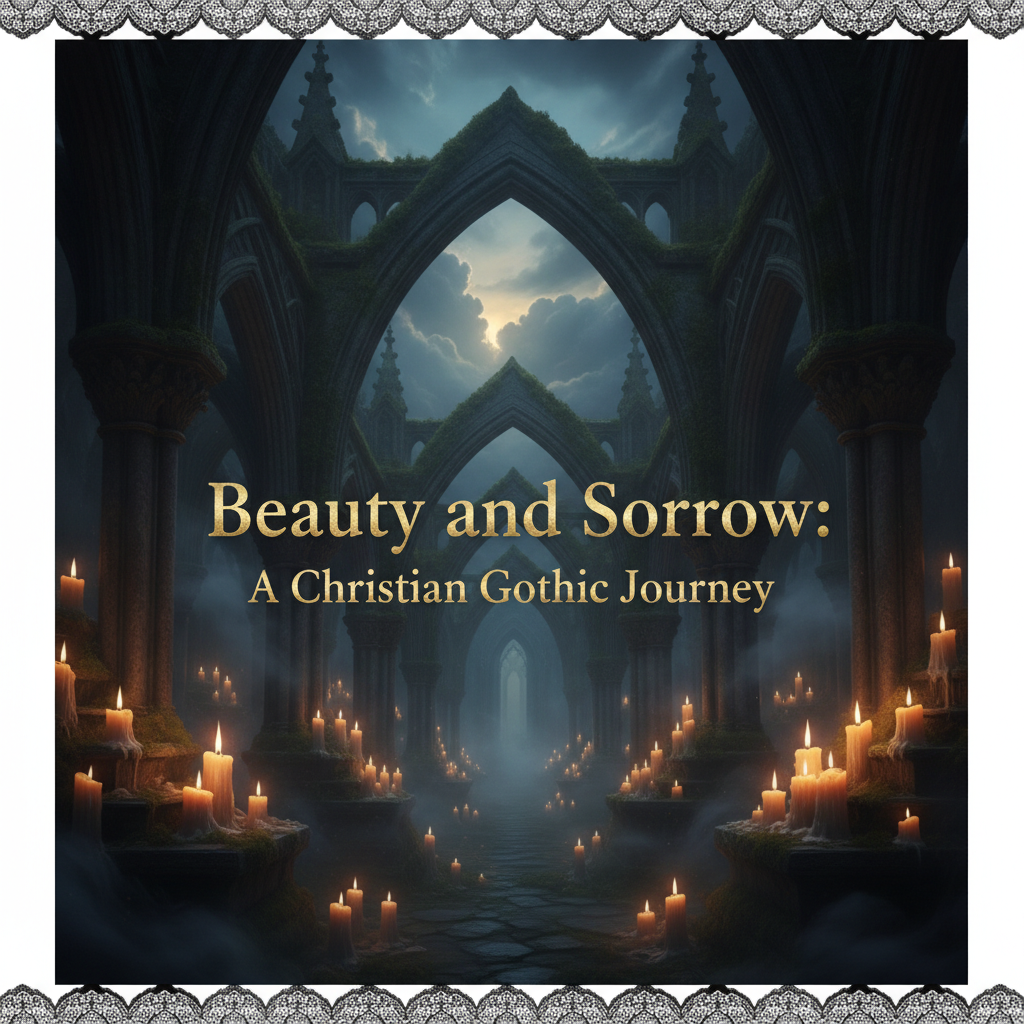
I’m glad you’re here. We’re going to talk about something that feels both mysterious and deeply true, why beauty and sorrow so often go hand in hand in the Christian Gothic world. You know how a stormy sky can look breathtaking before the rain falls, or how an old cathedral with its stained glass and shadows pulls at your heart in ways that words cannot describe. That’s what makes it so great. We see this dance everywhere in our faith, and it’s not by accident.
There’s a moody, artistic vibe to aesthetic darkness. Think crumbling ruins covered in ivy, candlelit rooms with velvet curtains, or paintings that have deep blacks and grays to make the light pop. I like it because it feels real and raw. It’s like fog rolling over a graveyard at dusk or moonlight hitting a broken statue at dawn. This kind of darkness is lovely because it shows how complicated life is. It doesn’t shy away from the broken parts. Rather than obscuring them, it highlights them, making them stand out like stars.
It’s a deeper and more serious kind of darkness. It’s the struggle inside, the valleys where doubt creeps in, when loss feels heavy, or where sin weighs on the soul. There’s a beautiful twist in our Christian walk; God meets us right there in the spiritual darkness. He doesn’t leave us wandering alone. Think about the cross. It’s not just for show. But this darkness tests us, refines us, and sometimes makes us cry out to God in the quiet hours. Yet from that darkest moment came beauty, resurrection, hope, and eternal life. Beauty and sorrow belong together because they tell the full story of redemption.
Whenever we look at Scripture, we see that pattern repeated. The psalms are full of laments that turn into praise. Jesus wept at Lazarus’ tomb before he called him back to life. Sorrow opened the door to a miracle that pointed to something bigger. The darkest times in our own lives, the seasons of grief, the waiting, are where we get to know God most intimately. Gothic art and stories help us process the spiritual kind. We can sit with the shadows without getting consumed by them.
Imagine walking through an old Gothic church. The stone walls feel cold, the light filters through colored glass in deep reds and blues, and you feel both awed and melancholy. This is beauty born of sorrow. We live in a fallen world, but in Christ, that weight becomes part of a bigger tapestry of grace. Our faith is like that. We know pain, they’ve lived through plagues and wars, yet they built spaces that lift us to heaven. We let sorrow carve out space in our hearts so that joy can fill it later.
It doesn’t mean we chase suffering, but we can stop fearing it so much. Beauty and sorrow come together to create something profound, like a song that starts off minor and resolves into major chords. A story where the hero has to face the abyss before overcoming it. In Christian Gothic terms, it’s the reminder that the grave is empty. The darkness couldn’t hold Him, and it won’t hold us forever either.
The next time you’re drawn to moody aesthetics, let them remind you that light will come. Let the shadows remind you that light will come. Beauty and sorrow belong together because they lead us to Jesus, where every tear is wiped away and everything is made right.