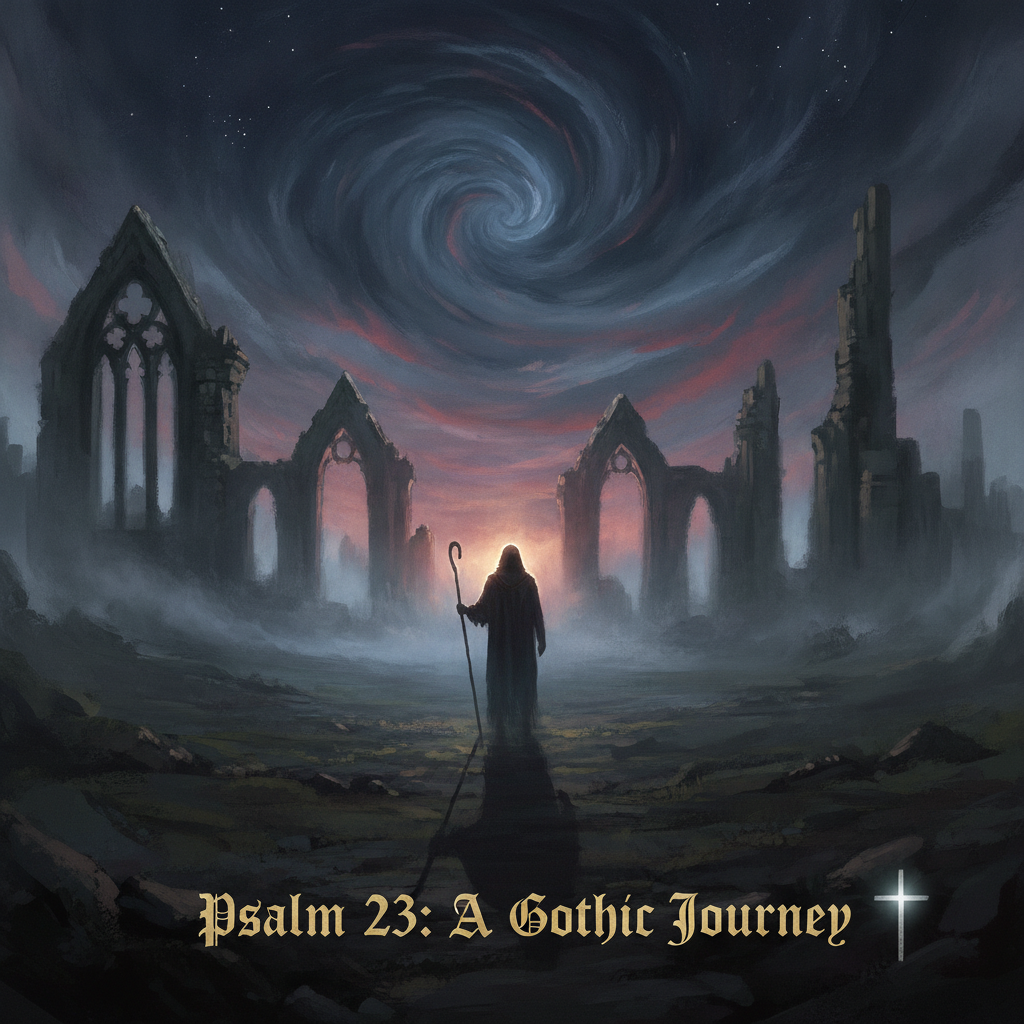
In the dim glow of flickering candles and ancient stone arches, we find ourselves drawn to the shadows that whisper of deeper truths. Today we explore the difference between aesthetic darkness and spiritual darkness while walking through Psalm 23 in a gothic way that feels alive and close to the heart. Aesthetic darkness is that beautiful veil of midnight hues, crumbling ruins, and misty graveyards that stirs the soul with a romantic chill. It is the velvet cloak of night skies, the echo of footsteps in empty halls, the way black lace and pale moonlight paint everything in haunting elegance. Spiritual darkness, on the other hand, is the heavy weight that presses on the spirit when we wander far from the Shepherd, the inner void that no candle can pierce without His light. One invites reflection and art, the other calls us to repentance and trust. Psalm 23 bridges these with its honest walk through the valley while holding tight to the promise of presence.
The Lord is my shepherd, I shall not want. These words hit different when you picture them against a gothic backdrop of twisting thorns and silent cloisters. Imagine yourself in a vast cathedral where stained glass filters crimson light onto cold floors. The Shepherd does not promise a path free of shadows. He promises to lead through them. Casual as it sounds, life often feels like wandering those foggy moors where landmarks disappear and every step echoes uncertainty. Yet the Shepherd knows the terrain. He guides us beside still waters that reflect not just the stars but the calm He offers in the middle of chaos.
He makes me lie down in green pastures. In gothic imagery, those pastures might sit in the shadow of ancient spires, soft grass pushing through cracked stone. Rest is not weakness here. It is the deliberate choice to trust when the world screams to keep running. Spiritual darkness creeps in when we reject that rest, chasing hollow comforts that leave us emptier. Aesthetic darkness lets us admire the beauty in the pause, the way fog rolls over hills like a gentle shroud. The Shepherd restores the soul in both, turning what could be despair into renewal.
He leads me in paths of righteousness for His name’s sake. These paths wind through dark woods where roots snag at your feet and branches claw like forgotten regrets. Righteousness here is not stiff rules but a lived alignment with the One who calls us by name. We stumble, sure, but He does not abandon. The gothic heart finds comfort in that persistence, the way ivy climbs ruined walls and life reclaims what seems lost.
Yea, though I walk through the valley of the shadow of death, I will fear no evil, for Thou art with me. This is the heart of the meditation. The valley is real, thick with spiritual darkness that tries to convince us we are alone. Aesthetic darkness romanticizes it with dramatic silhouettes and echoing chants, but spiritual darkness strips away the romance and leaves raw fear. The difference matters. One we can step into for art and contemplation. The other we only overcome by clinging to the Shepherd’s presence. His rod and staff comfort us, those ancient tools of guidance and protection that feel solid in trembling hands. In the gothic imagination, picture a lone figure in a black cloak walking that valley, not because the shadows are absent but because the Light walks beside.
Thou preparest a table before me in the presence of mine enemies. Even in the gloom, provision comes. The table is set with simple bread and wine, symbols that point to greater feast. Enemies circle like shadows at the edge of candlelight, yet the meal goes on. Spiritual darkness wants us to believe the enemies win, that scarcity rules. Aesthetic darkness lets us see the strange beauty in the tension, the contrast of light against dark that makes every detail vivid. Goodness flows anyway.
Thou anointest my head with oil, my cup runneth over. Overflow in a gothic world of scarcity feels defiant. The oil shines on the brow like a mark of belonging, even when robes are tattered. Abundance here is not loud wealth but deep satisfaction that survives the night. We learn to receive it casually, like a friend sharing warmth by the hearth in an old manor.
Surely goodness and mercy shall follow me all the days of my life, and I will dwell in the house of the Lord forever. The promise lands soft yet firm. Mercy pursues like a faithful companion through every shadowed corridor. The house of the Lord is no distant palace but a home that welcomes the weary traveler. In gothic terms, it is the eternal cathedral where light and shadow dance in perfect harmony, where spiritual darkness loses its grip forever.
As we meditate on these verses, the gothic lens helps us see the beauty without denying the weight. Aesthetic darkness inspires us to create, to paint with words and images the mystery of faith. Spiritual darkness drives us closer to the Shepherd who never leaves. Psalm 23 invites both the artist and the struggler to the same table. Walk the valley with open eyes. Notice the way light catches on dew in the pastures, the steady rhythm of the Shepherd’s steps. Fear no evil, not because darkness is imaginary but because He is more real.
The Christian gothic heart holds tension well. We do not run from the shadows. We let them highlight the Light. In casual moments of prayer or quiet reading, these truths sink deeper. The Shepherd restores what the night tries to steal. He prepares, anoints, overflows. Goodness follows even when the path twists. Dwell in that house, friend. Let the meditation shape how you face your own valleys.