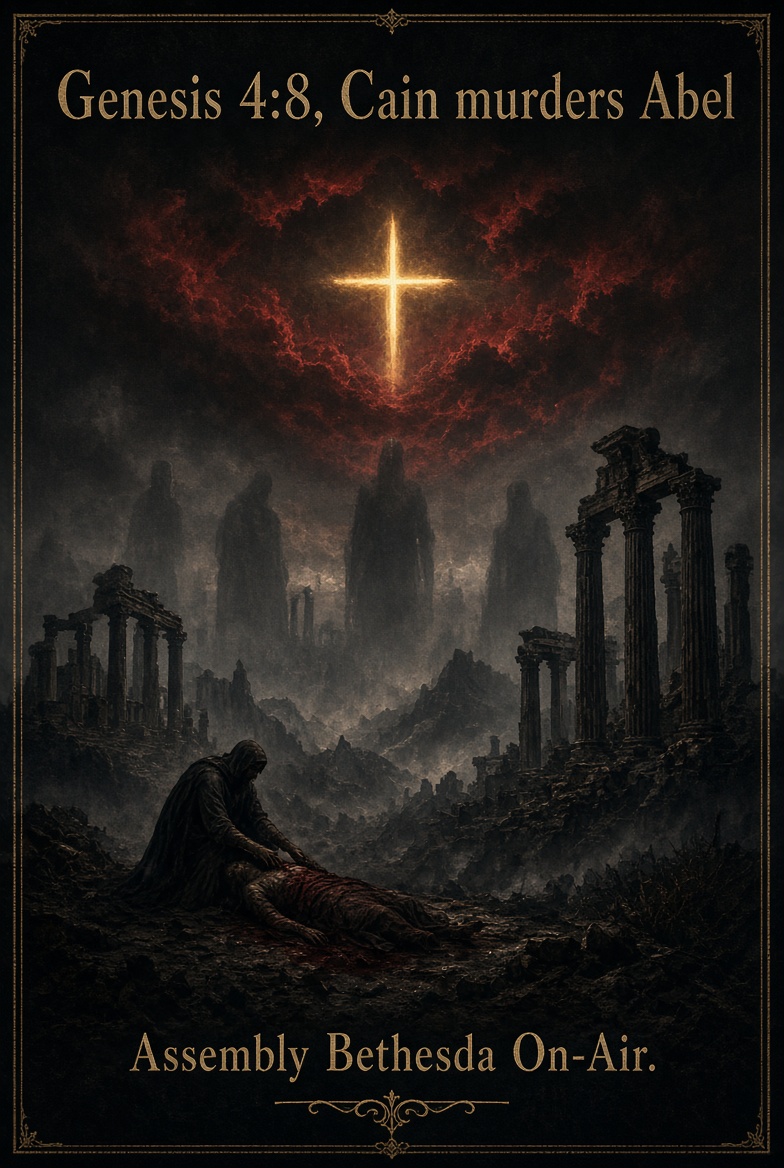
Genesis 6:1-4 feels like it belongs in the shadows of an old cathedral at midnight. Right before the great flood comes, Genesis 6:1-4 stands there, quiet and unsettling. In spite of its short length and a few verses, this passage has sparked more questions than any other in the early chapters of the Bible. It talks about God’s sons, men’s daughters, and those mighty Nephilim, the old, mighty men. A Christian Gothic light makes the scene feel heavy with mystery, ancient stone, flickering candlelight, and the sense that something vast and otherworldly once touched the ordinary world.
In the beginning, people were multiplying on the earth, and daughters were born to them. Seeing how fair the daughters of men were, the sons of God took them all as wives. Nephilim, the heroes of old, men of great fame, appear after that. The Lord sees the wickedness of man and decides that His Spirit won’t struggle with them forever, because they’re flesh, and their days will be one hundred and twenty years. Yet these four verses sit like a dark doorway leading into the bigger judgment.
Many faithful readers have lingered here, drawn by the strange beauty of the language. The sons of God are said to be angels who left their proper place to meet a human woman. Some people have read them as the line of Seth, the godly descendants that intermarried with Cain. Others have read them as powerful rulers who claimed divine status and got what they wanted. Each reading carries its own weight of sorrow and warning.
In the Gothic atmosphere of Scripture, the angelic view often feels most haunting, since it suggests that the boundary between heaven and earth once crossed in a way that brought ruin instead of blessing. Those Nephilim emerge from that crossing, strong and famous figures whose presence marks a world on the verge of corruption.
The text doesn’t linger on details. It doesn’t describe the Nephilim with elaborate color or height. It just names them as the mighty ones who were of old, men of renown. That restraint feels Gothic. Horror doesn’t come from graphic descriptions, it’s just an acknowledgement of something unnatural that took hold among humanity. Violence filled the earth, thoughts of hearts turned evil, and God was grieved. They stand at the beginning of that spiral, when desire went beyond its rightful bounds and rippled out into every generation after them.
Through the centuries, Christian readers revered these verses instead of speculating for their own sake. The passage is not given to satisfy curiosity about an unseen world, but to show the depth of human brokenness and God’s serious response. The story is still about the earth and its people, even if the sons of God were heavenly beings. It’s not just angels that cause the flood, it’s all about flesh. No matter where they came from, the Nephilim become part of the landscape of judgment. They are remembered as great, but they can’t escape the waters.
There is a quiet mercy hidden in the strangeness. God sets a limit. His Spirit won’t fight forever. A hundred and twenty years remain before Noah finds grace, builds the ark, and preserves a remnant. The Gothic shadows of Genesis 6 don’t swallow the light, they make it more important. The same God who watches the intermingling of heaven and earth is the God who later sends His own Son, not to force daughters of men, but to give Himself for the life of the world. It’s a stark and beautiful contrast. When God’s sons of old crossed boundaries in pride or lust, the Son of God crosses them in humility and love.
The passage also presses a question about boundaries in every age. Desire that refuses limits, power that claims divine right, fame that forgets the Giver, all of these still walk the earth. Even though the Nephilim don’t graze the plains anymore, the spirit that made them still entices hearts to reach beyond what’s given. Christian Gothic retells the old story. Our own age is reflected in the ancient one, a world of mighty names and restless longings, still in need of patient warnings and decisive mercy.
Despite the fact that we don’t need every question answered, the text invites us to stand still in the presence of mystery for a moment. The same God who allowed this bizarre episode later walked among us, healing the sick, raising the dead, and bearing human sin to the cross is the same God who later walked among us. While the sons of God and the Nephilim still play a role in early Scripture, they don’t have the final say. He came not to be served but to serve, and to give His life as a ransom for many.
During prayer, this passage can become a place of holy fear and holy hope. Holy fear because the Lord sees every crossing of rightful boundaries. Holy hope because He still limits corruption and preserves a people for Himself. Genesis 6’s Gothic mood doesn’t mean despair. The Nephilim rose and fell. The flood came and went. It’s the solemn acknowledgement that this world is darker than we sometimes admit, and that God’s light is stronger than we often believe. While the ark floated and rested, the Lord remained faithful to His redemption plan.
So we read the strange verses again, not to figure out every puzzle, but to let their weight settle on us. In that sequence, God’s sons saw, they took, the Nephilim appeared, and the Lord spoke. That sequence is a warning and a promise. The warning is that unchecked desire and forgotten limits lead to ruin. The promise is that God still sees, still grieves, and still acts. As Christian reflection unfolds in candlelight, those four verses become a doorway into deeper trust. It’s still a mystery, but the mercy is even greater.