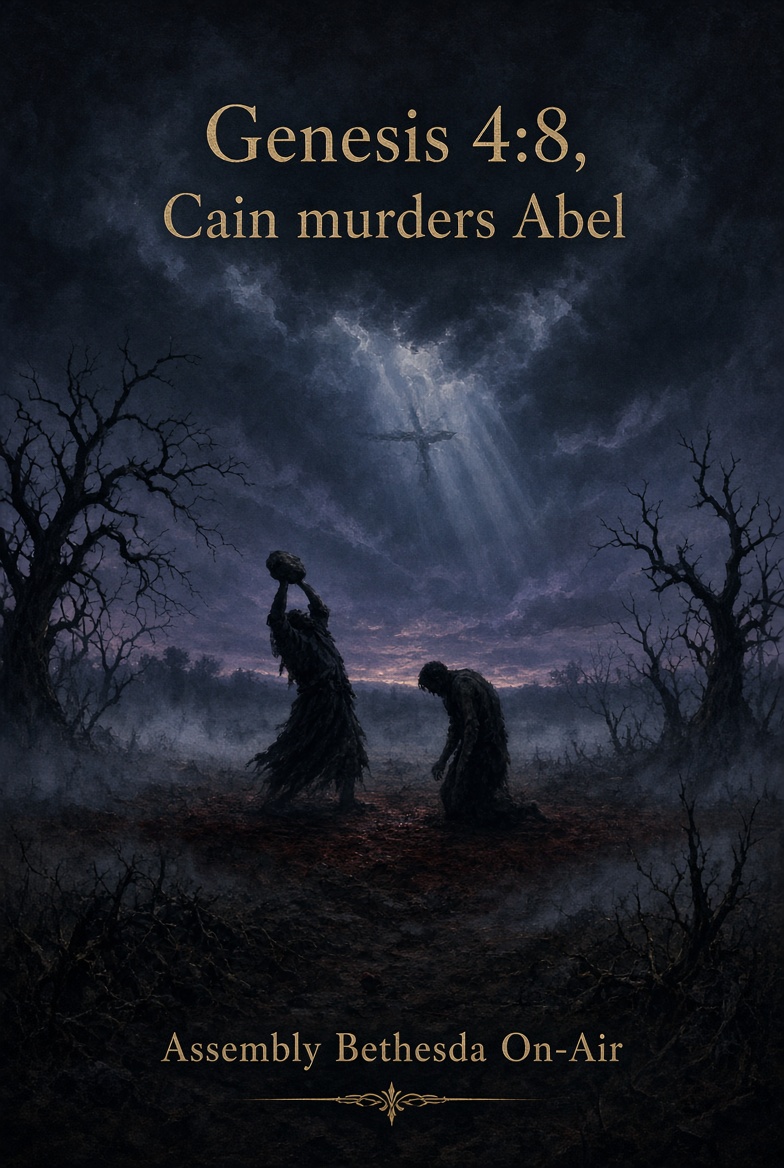
The book Genesis 4:8 records a simple, devastating exchange that settles over the heart like heavy fog. Cain talks to his brother Abel. They go out into the field. Cain kills him. The text is spare. It doesn’t linger on the blood or the cry. It just states the act. This short account has endured over centuries, often reduced to a story of sibling rivalry or simple jealousy. It’s too small an interpretation. It’s about hatred left to grow in the dark, about violence that starts before a hand is raised.
The Gothic sensibility finds its home here. Think of stone walls that hold old silence, candlelight that never quite reaches the corners, and the quiet knowledge that the human heart can harbor storms. There’s no sunny moral fable here, it’s a solemn chamber where unchecked anger reveals its cost. God had already spoken to Cain. He had warned him sin was coming, that it wanted him, and that he had to rule it. Cain didn’t rule. When the moment came, the field became a place of final silence. He let the rejection of his offering become something colder and harder than disappointment.
We often stop at the surface. Abel brought the firstborn of his flock and the fat portions. Cain brought fruit from the ground. The Lord looked favorably on Abel’s offering, but not on Cain’s. From that point, the narrative moves in a quiet inevitability. Cain’s face fell. Anger rose. Neither Abel nor Cain’s conversation is detailed in Scripture. Scripture just tells us that Cain talked to Abel, and then the murder happened. The omission itself feels intentional. A field, open and ordinary, becomes the stage where the first human blood is spilled by human hands. Words can hide intent. Silence can hold violence.
It’s not just about jealousy. While jealousy may have sparked this fire, hatred was given free reign. Hatred doesn’t always shout. Sometimes it sits in the chest and calculates. When the other gets favor, it decides that it’s theft. It refuses to master the impulse. God didn’t leave Cain alone. His warning was clear and personal. Sin isn’t a distant force. It crouches and waits for the unguarded door. It’s up to the person who stands at the threshold to make the choice.
Under a darkening sky, the field looks like a shadowed plain in a Christian Gothic frame. The ground where the first plant was planted now receives the first body. Blood cries out from the ground, and God hears it. There’s no hiding. Cain’s answer is famous for its coldness. Am I my brother’s keeper? There’s no denial here. Responsibility is refused. Kinship is rejected. Murder isn’t just about ending a life. It’s about rejecting the claim that another life has on us.
This passage makes us want to linger in the quiet after the violence. No crowds gather. No immediate justice falls like lightning. But there is a voice from God, a curse that follows, and a mark that prevents further bloodshed. Grace and judgment go hand in hand. Cain gets driven out but he doesn’t get destroyed. The ground won’t yield strength to him anymore. He becomes a wanderer, but he gets to live and build. The story isn’t easy to wrap up. Hatred changes everything once it’s loosed, and God still speaks into the wreckage.
Many readers treat the account as a distant origin story, something that happened in the first family and doesn’t need to bother us now. It’s an illusion. The same impulses move in ordinary hearts. Resentment over recognition. Bitterness when you’re preferred to something else. It’s the slow hardening that turns a grievance into a plan. Anger can grow without challenge in the field. The conversation that precedes the blow can either be spoken or unspoken. When hatred gets the final say, the outcome is the same.
Christian Gothic doesn’t romanticize the darkness. It acknowledges it with open eyes. The stained glass in an old chapel might glow with color, but the stone around it remains cool and heavy. The story of Cain and Abel reminds us that the first murder was not committed by a monster from outside the human circle. It was committed by a brother who had heard the warning and decided not to heed it. Violence was intimate, hatred was personal. It was absolute silence until God broke it.
One more layer. Abel’s blood speaks. The New Testament puts that blood next to the blood of Christ, which speaks a better word. The contrast is deliberate. Blood cries out for justice, but blood cries out for mercy. The field in Genesis isn’t the end of the story. It’s just the beginning of a pattern that can only be stopped by the cross. But there’s still a warning. Unchecked hatred still lurks. It still waits for an unguarded door.
In Genesis 4:8, the warning is felt in the present. The text doesn’t ask us to analyze ancient agriculture or reconstruct sibling dynamics. We are asked to notice when anger gets a chance to grow. We are asked to hear the quiet counsel that still comes to us: sin is crouching, and you have to control it. The field is still open. We still have a choice to make. In the One whose blood speaks better things, the blood that cries out still finds an answer.
It’s hard for a Christian Gothic heart not to find sobriety and hope in this ancient account, because violence isn’t foreign to us. Hope because the same God who confronted Cain is the same God who gives better blood. Shadows are real. Light that enters them is stronger. The story doesn’t end with the body in the field. A voice searches for the wanderer, marks him for protection, and keeps the bigger promise alive. That’s the deeper music beneath the tragedy. Hatred left unchecked leads to death. Mercy offered and received leads to life.