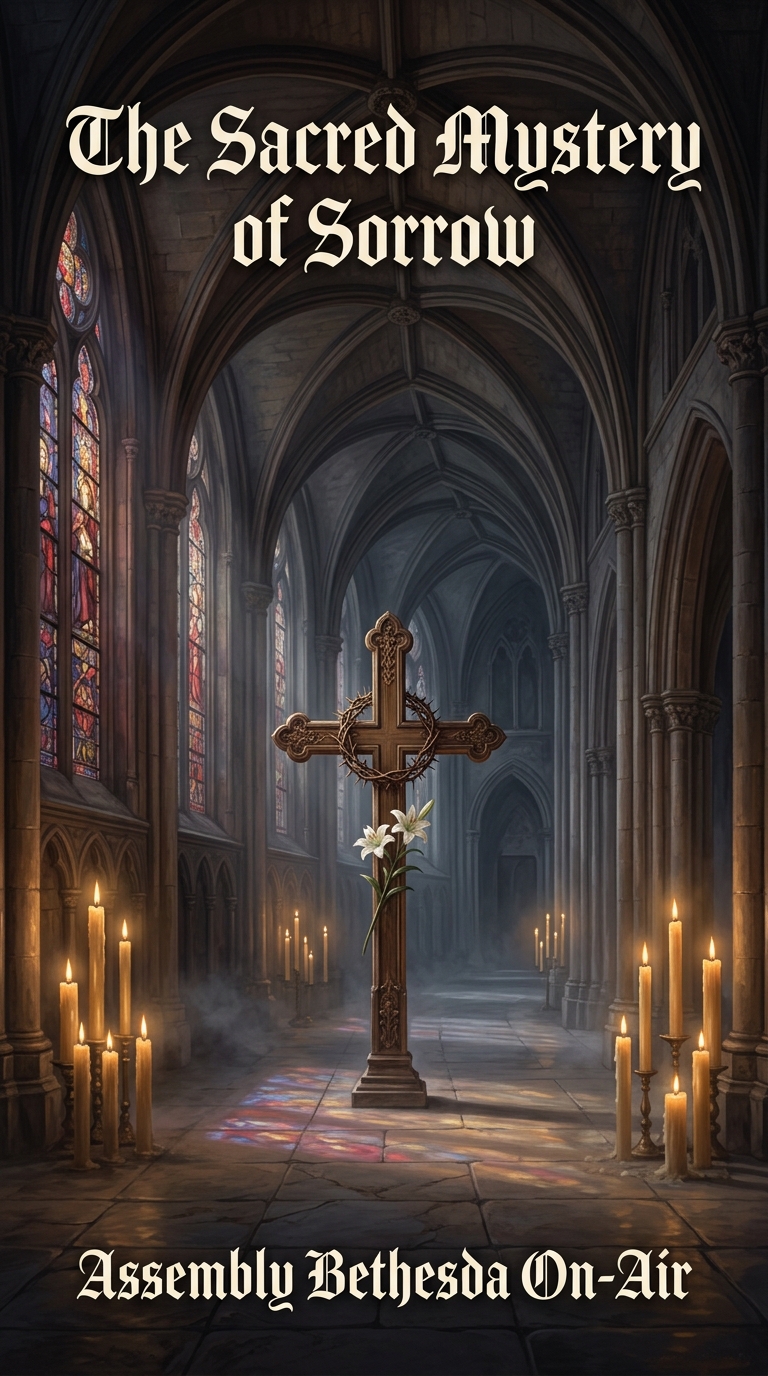
A silent guest who never quite leaves, sorrow strolls through the halls of faith. The cross stands at the center of everything we believe, and it’s filled with sorrow. In Christian Gothic, this guest isn’t an intruder but a companion the Lord Himself has known. And that’s not the end of the story, though. You can see it through the doorway into a deeper kind of light, the kind that only appears after the candles have burned low and the shadows have stretched long across the stone floor.
Our society treats sorrow like a problem to resolve or a weakness to hide. Screens flash bright solutions, songs promise endless joy, and well-meaning voices tell us to keep going, look up, stay positive. The old cathedrals knew better. Their dark arches and stained glass windows that turn sunlight into deep red and blue understood that sorrow has a place. Saints who knelt on cold stone floors understood it too. They didn’t run from tears. They let the tears teach them.
The Psalms never pretend sorrow is optional. Jesus wept at the tomb of His friend. He sweat blood in the garden. He cried from the cross. We don’t call Him the Man of Sorrows lightly. It’s the truth of who He is. And somehow, in the strange economy of grace, that sorrow becomes the very ground where mercy grows.
Imagine the way a gothic rose window catches the light. The glass is stained with pain, with deep crimson and midnight blue, but the light comes through and transforms it into something beautiful. When we hold sorrow in Christ’s hands, it doesn’t vanish. It’s changed. The sharp edges still stick, but they catch the light differently. Now what used to cut reflects as well.
A sacred mystery. Sorrow isn’t a waste, it’s not meaningless, it doesn’t mean God turned away. It’s part of the architecture of faith in the Christian Gothic imagination. The vaulted ceilings rise the highest above the places where the floor has been worn smooth by kneeling. There is a lot of incense in the air where there is a lot of grief. After the last note of the organ fades, the silence is not empty. It’s full of presence.
This mystery invites us not just as spectators, but as participants as well. The Crucified One knows the weight. He carried it first. We can name it. We can sit with it. We can bring it into the shadowed nave of prayer and leave it there under his watch.
In the aftermath of loss, there’s a kind of beauty. The empty tomb is empty because something real and costly happened. Though the stone was rolled away, the nails still show. Glory doesn’t erase wounds, it shines through them. That’s the Gothic heart of the gospel. The resurrection doesn’t cancel the crucifixion. It completes it. Even as it opens into life, the sorrow is gathered up into something bigger.
As a result, we don’t have to treat our own sorrow as a failure in faith. Christians who weep aren’t weaker than those who smile. Sometimes they’re closer to the truth of the moment. Faith isn’t the absence of tears. Faith is the decision to keep going even when the path is wet with tears.
You feel small in the best way in the old Gothic churches. Sorrow does the same thing in the soul. It strips away the illusion that we’re self enough. The high ceilings draw your eyes upward, the darkness makes the candles matter more, the cold stone makes the warmth of community feel like grace. We need the Body of Christ, the bread, the wine, and the quiet presence of others who’ve walked through the valley, too.
In every age, we’re tempted to soft pedal the hard parts of the story. We like the soft light of the manger over the hard light of Calvary. We like the empty tomb on Easter to the sealed tomb on Saturday. However, the Christian Gothic aesthetic doesn’t take that shortcut. It knows that the deepest praise often comes from the deepest pain. It insists on the whole story. It holds the sorrow and the joy in the same hand.
As sorrow comes and it will come, we don’t have to fear it as an enemy. We can look at it as a mystery. We can ask what it has to teach. We can give it back to the One who turned the greatest sorrow the world has ever known into the greatest victory. The cross still stands. The wounds still shine. The mystery remains sacred.
As a Christian Gothic, you don’t want sorrow for its own sake, you want Christ, and that Christ is found most clearly in the places of honest sorrow. The dark beauty of the faith isn’t darkness for its own sake. It’s the light that’s passed through the shadows and comes out the other side still burning. That’s the sacred mystery. That’s the invitation. If all other lights are out, that’s the hope.
The stones of the old churches still remember the prayers that were prayed in tears. The glass still holds the colors of suffering and glory mixed together. The same God who met His people there meets us still, in the quiet rooms where sorrow has taken up residence. The Man of Sorrows walks with those who sorrow. Despite all odds, that walking reveals something that looks like grace.