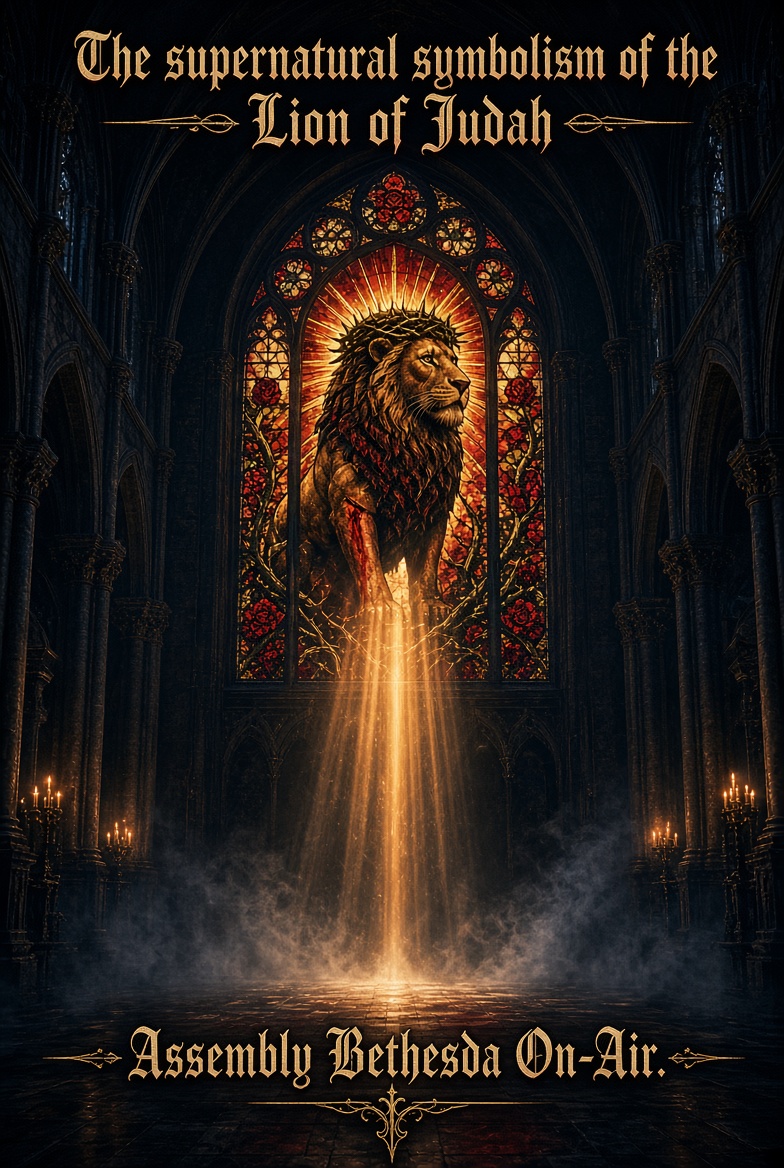
A presence moves through every night of the soul, cutting through every veil of fear and forgotten hope. As the living force of supernatural power, the Lion of Judah is at the center of Christian mystery. Whenever the world feels heavy and the light seems far away, this ancient title of Christ reminds us of a truth that burns brighter than anything else.
A prophecy that would echo through centuries, the Lion of Judah appears first in Jacob’s blessing over his son. Although Judah is the line through which the Messiah would come, the image of a lion isn’t gentle. It’s fierce, sovereign, and unyielding. The apostle John weeps because no one is worthy to open the sealed scroll in Revelation until the elders say the Lion of Judah won. The Lion is revealed as the Lamb who was slain at that moment. Strength and sacrifice meet in one person.
The Gothic Christian imagination has always understood this paradox. You’ve probably seen cathedrals with high vaulted ceilings, stained glass, shadows clinging to stone pillars, and a single candle holding the darkness at bay. This is where the Lion of Judah belongs. This is the roar that shakes every false kingdom, the majesty that can’t be tamed by human systems, the victory won through the cross, not through physical strength.
In the same way that lions don’t negotiate with the wilderness, Christ claims the territory of every human heart, every stronghold of fear, every shadowy corner of doubt, and His supernatural nature is evident in His authority. When we talk about the Lion of Judah, we’re talking about a King whose rule isn’t bound by the borders of this age. Death itself couldn’t hold Him. At the grave, the powers of darkness first heard His roar, and they fled.
There’s also the symbolism of courage. In a culture where faith is treated like a private comfort, the Lion of Judah calls us to something much harder. He doesn’t offer escape from the night. He offers presence in it. It’s been known for centuries that true faith goes through valleys with thin light and thick air, but still chooses to trust God. The Lion doesn’t take every shadow away. His presence fills the shadows so we’re never alone.
A lion moves silently until he takes decisive action. As Christ often works within the soul, we pray, we wait, we feel the weight of unanswered questions, and then suddenly a door opens that only He can open. His timing is perfect, His power is complete, and His purpose is always redeemable. That’s the supernatural signature of the Lion.
The Lion of Judah also carries the weight of royal lineage. In a world that values self-made identities, this title roots us in something older and stronger than our own efforts. We’re not orphans making up meaning as we go. A kingdom whose King already won has been established before the foundation of the world. We belong to a kingdom that’s been around since the beginning. We’re aligning ourselves with that unshakable reign every time we take communion, every time we open Scripture, every time we choose forgiveness over bitterness.
The Lord says he is a warrior who fights for His people, just like a lion defends his own. We can count on the Lion of Judah to fight for us when the spiritual atmosphere feels oppressive, when accusations and fears circle like scavengers. His roar isn’t just a sound of triumph. It’s a declaration that a life hidden in Him will never be overcome by the forces of hell.
The most profound symbolism is found in the marriage of the lion and lamb. The same One who can break every chain is gentle enough to carry the broken. This isn’t a contradiction, it’s the true nature of the God. Gothic Christian art often captures this tension, the pierced hands of the Savior set against cosmic victory, the crown of thorns resting upon the head of the King of Kings. By becoming the weakest, by entering death itself, and by rising with authority no tomb could contain, the Lion of Judah conquers.
In our daily walk, this truth becomes intensely practical. When anxiety tightens its grip, we remember the Lion who holds all outcomes. When loneliness sets in, we remember the King who never leaves. When the future looks uncertain, we remember that the scroll of history is already in the hands of the One who is worthy. We don’t live in an atmosphere in which we live, breathe, and move because the symbolism of the Lion of Judah doesn’t remain a doctrine. It’s an atmosphere we live, breathe, and breathe.
We don’t deny suffering, the weight of unanswered prayers, the ache of a fallen world. We just don’t let those realities have the final word. The Christian Gothic path encourages us to hold both the light and the dark without flinching. Every generation of the church hears his roar, urging the weary, the wounded, and the watching to lift their heads. His victory is secure. His presence is near.
We stand in the night not because it’s comfortable, but because He’s with us. The supernatural is not far away when we learn to hear His voice above the noise of the age, trust His timing when our plans collapse, rest in His strength when our own strength fails, and rest in His strength when our own strength fails. It’s as close as the next breath, as close as the next whispered prayer, as close as the Lion who walks beside us in every shadowy valley.
This is the invitation from the Lion of Judah. It’s not a distant symbol to admire from afar, but a living King who takes care of us, protects us, and leads us home. His roar is the surest sound we’ll ever hear in the gothic quiet of the soul, where candles flicker and ancient truths still burn.