In the quiet corners of this shadowed world, where the light of day fades into long evenings and the weight of ordinary living presses close, there is a mystery that unfolds not in thunder or spectacle, but in smallest gestures of kindness. Compassion isn’t just something distant or reserved for grand occasions. It exists in the everyday, in the way a glance or an offered presence can change a room, a heart, a life.
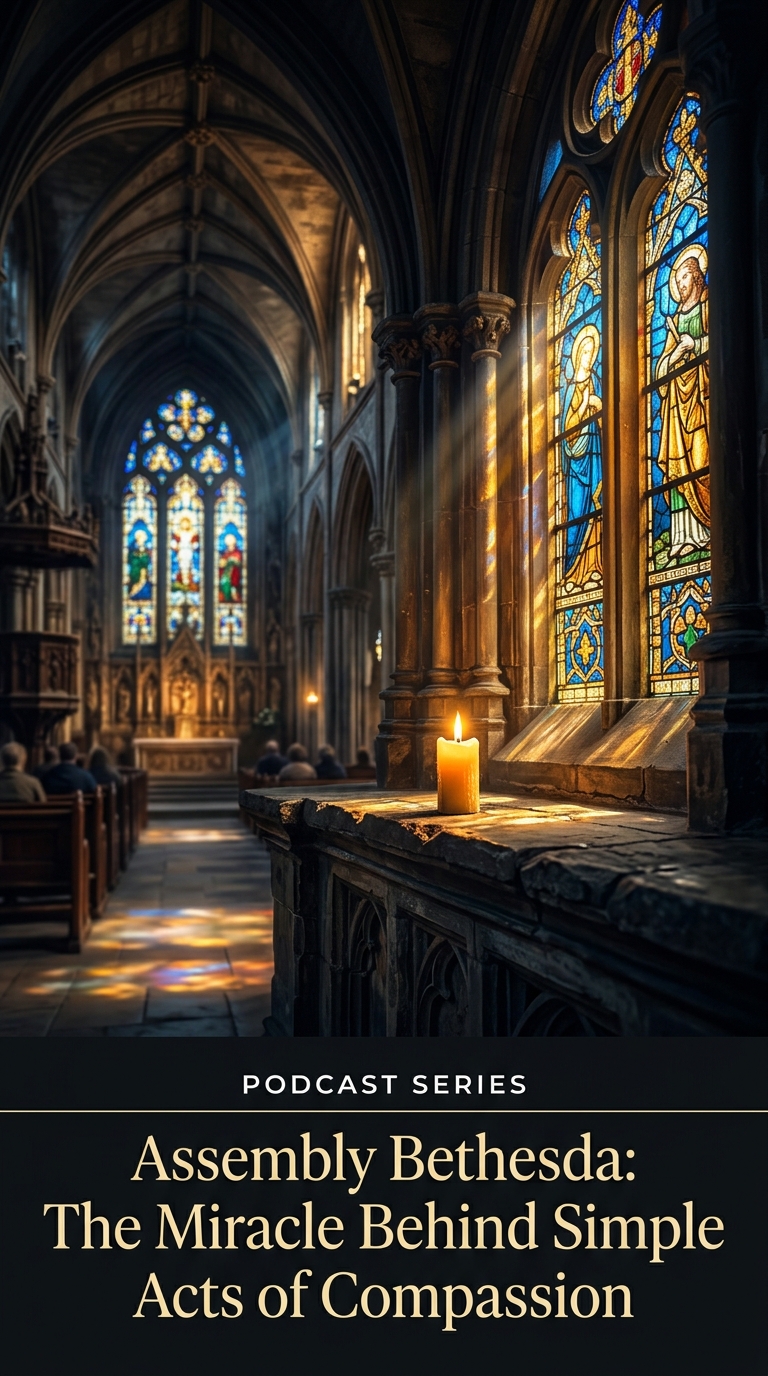
Christian Gothic sensibility draws us into this truth with particular clarity, because it never looks away from the darkness that surrounds us. The stone walls of old chapels, the flicker of candlelight against damp stone, the sound of rain against leaded glass, these are the settings where we learn that light does not erase the night. It enters it, softens it, and makes room for something holy to take shape.
Compassion, in its simplest form, is the choice to notice. It’s choosing to see the person beside us not as an interruption or burden, but as a fellow traveler marked by the same image of the Creator as us. One act of kindness can ring far more powerful than its size in a world that feels cold and mechanical, where systems grind forward and people can get lost. For a moment, it’s like the veil between the seen and the unseen thins. When you think about the architecture of the soul, a cup of water given freely, a listening ear offered without rush, a quiet word of encouragement spoken into silence, these aren’t small things. They’re openings where grace comes in.
Look at how Gothic imagination has always kept beauty and sorrow together. The great cathedrals rise in spires that reach to heaven, but their foundations rest in the earth. The interior glows with colored light filtered through stories of redemption. The gargoyles watch from the heights, a reminder of the chaos that still lurks at the edges. Compassion is the same register. It doesn’t pretend the darkness doesn’t exist. The air itself changes when someone stops to help another carry something that feels too heavy. The weight is shared. The isolation that often accompanies suffering begins to loosen its grip. It’s when we share that something miraculous happens. It reminds the receiver they’re not alone, and it reminds the giver that their heart has grown beyond themselves.
Scripture is filled with these quiet miracles, though they usually don’t get much attention. A stranger on the road is tended. A child is welcomed. A meal is shared with those who have little. These moments aren’t footnotes to the big story. They tell the story in miniature. They show the character of the One who moves toward the broken and overlooked. It’s not that the act itself solves every problem, it’s that it shows the character of the One. Love has been made visible, and visibility changes everything. A Christian Gothic frame emphasizes that the world is both fallen and loved. The cracks are deep, but light keeps finding its way through them. Light travels mostly through compassion.
There’s something special about simplicity. Grand gestures inspire, but simple ones last because they’re accessible, repeatable, and rooted in the present. Anyone can do them. It doesn’t take special training or status to do it. What’s important is willingness. Willingness to see. Willingness to risk a small inconvenience for another person’s dignity. Willingness to believe that ordinary people can do the Spirit’s work. The quiet architecture of care that holds communities together when louder forces try to tear them apart is formed in the dim light of a chapel at dusk, in the fluorescent glow of a hospital corridor, or in the muted colors of a rainy afternoon.
As Gothic sensibility reminds us, compassion isn’t sentimental. It’s costly. It asks for something. It might mean staying longer than planned, speaking when silence would be easier, opening up when scarcity feels safer. Yet in those costs, a deeper freedom is found. The heart that gives discovers it wasn’t meant to remain closed. The hands that serve discover they’re stronger when not clenched in self-protection. A miracle is a paradox. What looks like loss becomes gain. What feels empty becomes full. The cross itself stands as the ultimate expression of this truth, a place of profound darkness where love poured out without reserve, and in that outpouring, life was made possible for everyone.
Such simple compassion remains urgent in our own time. Modern life can leave people feeling unheard, even in crowded places. Screens create a sense of connection, but they can also deepen isolation. Designed for efficiency, systems can overlook people. Against this backdrop, a deliberate act of kindness becomes a quiet declaration that people matter more than productivity, that presence matters more than performance. It’s a return to the idea that every person has a story, and that story is in the hands of a God who notices sparrows and counts hairs on every head.
One act doesn’t stay contained. The person who gets kindness is often moved to spread it. A chain begins, not out of obligation, but out of gratitude. In a workplace, the atmosphere softens. The neighborhood begins to feel less anonymous. In a family, there’s a new way of caring. The changes aren’t dramatic, they’re incremental, almost invisible at first. They reshape the landscape of your life over time. This is how the kingdom advances in the Christian Gothic vision, not always through conquest, but through steady, patient love.
When we give compassion, we’re participating in something bigger than ourselves. We’re part of the ongoing story of divine mercy. Despite the smallest things, the same Spirit that hovered over the waters at creation, that filled the early believers with boldness and tenderness, continues to move. In the hush that follows a kind word, in the relief that settles after a burden is shared, there is a sense of presence you can’t replicate. It’s a gift. And gift is the language of miracles.
It’s not just politeness to walk through the world differently when you’re aware of this reality. The ordinary becomes charged with possibility. A conversation at the market, a note left for a neighbor, a moment of patience with someone who is struggling aren’t just polite. Light has entered, and it continues to enter through every open hand and willing heart. They’re ways of saying, without words, that the darkness doesn’t have the last say.
In the end, the miracle behind simple acts of compassion is that they reveal the heart of God in the midst of human frailty. They show that holiness isn’t confined to sacred spaces or special times. It’s in the grocery store, in the kitchen, in the waiting room at the hospital, on a quiet street at night. Gothic imagination helps us see this better because of its love of contrast and refusal to deny the shadows. Compassion weaves beauty and sorrow, light and dark, strength and vulnerability into something redemptive.
In a world that feels heavy and cold, these acts become the warm places where hope takes root. So we’re invited to notice, to act, to trust that even the smallest gesture has eternal weight. There are lights in a vast stone nave, small but enough to push back the dark and invite people to come close. It’s the quiet revolution of love. One small act keeps the miracle going.