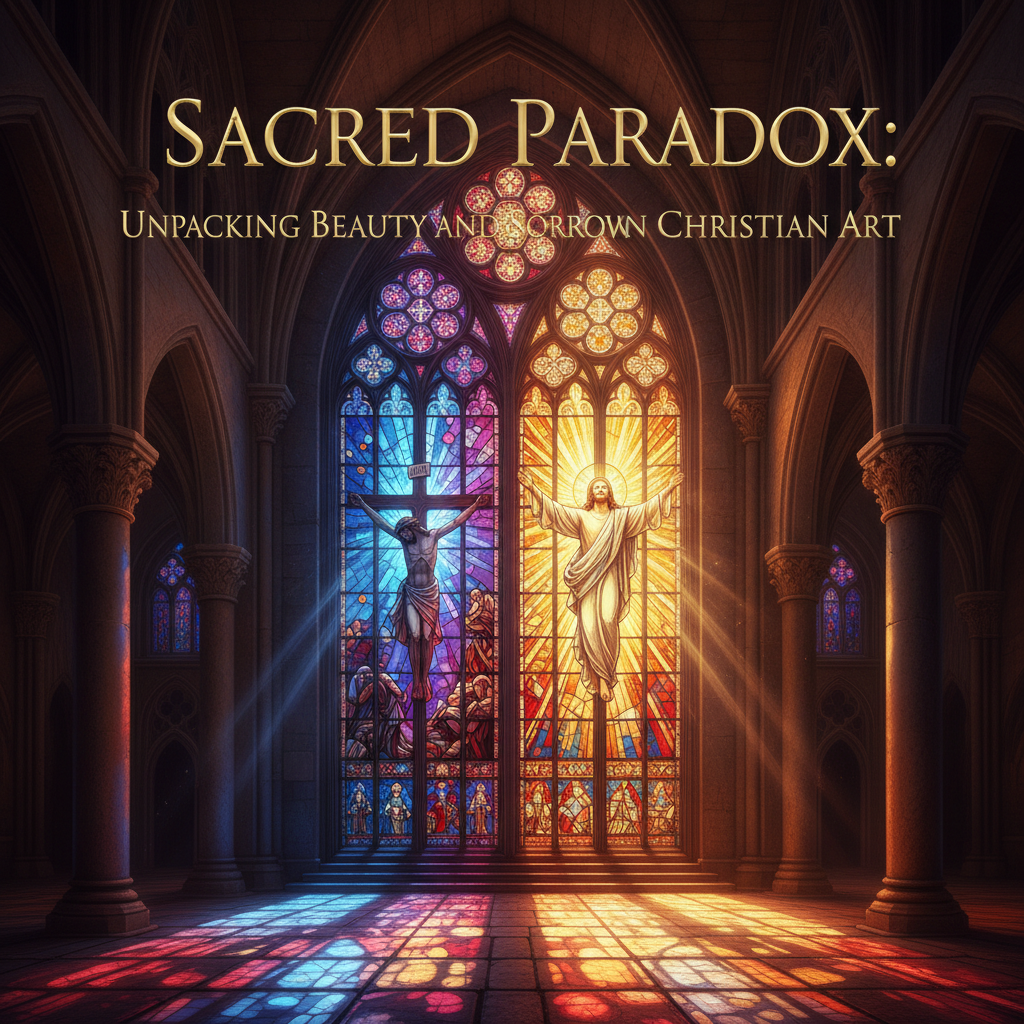
We’re gonna talk about something deep in the heart of Christian art today. What makes beauty and sorrow so often come together? Think about those old cathedrals with their soaring arches and colorful windows. They draw you in, but many scenes show the cross, tears, and suffering. It’s not a coincidence. It’s the real heart of our faith that’s captured in this mix. It’s true that life brings joy and pain close together, and Christian artists have shown this truth for centuries.
Start with the basics. Christian art grew from the stories in the Bible. Jesus came to save us. His life had moments of pure beauty, like the Sermon on the Mount or loaves and fishes. The cross, however, was not just sad. It was the greatest act of love ever. Artists painted these because they knew it was not just sad. Beauty here means something that lifts up your soul. The sorrow reminds us of the cost of sin and the depth of love.
Gothic cathedrals use light to make heaven on earth. Reds, blues, and golds glow like jewels, but the images often show saints with wounds or Mary holding her son after the cross. Those tall spires reach up in hope while the shadows inside speak of trials. Walking in one makes you feel both at once. True beauty comes through suffering, just like spring flowers push through winter ground. It’s that pull that makes art so powerful.
There’s a soft glow around faces in Gothic paintings. Eyes might be filled with tears, but there’s a soft glow around them. Golden leaf makes halos shine even in dark scenes. This mix shows us that sorrow doesn’t win. Beauty wins. In the Pieta, Mary cradles Jesus. It hurts to see, but the tenderness and faith in her face bring comfort. It says yes, the pain happened, but love is stronger.
In spite of how casual it sounds, this idea fits every day faith. When we are struggling, beauty shows up too. A kindness, a sunrise, or a song can break our sadness. As Christians, we know God works that way. Good Friday leads to Easter Sunday. Artists painted both sides so we remember the whole thing. They didn’t hide the hard parts because hiding them would miss the point.
During the early days, Christians faced persecution. Art in the catacombs mixed symbols of hope and death. Later, Gothic style exploded. Sculptors carved leaves and flowers around doorways, full of life, while inside crucifixes showed sacrifice. This balance helped people connect. Beauty attracts the eyes and heart. Sorrow makes the beauty real, not fake.
It’s still used by Christian artists today. They paint or sculpt in a Gothic way. Dark backgrounds with bright light beams, or flowers growing from thorns. The art says God is in both joy and pain. A family celebration might come after a loss. An answered prayer might come after a long wait.
The rose windows in Notre Dame are bursting with color and patterns that feel like joy. But many tell stories of martyrs or the fall of man. The beauty pulls you in, and somehow you leave lifted. Take a look at illuminated manuscripts. Monks painted fancy letters and borders with vines and creatures, and a crucifixion scene in the middle. It’s all done with love, from the pretty parts to the heavy ones.
Why does this matter for us casual folks today? This kind of art helps us see our own lives through the eyes of faith. When sorrow strikes, we can look for the beauty God is growing in it. Art like this teaches us that. It’s not about denying pain, it’s about seeing it next to redemption’s greater beauty.
A cross is the perfect picture. Wood and nails, blood and suffering, look ugly at first. But Christians see it as the most beautiful symbol. It symbolizes forgiveness, new life, and a God who’d rather die than lose us. They turned sorrow into something that drew us in. They glistened with jewels or surrounded it with angels.
While we focus on visual art here, the same idea applies to music and hymns. Sad tunes with hopeful words. Gothic revival brought this back in buildings and paintings. It felt mysterious and deep, perfect for faith that holds both mystery and truth.
The next time you see Christian art like that, pause. Feel the beauty, then feel the sorrow, and remember how they work together. Jesus took the sorrow so we could have the beauty of eternal life.
On top of that, consider how light and shadow work in these works. Gothic windows filter sunlight into patterns on stone floors. The light is beautiful, dancing and alive. Shadows gather in corners, reminding us of the valley we walk. Together, they create depth that flat brightness cannot. It made sense for artists to add sorrow to their paintings. It gave them soul and made them more beautiful.
In art, saints often look peaceful in the midst of trials. Their faces show sorrow lines, but their eyes are filled with hope. This teaches resilience. Beauty is not the absence of pain, but God’s presence.