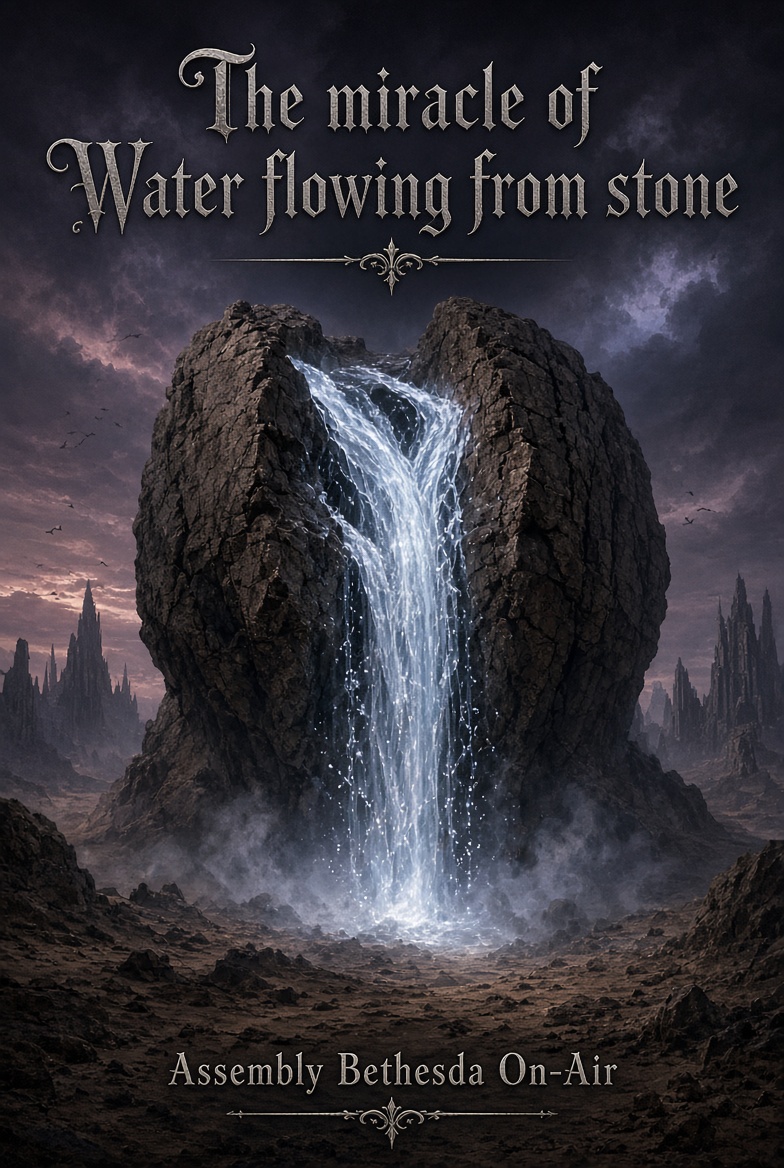
There is something deeply stirring about a miracle happening in the middle of nowhere, under a hard sun, with nothing but dust and complaints for company. The people are thirsty. The land is dry. The rock stands there, silent and unyielding, like a stone watching generations pass by without ever offering a drop. Then the command comes. The staff rises. The rock gets hit. Water, real, rushing, life-giving water, pours out like a hidden sea was being held back by the stone.
It’s the miracle at Rephidim, the place later called Massah and Meribah. Moses led the Israelites out of Egypt. They saw the sea split. They ate manna that appeared with the morning dew. Yet here they are again, throats burning, voices raising in accusation. “Why did you bring us up from Egypt to kill us, our children, and our livestock?” Those words hang in the air like heat haze. It’s simple, almost stark. Take the staff. Go to Horeb. Strike the rock. Water will come out.
Gothic imaginations love scenes like this. Think of the desert as a shadowy waste, with scarred and dark rock rising like a ruin of a forgotten cathedral. A stream streams out of the wound, catching whatever little light there is and turning it into silver movement. The people press close, faces marked with dust and doubt. The staff falls. The stone yields. It’s not gentle. It’s not polite. Even when they’re busy accusing Him of plotting their demise, God’s sudden, almost violent generosity won’t let His people die of thirst.
The rock doesn’t negotiate. It doesn’t explain itself. It just opens up. Water doesn’t trickle. It flows. People who were ready to stone their leader now stoop to drink. Livestock lower their heads. Kids laugh for the first time in days. The place of quarreling became a place of provision. And yet the name is still Massah and Meribah, a reminder that faith and complaint can go hand in hand.
Throughout Christian tradition, this rock has been more than just a one-time rescue. Paul later writes that people drank from a spiritual rock that followed them, and that rock was Christ. The struck stone becomes a figure of the stricken Savior. It’s almost too much like Gothic. The dark rock, the blow that opens it, the flood that follows. Blood and water are everywhere at Calvary. A side is pierced. The desert miracle isn’t forgotten in the wilderness. It finds its deepest meaning in another wound that yields life.
What does it mean to stand before a God who brings water from stone? Then scarcity doesn’t always win. Even in the hardest places, under the most unyielding circumstances, when all natural resources have failed, there can be unexpected supply. The Gothic sensibility doesn’t shy away from the hardness. It doesn’t pretend the desert is nice. The same God that allows the thirst also commands the rock to open. While the atmosphere is shadowy and the landscape is harsh, the water is real.
People’s complaint isn’t abstract theology. It’s the raw cry of bodies that need water and hearts that begin to question the goodness of the One who led them there. The Gothic heart knows complaint. It knows the long night of the soul, the dry season when praying feels like talking to stone. The miracle doesn’t wait for perfect faith. It arrives right when grumbling is still in the air. Grace doesn’t make people feel grateful first. The need is met.
There’s the staff, too. Moses carries the rod that once turned into a serpent in Pharaoh’s court. Now it strikes stone. Instruments matter in these stories. Ordinary things become conduits. A piece of wood, a human hand, a command. Gothic imagination loves such details. The staff isn’t magical. It’s obedient. Power doesn’t come from the wood, but from God who said, “Strike.”
As for the water itself, it becomes a sign of life in a landscape of death. Streams in the desert aren’t just practical in Scripture. They’re sacramental. They’re pointing beyond themselves. The water that saves the body becomes a figure of the water that saves the soul. Prophets will later talk about drawing water from salvation wells. In the temple courts, Jesus will chant about rivers of living water. Horeb’s rock is the beginning of a long story that ends with a river flowing from God’s throne.
It’s a miracle, but there’s also a warning. It’s a place of testing, and provision doesn’t erase unbelief. The water flows, but will they trust again? Gothic tone holds both realities without forcing a tidy resolution. God is generous. People are slow to believe. Both truths stand.
It’s the same in our own dry seasons. The heart looks like cracked ground when resources run out. Hope thins. Sometimes, quietly, sometimes with a sudden flood, provision comes from unexpected places. When a word arrives at the right time, a door opens that was sealed, strength returns when it has been spent, the stone splits. Water flows. Miracles don’t always look dramatic from the outside. The thing we thought was solid and barren has actually been holding life all along.
In Christian Gothic, the mystery stays intact. It doesn’t just teach a moral lesson or tell a historical tale. It lets it stay strange. A rock yields water. A people who deserve mercy receive mercy. A staff becomes a lifeline. The desert becomes a place of gathering. Even as the shadows lengthen across the sand, the stream keeps flowing, catching the last light.
It’s still the same God that can bring water from stone when the land is hard and the throat is dry, when complaints take precedence over praise. It still stands. The command still echoes. I still invite you to drink, and remember that the One who struck the rock is the One who struck us for us. Living water still flows. The desert isn’t empty after all.