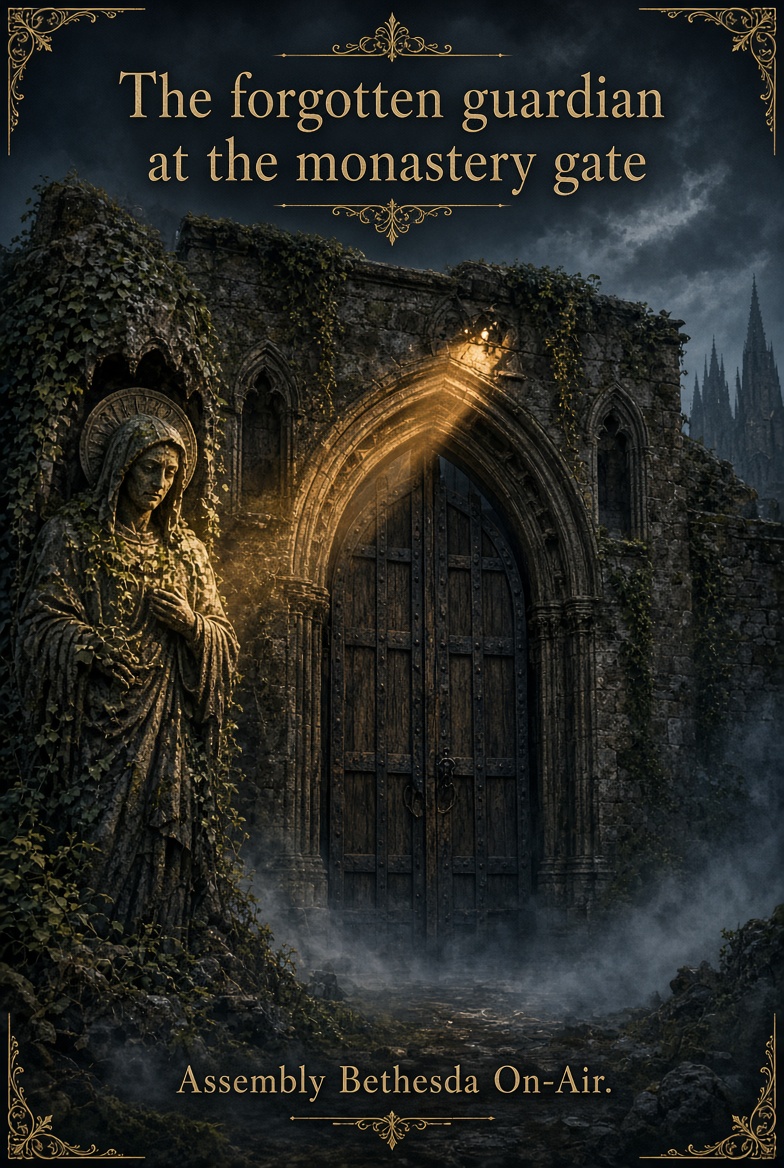
Something settles into your bones whenever you stand in front of an old monastery gate. The wood is thick, the iron bands are dark, and the stone arch above is worn smooth by centuries of weather and prayer. Usually the most striking part is the person sitting right next to the entrance. Sometimes it’s carved into the pillar, sometimes it’s a statue that’s half swallowed up by ivy. People walk past it all the time. Even the monks who live inside barely glance at it. The guardian has become a quiet presence that no longer draws attention.
It’s not just the stone guardian at the monastery gate that’s forgotten. It’s a picture of something deeper that happens inside of you. We build routines, we learn the words, we pass through the same doors of worship and habit, and somewhere along the way we lose sight of who’s really watching over the threshold. The guardian is still there. The stone hasn’t moved. If the carver gave it eyes, they still look outward. But we’ve stopped looking back.
The beauty of Gothic art isn’t just in brightness. It’s in the contrast. Dark arches, heavy shadows, sudden shafts of light through narrow windows. A monastery gate has the same contrast. The walls are high for a reason. The gate is solid for a reason. We keep something valuable inside, and something real stands watch outside. But over time, the watchman becomes scenery. We get used to protection, and we forget the protector.
It’s full of gatekeepers in scripture. The Levites stood at the temple gates. The watchmen on Jerusalem’s walls cried out whenever danger approached. In the Psalms the Lord is described as the one who doesn’t sleep nor slumber, the keeper of Israel. The imagery is consistent. Jesus describes Himself as a door, and the sheepfold that only Jesus can enter. There’s a threshold. That’s where someone belongs. People who live inside the walls might treat the threshold like anything else.
A guardian is forgotten, so two things usually happen. First, the sacredness fades. The gate becomes just another door. The monastery becomes just another building. Second, the people inside start assuming safety is automatic. There’s a quiet drift in the Christian life. Prayer becomes thinner. Awareness of spiritual danger becomes dull. They stop asking if it’s still being kept. They stop saying thanks for the one who keeps it. It’s still there, but it doesn’t catch your eye like it used to.
Stone doesn’t complain about the forgotten guardian. The figure stays there no matter what happens, whether it’s rain or heat or festivals or just Tuesdays. In the same way, Christ’s presence at the door of the heart doesn’t shout. The Spirit doesn’t force recognition, Grace waits. It’s the question if we’ll notice it again. It’s not demanding attention. It just keeps going.
I don’t think you have to come up with new rituals to get the guardian back. Just slow down long enough to look. Look at the gate. Feel the weight of the wood, the cold iron, the carved figure’s patient face. Then let that physical act become spiritual. Ask what it means to be watching over your life while you’re busy with other things. Ask what it costs to be faithful when no one’s around. Find out if the walls you trust are still being guarded by the One who built them.
There’s a tenderness in this recovery. The guardian doesn’t get mad at being overlooked. The Gospel isn’t about ingratitude. It’s an invitation to see again. The same Lord who knocked still knocks. The same Spirit who gave you help still helps. The same Father keeps count of every hair on your head. A stone face at the monastery gate only echoes that greater reality. If we follow shadows, we can find our way home.
Christian Gothic sensibility understands that darkness isn’t the enemy of faith. Darkness is the place where light becomes visible. A forgotten guardian stands in the darkness, half hidden in shadow and half revealed in the light. It’s not about banishing the dark when we remember the guardian. It’s about learning to see inside it. It’s about learning that the One who watches the gate has already been through every night we’ll ever face. The cross is the ultimate gate, where death was entered and defeated. The empty tomb is the open door on the other side.
If you pass an old stone figure at a church or monastery entrance, pause. Let the stone speak to you. Let the weight of years settle on you. Then remember that the real guard has never left. He’s not a relic, he’s alive. Heaven doesn’t forget him even when earth doesn’t. The gate He watches is still the way to heaven.
Look again. Give thanks again. Walk through the gate with your eyes open. The stone face will keep its silence, but the living Christ will meet you.