Isaiah’s voice rises in the dim corridors of ancient scrolls, where ink bleeds like old blood on parchment and the air smells like forgotten altars. The sound isn’t a soft murmur. A cry that cuts through the centuries, a lament that becomes a herald. The prophet stands amid the ruins of kings and the ashes of empires, speaking words that echo in the hollow chambers of our hearts. These words don’t just tell us about Israel’s sorrows. In unerring gravity, they point toward the One who would bear every sorrow, the Christ who enters the world as both suffering servant and conquering king.
The vision of Isaiah starts in heaven, and immediately descends into earth. He sees the Lord lifted up, His train filling the temple, seraphim screaming holy, holy, holy. His mouth gets touched with coal from the altar, and guilt is taken away and sin is atoned for. The prophet himself is undone, a man of unclean lips living in a people of unclean lips. Isaiah answers the question: Whom should I send? Here I am. Send me. This commission isn’t just to comfort. It’s to proclaim judgment that softens into mercy, blindness that yields to sight, and a remnant that one day sees the glory of the Lord.
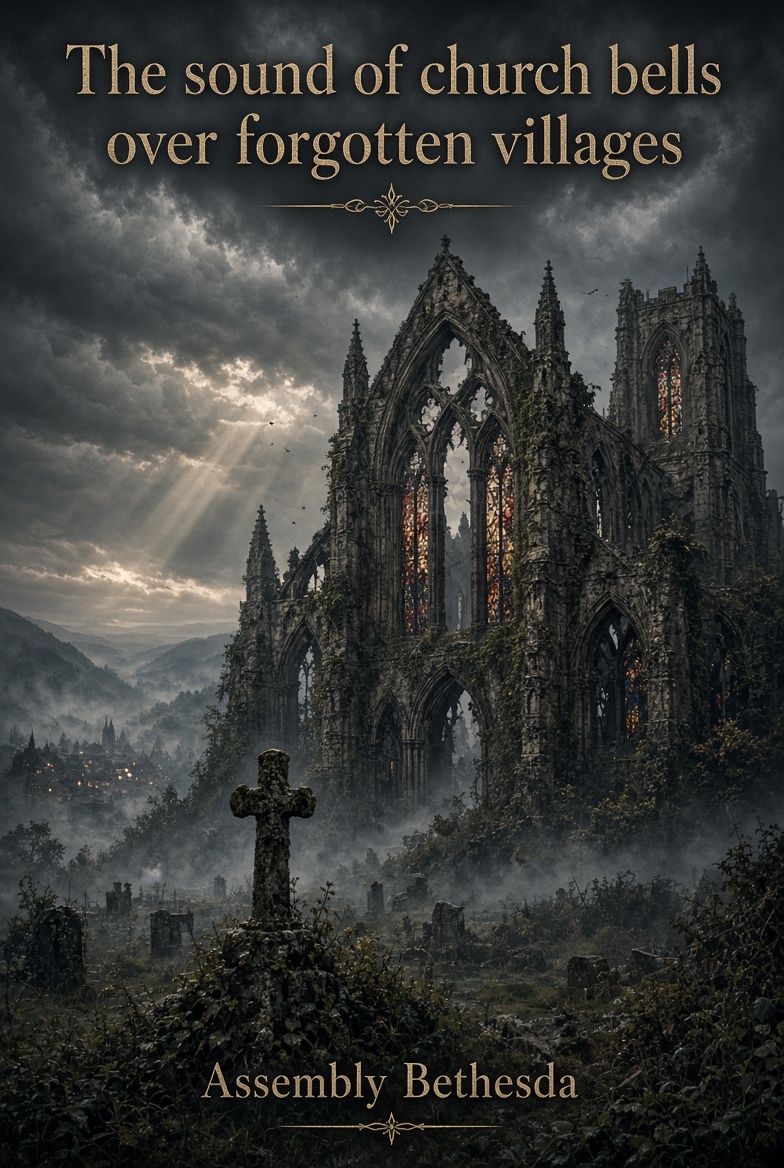
In the first chapters, the shadow of Christ gets longer. In the time of political fear and spiritual famine, the word is spoken of a virgin giving birth and naming him Immanuel, God with us. Ahaz trembles at the sight of invading armies. The prophet is a sign of divine presence, not military victory. God Himself will enter human flesh. The child will be born under the shadow of empire, yet His name will tell you that He has drawn close to the Holy One. There’s a distant toll of bells over abandoned villages in the Gothic stillness of that promise, the quiet certainty that darkness can’t quench the light.
It says a new child will be born, a son will be given. Government will be on His shoulders. He’ll be called Wonderful Counselor, Mighty God, Everlasting Father, Prince of Peace. There won’t be an end to His government and peace. With the zeal of the Lord of hosts, he’ll sit on the throne of David to establish it with justice and righteousness from now on. This isn’t just an earthly monarchy. It’s the eternal King whose rule doesn’t fade with the seasons. In the cold stone halls of history this Child walks, bearing titles that mortals can’t claim without blasphemy.
My servants songs deepen the mystery. Look at My servant, whom I uphold, my chosen, my soul adores. He will bring justice to the nations. He won’t cry out in the street or raise His voice. He won’t break a bruised reed, and He won’t quench a faintly burning wick. He’ll faithfully bring justice. The servant is gentle yet unyielding. He doesn’t shatter the weak. He restores them. He doesn’t extinguish the flickering hope. In the gloom of human failure, he moves with quiet authority, the very image of Christ who later walks among the broken.
There’s the most solemn song. Who has believed what we’ve said? Who has seen the arm of God revealed to him? He grew up before Him like a young plant, or like a root out of dry ground. He had no form or majesty that we should look at Him, and no beauty that we should desire Him. Men despised and rejected Him, a man of sorrow and grief, and we didn’t regard Him. He was one from whom men hid their faces, and we didn’t love Him. Our griefs and sorrows have surely been carried by Him, yet we think He’s struck, smitten, and afflicted by God. But He was pierced for our transgressions. He was crushed for our iniquities. His chastisement brought us peace, and His wounds healed us. We’ve all gone astray like sheep. We’ve all gone our own way, and He’s been slapped with iniquity.
These words aren’t abstract. They’re the architecture of the cross. The servant is silent before His shearers. He’s cut off from the living. He makes intercession for transgressors. He pours out His soul to death. In spite of that, God’s will comes to pass. He’s going to see His offspring, and He’s gonna live longer. My servant will make many accounted righteous, and He’ll bear their iniquities, too. From the manger to the empty tomb, this chapter shines like a dark rose window in the Gothic cathedral of Scripture.
As Isaiah doesn’t stop at suffering, he lifts the remnant’s eyes towards restoration. The Holy Spirit is upon me, because the Lord has anointed me to bring good news to the poor. He sent Me to bind up the brokenhearted, proclaim freedom to the captives, open prisons for those who are bound, proclaim the year of the Lord’s favor, and the day of vengeance of our God, to comfort all who mourn. Century later, the anointed one speaks these words in a Nazareth synagogue. The fulfillment is here. The kingdom is near.
In the book, the imagery stays true to Christian Gothic. Valleys are exalted. Mountains are lowered, crooked places become straight, and rough places become plain. The glory of the Lord is revealed, and all flesh shall see it together. Waters break out in the wilderness. Streams in the desert. The ransomed of the Lord return and come to Zion with singing. Everlasting joy is on their heads. Sorrow and sighing are gone.
However, it’s a long road to that joy. The prophet doesn’t spare the reader from the cost. Judgment falls on the proud. The lofty are brought low. Only those who wait on the Lord gain strength. They mount up with wings like eagles. They run and are not weary. They walk without fainting.
Isaiah points to Christ in more than one verse. He weaves threads of judgment and mercy, exile and return, death and resurrection into his entire prophecy. All these ancient words find their living center in Jesus. A virgin birth, the names of the Child, the gentle servant, the suffering servant, the anointed liberator, the coming king. The coal that touched Isaiah’s lips becomes the Lamb’s cleansing blood. David’s throne becomes the throne of Christ. The wounds that heal become the marks of Christ.
One can walk the length of Isaiah’s scroll as one strolls through the aisle of a ruined abbey in the quiet of contemplation. Light filters through broken glass. The stones remember every footstep. The air smells faint incense that has burned long ago. Yet the voice remains. He speaks of the One who was, and who is, and will come. Isaiah invites us to see the servant, to trust the king, to receive healing from that pierced side. The prophecy doesn’t end there. It continues in every heart that turns from its own way and finds rest in the One whom the Lord has laid our iniquity upon.
In the long night before dawn, Isaiah stands like a sentinel. His words are lanterns hung along the road to Bethlehem, Golgotha, and the garden tomb. They’re not relics. They’re fires. Christians walk in their light, knowing that God has spoken finally through His Son. The shadow points to the substance. The promise is kept. The Christ has come, and He’s coming again.
This is Daniel’s revelation. This is the hope that endures through all ages of darkness. This is the coming kingdom that can’t be snuffed out by anything.