There’s a quiet kind of beauty that we don’t notice. It doesn’t shout. It doesn’t demand attention with bright colors or easy slogans. It lives in the softer places, the dim corners, when the heart finally stops running and turns around. That beauty is repentance.
In a world that values strength, self-assurance, and forward momentum, repentance feels like an outdated word. It sounds heavy. It sounds like failure. But if we look closer, when we let the light of Scripture and the long tradition of the church settle over it, something unexpected appears. You can’t just admit your wrong. You can rediscover your home. It’s about turning your face toward the One who’s always been watching you.
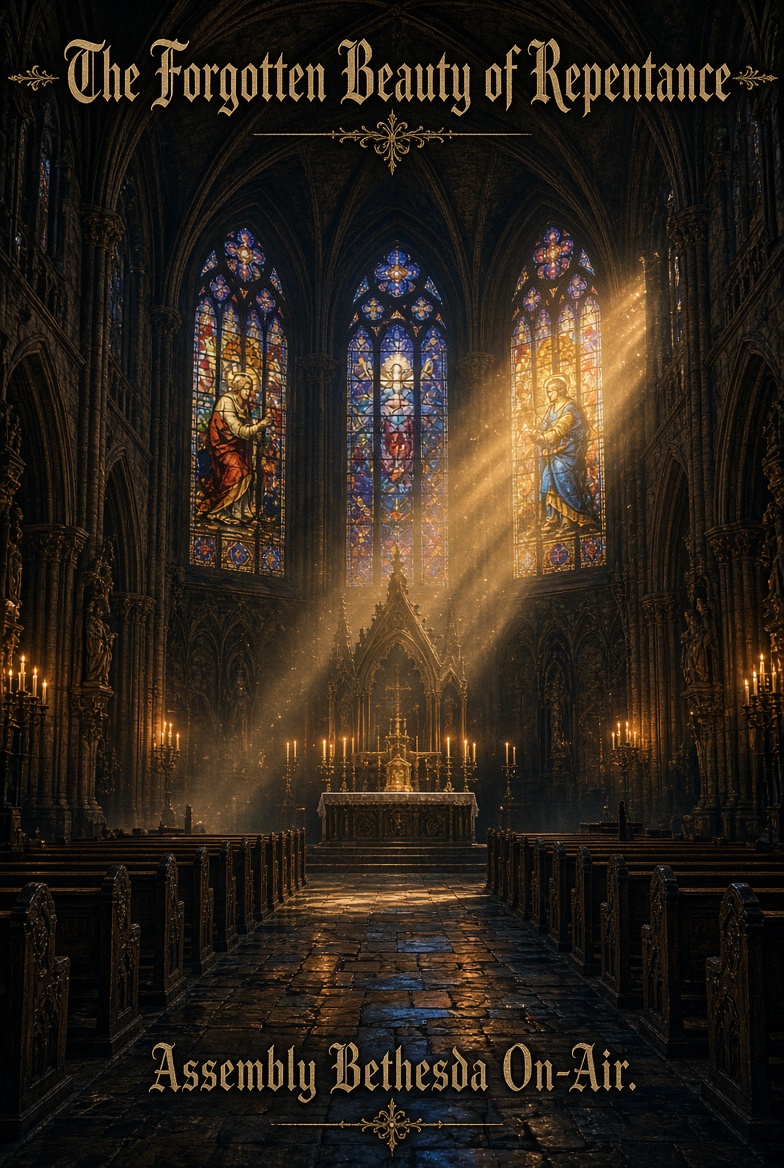
During dusk, think of a cathedral. The stone is cool. The air smells of wax and dust. The stained glass still holds the last light of day, broken into deep reds and blues that fall across the floor in imperfect shapes. A single candle burns near the altar. There is nothing loud about the scene, but the beauty is undeniable. This is real repentance. It’s not a performance under bright lights. It’s the soul coming into a quieter place where honesty is safe and grace is already there.
As soon as the prodigal son returns home, the father runs. David says his confession in the psalms, and yet it ends in hope. The risen Lord doesn’t leave Peter in his sorrow when he weeps after denying Jesus. He restores him with a simple question repeated three times, matching the three denials. The pattern is consistent. Turning back is welcomed. Shame itself isn’t beautiful, but how steadfast love responds to it is.
Repentance is beautiful, but we often confuse it with self punishment. In the gospel, we’re invited into the light instead of staying in the dark, replaying every failure, measuring ourselves by how sorry we feel. We have fellowship with one another if we walk in the light as He is in the light, and we’re cleansed from all sin because the blood of Jesus cleanses us. In the light, you tell the truth about the shadows. We don’t have to live there.
It’s a tender way God receives repentant hearts. God says that while our sins are scarlet, they’ll be white as snow. This isn’t a reluctant pardon. It’s more like a transformation. Scarlet becomes snow. Deep stain becomes bright. There’s no cosmetic change here. It’s true what we are. That’s beautiful, but it’s also expensive. On the cross, Christ carried the full weight of every turning away so that every turning back could be met with open arms.
There’s a certain gravitas to this beauty in Christian Gothic. Sin isn’t light or the world doesn’t have shadows. The cross stands at the center, dark wood against the darkened sky, yet from that place of deepest sorrow comes brightest hope. Gothic architecture and art have always understood this tension. Vaulted ceilings reach to the heavens while lower stones stay close to the ground. There’s light filtering through colored glass that tells stories of both suffering and glory. There’s a serious atmosphere without being joyless, a solemn atmosphere without being despairing. Repentance belongs in that same visual language. It’s serious because sin’s serious. It’s hopeful because Christ is greater.
Most of us have quiet regrets we’ve never fully revealed. Words spoken in anger. Opportunities to love that got passed up. Thought patterns that hardened into habits. As time goes on, these things become heavier. But repentance isn’t about digging endlessly into the past. It’s about naming what’s true, turning, and accepting mercy that’s already been offered. The beauty is in the turn. There’s a shift when the heart decides the old path won’t lead to life. Air moves. Light breaks through.
For Christians, repentance isn’t a one-time event. It’s an ongoing attitude toward God. Luther wrote in the Ninety Five Theses that believers should be repenting the whole time of their lives. We keep turning because we keep needing to. It doesn’t mean constant gloom. It means constant honesty and constant trust. We keep turning because we need to, and we always find the same faithful God waiting.
There’s also a communal dimension we sometimes overlook. People are stronger when they repent. Confession, when offered in the safety of trusted community, breaks the isolation that shame creates. Mutual confession wasn’t a control system, but a way of healing for the early church. James encourages believers to confess their sins to one another and pray for one another so they can be healed. It’s all about healing. Honesty grows beauty.
Often, apology is seen as weakness and vulnerability as risk in our culture. The gospel offers a different perspective. In the kingdom of God, those who turn back aren’t diminished. People who admit they need aren’t dismissed. When you walk into the light, you’re not left alone. It’s warm. There’s still a place at the table at the Father’s house. Even though the elder brother struggles with the celebration, it still happens.
Think about the quiet practices that cultivate this beauty. Silence. Scripture reading slowly. Prayer that includes both gratitude and honesty. The simple act of examining the day before bed, asking where love was present and where it wasn’t. These aren’t dramatic gestures. They’re like lighting a candle in a large, dim room every day. It gets brighter. Over time, the shadows stop scaring you.
It frees us from self justification, too. When we don’t need to defend every choice or minimize every failure, we have more energy to do good things. Love becomes more freely when we don’t have to protect a fragile image. Forgiveness becomes easier because we’ve tasted it. The beauty multiplies.
It’s the beauty of a heart that doesn’t run that’s the forgotten beauty of repentance. It’s the beauty of a relationship that’s restored. It’s the beauty of light beaming through colored glass onto a stone floor, making even the dust look glowing for a bit. God doesn’t wait for us to impress Him before He draws near. He draws near so we can be honest. When you’re honest, something beautiful grows.
May we rediscover the soft glow that lurks in the shadows. May the forgotten beauty of repentance become a familiar and welcome friend once more.