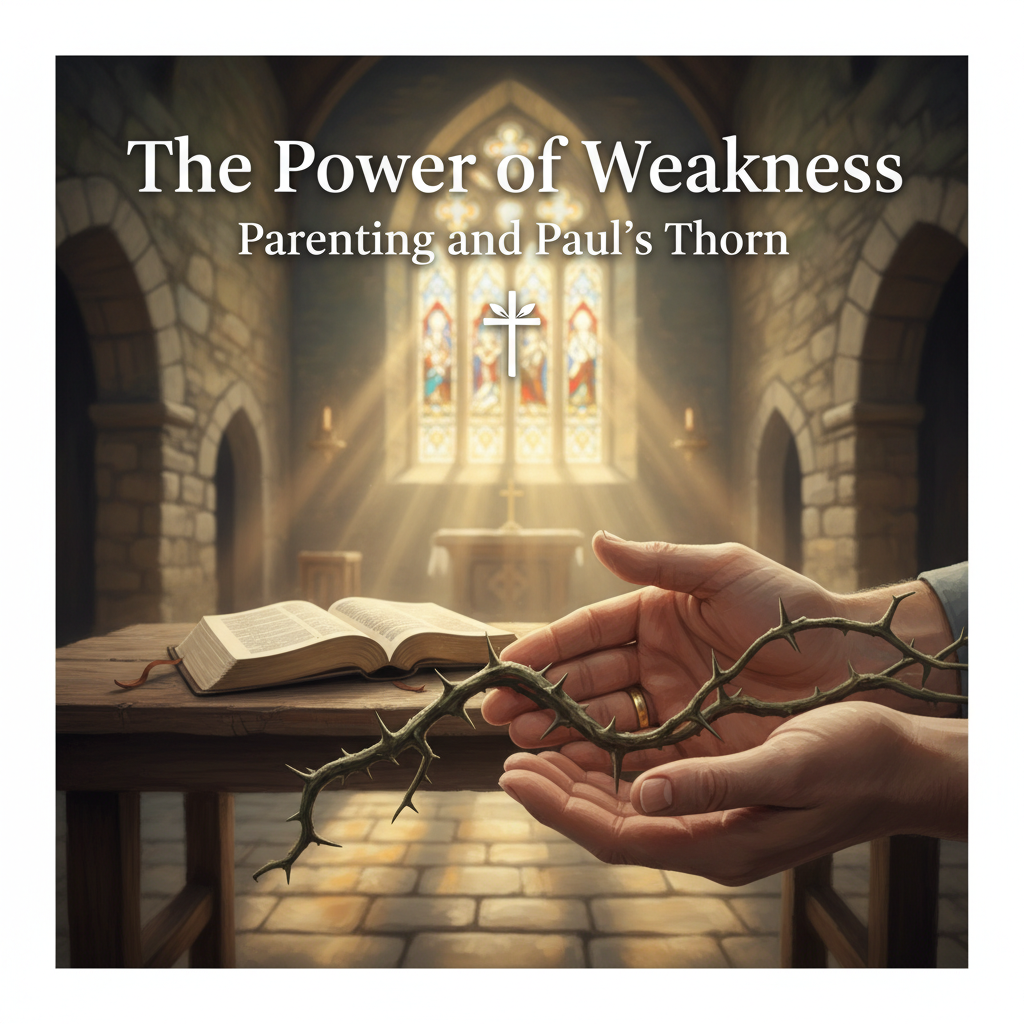
It’s in the dim corners of scripture where pain lingers like fog in an old cathedral that Paul pours out his heart in 2 Corinthians 12. He talks about this thorn in the flesh that wouldn’t go away no matter how hard he begged God. Even the greatest apostles dealt with weakness. God didn’t take it away. It’s a constant companion. The truth hits you differently when you sit with it in the quiet, gothic stillness of real life struggles.
As Paul describes it, he got caught up in paradise, saw things too sacred to repeat, and then this thorn came to keep him from getting proud. He pleaded three times for relief. Three times the answer wasn’t yes, or at least not the kind of yes we usually want. My grace is sufficient for you, because my power is perfect in weakness. It feels like candlelight flickering against stone walls, beautiful and a little haunting. Paul says he delights in weaknesses, insults, hardships, persecutions, and difficulties, because when he’s weak, he’s strong.
There’s no polished theology here. This is raw, honest talk from a man who planted churches while carrying secret pain. Chronic suffering. We all know someone who lives with it, or maybe we do. The thorns keep us near the cross, dependent on grace instead of our own strength, a body that aches every day, a mind that fights shadows, a situation that doesn’t seem to lift. But there’s a purpose behind them. They keep us close to the cross.
For examples of parenting that echo this same truth, let’s turn to the Bible. God often shows Himself as a Father who allows hardship to benefit His children. Think about how He handled Israel in the wilderness. God didn’t forget them, He just needed to teach them dependence, shape their hearts. In Deuteronomy 8, the Lord says He humbled them, let them hunger, and fed them manna so they would learn that bread alone doesn’t make you happy. Love doesn’t always mean removing every discomfort. Sometimes it means walking alongside them.
He who spares the rod hates his son, but he who loves him takes care of him. Discipline can feel like a thorn, a daily correction that stings. But it builds character. Hebrews 12 reminds us that our earthly fathers disciplined us for a short time as it seemed best to them, but God disciplines us so that we can be holy like him. In the beginning, all discipline seems painful, but when you’ve been trained by it, you’ll reap the peaceful fruit of righteousness. God models this for us. Because He sees the bigger picture, He doesn’t rush to get rid of every thorn in our kids’ lives.
When Jesus was with His disciples, he allowed them to face storms, and he allowed Peter to sink when he walked on water. These moments weren’t cruel. They were training grounds where faith grew stronger than fear. Paul’s thorn taught him to trust God. As parents, we sometimes watch our kids struggle with homework, friendships, health issues, or doubts, and we want to fix it right away. God invites us to pause and ask what grace He might want to show us in our weakness.
It’s like the father in the New Testament who brought his son to Jesus, desperate to be cured. The disciples couldn’t cast out the spirit. Jesus did, but only after the father admitted his own unbelief and pleaded for help. Seeing a child suffer made a father closer to God. The long nights praying over sick kids, the endless appointments, the fear that never goes away are something all parents go through. God sees those tears. While He doesn’t always remove the thorn right away, His presence is what really comforts us.
The apostle Paul teaches us how to deal with unanswered prayers in 2 Corinthians. Despite being pierced by the thorn, he kept serving, preaching, and pouring out love. That’s Gothic beauty in the faith. There are stained glass windows in our lives made from broken pieces, letting the light shine through in patterns we wouldn’t have thought of.
Hannah prayed bitterly for a child, pouring out her soul at the temple. God gave her Samuel, but she gave him back to the Lord. That surrender must have felt like a thorn, yet it birthed a prophet. God told Abraham to offer Isaac as a sacrifice after he waited decades for him. These are parenting moments carved in stone – walking up a mountain, raising the knife, total trust. A ram was provided by God, but Abraham’s obedience through suffering remained part of his story.
She held Him as a baby, then watched Him bleed on the cross. The angel told Mary that a sword would pierce her soul. No parent chooses that path, but she trusted. Her life shows that even the favored ones have thorns. God’s favor doesn’t mean a pain-free road. It means grace enough.
We can learn from Paul’s example by shifting our prayers. Instead of just asking for removal, we can ask for strength to carry the thorn with dignity. We can look for how Christ’s power rests on us in the middle of it. It’s good for parents to model endurance for their kids. They learn what living faith looks like when they see us pray through chronic pain, trust God with financial struggles, or forgive repeated hurts. It’s not pretending the thorns don’t exist. Admitting hurt while proclaiming God’s grace louder.
We don’t know exactly what Paul’s thorn was. Some think it was poor eyesight, others a chronic illness, others spiritual attack. We see our own struggles in the vagueness. Whatever you’re going through, Paul’s words fit over it like a heavy cloak. It might be depression that clings like ivy on an old stone. It might be a child with special needs that stretches you daily. It might be loneliness in ministry or marriage.
In actuality, God didn’t remove the thorn because if Paul had been superhuman, glowing with constant success, we’d worship him instead of Christ. The thorn kept the focus on Him. Sometimes we try to protect our kids from every failure, every bruise, but God allows His kids to face giants, prisons, and wildernesses so they can glorify Him. As a boy, David faced Goliath because he had already dealt with lions and bears. He trained his hands for war and his heart for worship with those smaller thorns.
Let’s sit with this truth casually, like friends talking in a candlelit church nave. Life hurts sometimes. Prayers don’t go as we expect them to. Paul begged God, and He answered with grace, not escape. That grace sustained him through beatings, shipwrecks, and sleepless nights. We can point to Paul when our kids ask why God doesn’t fix everything right away. We can read 2 Corinthians 12 together and talk about how God shows off most in weakness.
The passage ends with Paul content in his weaknesses. It’s not fake positivity. It’s hard-won trust. It comes from repeated nights of prayer where the thorns stayed, but the Savior stayed. Your kids will hear you preach contentment amid suffering the loudest way they’ve ever heard. They see how you deal with doctor visits, how you talk to difficult relatives, and how you pray on a tight budget. Moments like those plant seeds of resilience and faith deeper than any perfect day.
Joseph suffered betrayal and prison before saving nations. Jacob wrestled with God and walked with a limp afterward, a literal thorn to mark his encounter. Our limps can become the same as our thorns, visible signs that we’ve met with God in the dark places and come away changed.
It’s okay to have a thorn today. Paul did. Jesus carried the cross. Biblical parents had to walk hard roads with their kids. We don’t have to love pain, we just have to let Christ’s power rest on us. You can ask God to remove it, yes, three times, ten times, a hundred times, but when he says grace, lean in. Let the weakness make room for strength that’s not yours.
This is the Christian gothic reality. Beauty born from brokenness. Light that shines only because of surrounding shadows. Paul’s thorn reminds us that our stories are still being written, and the Author knows just how much pressure we can handle. Through the very things we wish would go away, He’s building something eternal in us and in our kids.