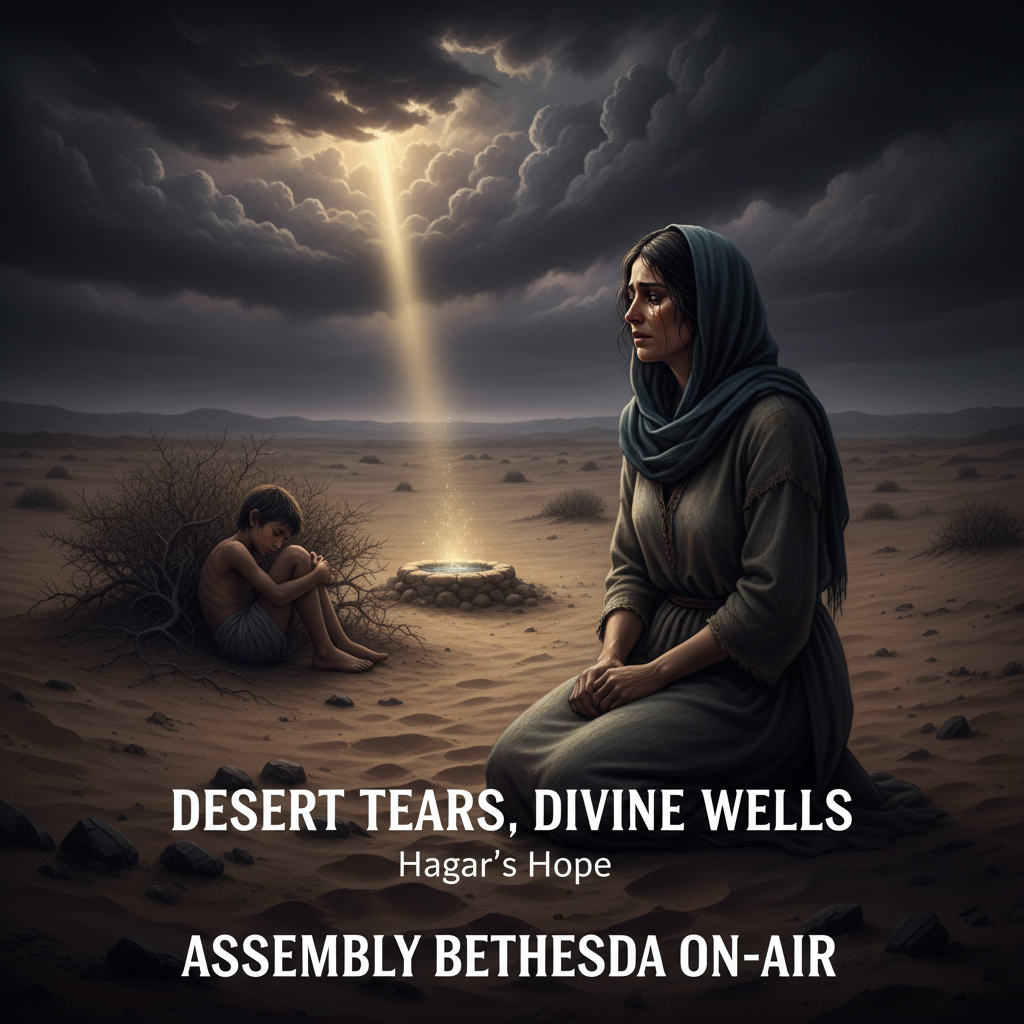
In the ancient sands of scripture we find a story that feels heavy with shadows and sorrow. Ishmael and Hagar are sent away from their only home. Eventually, the water runs out. Abraham makes the painful decision and they move into the wilderness with nothing more than a skin of water and some bread. So the mother walks away and leaves her child under a bush so she doesn’t have to watch him die. Her cries are raw and broken. At this point, abandonment feels complete, death seems certain, but God steps in with eyes that see and ears that hear.
Imagine it in Gothic style. The endless dunes stretch out like a cathedral of sand. The wind whispers accusations through the dry air. Once a servant, Hagar now walks as an outcast carrying promises and conflicts that aren’t her own. Ishmael, once a boy who laughed and played, is now weak with thirst. In the forgotten chapel, despair hangs thick like incense. Heaven has other plans than theirs.
This account from Genesis 21 hits hard because it doesn’t rush past the pain. It lets the rejection sit there in full view. Sarah demands they leave. Abraham obeys after God talks to him. There are only a few supplies and the desert is vast. Before long, the water is gone and reality sets in like a heavy stone. A mother watches her son fade. She can’t bear it, so she distances herself and weeps. The Gothic atmosphere wraps all around everything. There’s no help in sight. Just a mother and child facing certain death on dry cracked earth.
But right in the middle of the lowest point, God moves. An angel calls from heaven, and he speaks directly to Hagar. He says don’t be afraid. When he opens her eyes, a well of water appears. She fills her skin with water, gives it to her son, and life returns. God goes on and says Ishmael will be a great nation. From death comes a future. From abandonment comes divine attention.
Let’s sit with this casually for a while. When you run out of resources and your relationships break down, you know how it feels. Hagar didn’t ask for this wilderness journey. She got caught up in the complicated dynamics of that ancient household. Once a part of the family unit, she’s now faced with uncertainty with her child. The pain of that dismissal must’ve cut deep. The heat pressed down. Their thirst clawed at their throats. Every step forward felt heavier than the last. It’s not a polished story of quick victory. It’s a raw walk through despair.
We let the shadows grow long in Christian Gothic reflection so the light gets to break through more dramatically. The dunes grow taller and taller like towering cathedral bells. Hagar’s tears fall onto the barren ground. Her cries rise like prayers from a soul stretched to its limit. Ishmael struggles for every breath under a thin shade of a desert bush. Death is a constant threat. There’s no rescue party on the horizon. There’s no sudden rain. Just silence and heat.
A voice from heaven cuts through. God hasn’t forgotten them. He sees the suffering of the mother. He hears the weakening cry of the child. He sees provision in unlikely places. A well of water right there in the wilderness. Hagar couldn’t see it before because despair clouded her eyes. Divine intervention opens her eyes and changes everything.
Even when people cast us out, even if supplies fail, and hope seems hopeless, the Lord still cares for us. He doesn’t abandon the abandoned. Hagar, an Egyptian servant, gets direct care from heaven. Although Ishmael isn’t the main promise, he still falls under God’s protection and gets his own word of future greatness. Grace doesn’t stop at human plans.
As we continue through the story, we see them rise from that low place. Hagar lifts her son. She gives him water. They drink deeply and strength returns. It says in the Bible that God was with the boy as he grew. He became an archer and lived in the wilderness. Hagar finds him a wife in Egypt from her own people. After the exile, the line of Ishmael grows into nations just as he said. God keeps His word in the dry and hard times.
The Gothic Christian narrative raises dark spires like dark spires with themes like abandonment by people, never God. Depletion of every natural resource met by supernatural provision. A mother’s love tested to its limit and then upheld by divine compassion. Blinded by tears and fear, eyes were suddenly opened to see help that was already there. There’s something ancient and deeply relevant about this story.
Almost like a living character, the desert tests them mercilessly. There are no landmarks to guide them, no friendly faces to greet them. Just vast empty spaces and burning sun. Every little mercy shines brighter in such a place. It doesn’t just refresh you, it shows God’s never-ending attention. When heaven intervenes, nothing is truly hopeless.
A dusty sky and fading light adds to the atmospheric detail. Hagar’s robes are torn and dusty from her journey. Her face is marked by exhaustion and grief. Ishmael lies little and vulnerable beneath the sparse bush. The skin lying useless on the ground. A sudden heavenly voice changes everything. It seems like the light shifts. Hagar looks up. She runs to the well. After the terrible silence, the sound of water filling the skin must have been like music. They both feel relief. They drink. Their bodies revive. Their spirits lift. The journey continues, but this time with a new perspective.
It’s a good reminder that we can trust in the same ways today. When life gets tough, when relationships end or resources go away, we can remember Hagar. We can cry out like she did. We can wait for God to open our eyes to wells we didn’t see before. God meets His people in barren places again and again and brings life to them. Think of the Israelites wandering. Think of Jesus facing temptation in the wilderness.
As a matter of fact, this story reminds me not to rush past hard emotions. Rejection is okay. Weeping when a child suffers is normal. Fearing the end of supplies when supplies run out is natural. Genesis 21 doesn’t shame those feelings. It shows them honestly and then shows God responding with kindness. He doesn’t scold Hagar for her tears. He comforts her. He provides. He promises.
The Gothic heart of this tale beats strongest in the contrast. Deep shadows and sudden divine light. Complete weakness matched by heavenly strength. A mother expecting death now leading her son forward with renewed life. The opposites stir the soul and deepen our worship. They remind us that God turns places of despair into testimony.
The narrative closes in this chapter with Hagar and Ishmael moving forward. They don’t go back to the original household but they don’t die. God is there for them. The promises stand true. It gives the story a quiet strength. Even after they’re gone, they’re not forgotten. Despite running out of water, they still find food.
Take heart if you’re in a desert season, friends. The same God who saw Hagar sees you. The same God who heard Ishmael hears your cries. It’s the same God who revealed the well that can open your eyes to provision in unexpected places. Lift your voice. Don’t be afraid to weep. Then listen for the heavenly voice still talking to you.
As a Christian Gothic reflection on abandonment and rescue, Genesis 21 stands out. It shows the pain in full color. It shows the deliverance with the same honesty. Mother and child sent into the wastes. Water gone. Death is approaching. Heaven intervenes. Eyes open. Water flows. Life continues. God is faithful.
The account leaves us with hope that endures beyond the desert. Promises outlast the pain. Divine sight overrides human despair. We discover the light of being seen by God Himself in the shadows of rejection. Trust and courage can help us get through our own hard times.