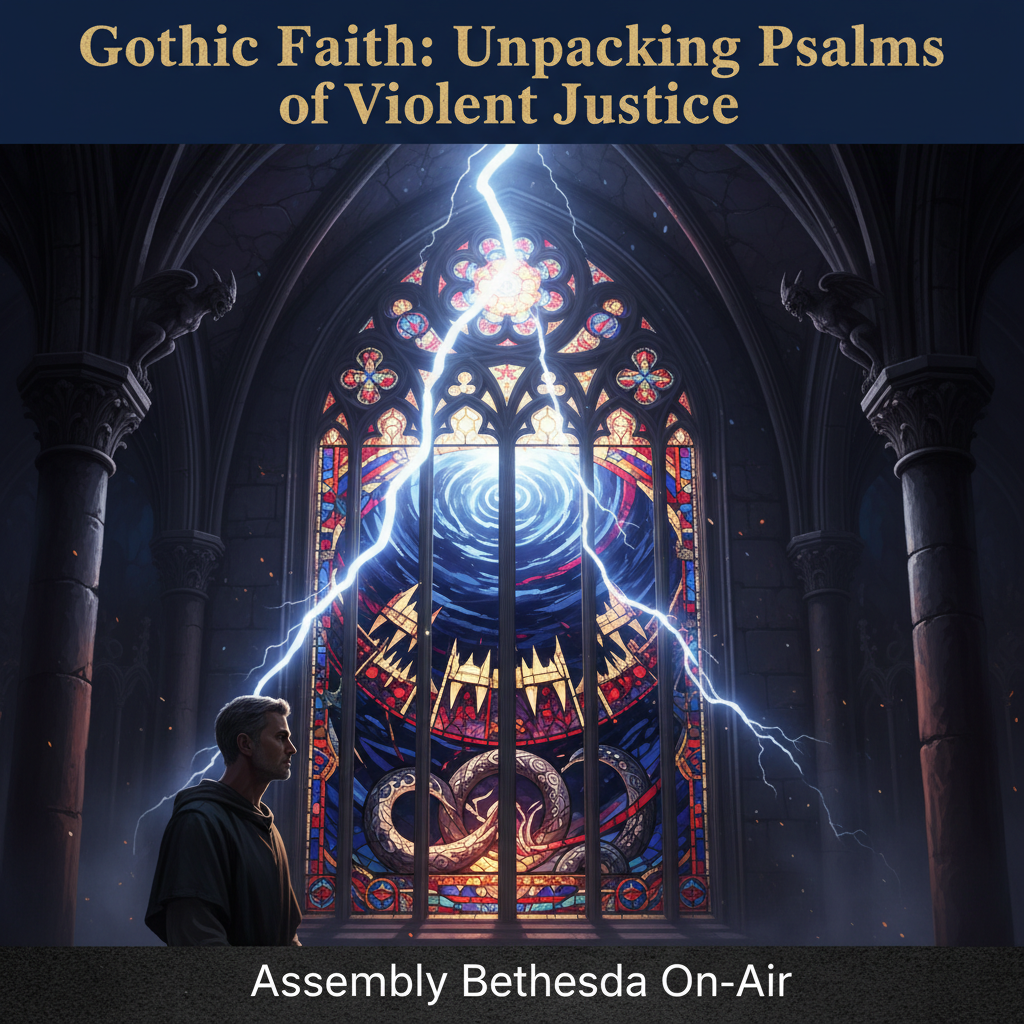
A dim glow of candlelight and the whisper of ancient stone walls reveal some of the Bible’s most intense moments. Psalms 58 and 83 stand out like jagged shadows on a moonlit graveyard. You’re asking God to step in with real force. Break the teeth in their mouths. Make enemies melt like melting slugs or turn them into nothing more than dung on the ground. Destroy them violently so justice can return. These psalms speak directly to that gothic corner of the soul where darkness and divine power collide. They remind us that God doesn’t ignore the pain of His people. He hears and He acts.
The writer starts by calling out rulers who twist justice. They talk smooth, but their hearts brew violence. From birth, the wicked spread lies like venom from a snake that won’t listen. Then comes the bold request. Break the teeth in their mouths, O God. Lord, tear out those lion fangs. It’s like raw power being stripped away. No more biting, no more tearing. Next lines paint even starker images.
When they draw the bow, let their arrows fall short. Let them disappear like water that flows away. Let them disappear like a slug that melts away as it moves, like a stillborn child that never saw the sun. The wicked will get swept away before your pots can feel the heat from the thorns, whether they’re green or dry. The righteous will rejoice when they’re avenged, when they get drenched. People will say, surely the righteous are rewarded, surely God judges the earth.
This is gothic faith at its core. It’s like it belongs in a crumbling cathedral lit by lightning. Teeth shattered like stained glass, fangs torn out so the predators become harmless. In the end, the wicked melt away, leaving only a trail that fades away into the night. It’s not pretty, but it’s beautiful. It proves that evil doesn’t win forever. Light breaks through the storm when God steps in. In our own dark seasons, when lies and violence seem to rule, these words give permission to cry out honestly. We don’t have to pretend everything is fine. We can ask the same God who created the stars to take down the systems that crush us.
In Psalm 83, the prayer is about a whole alliance of enemies. God don’t stay silent, don’t turn a deaf ear, don’t stand aloof, God. Watch your enemies growl, watch your foes rear their heads. They plot against your people, against your loved ones with cunning. Come, let’s destroy them as a nation, so Israel’s name won’t be remembered anymore. The list goes on, united in hate. A call to action echos past victories.
Do to them as you did to Midian, just like you did to Sisera and Jabin at the river Kishon, who perished at Endor and became like dung. Make their nobles like Oreb and Zeeb, all their princes like Zebah and Zalmunna, who said, Let’s take over the pasturelands of God. Make them like tumbleweed, my God, like chaff before the wind. Just like fire consumes the forest or a flame sets the mountains ablaze, so pursue them with your storm and terrify them with your tempest. Lord, cover their faces with shame so they’ll seek your name. May they be ashamed and dismayed, may they perish in shame. Let them know that you alone are the Most High.
Those fierce gothic edges again. Enemies reduced to dung, scattered like forgotten refuse after a battle. Tumbleweed rolls through empty fields, chaff blowing away in the wind, forests set on fire. Almost as if it came out of a dark romantic painting, with swirling clouds and crumbling ruins. Yet this violence serves a purpose. It aims to bring God’s name to light, so even the enemies can seek Him.
The goal is to recognize the Most High, but they are covered in shame. As a gothic Christian, darkness serves the light. Decay prepares the soil for resurrection. These psalms don’t celebrate cruelty for its own sake. Because only God can judge with perfect justice, they trust God alone to win the battle.
Together, Psalms 58 and 83 form a powerful pair. One focuses on wicked leaders who need to be broken, while the other zooms out to national threats. They both use vivid, almost shocking images: teeth, fangs, dung, melting slugs, raging storms. These verses feel uncomfortable in a world that often prefers polite faith. They crash through the Gothic manor house like thunder, yet they belong right at the core of our faith.
These cries for violent intervention are found in the same Bible that gives us the gentle shepherd in Psalm 23. They teach us that God is not distant or weak. He is the Lion whose roar shakes the foundations.
This is how we deal with injustice, lies spread like venom, and the powerful plot against the vulnerable every day. The gothic beauty here is the honesty. We don’t take revenge ourselves. We hand it over. We ask God to break what needs breaking and scatter what needs scattering. Faith doesn’t have to be tidy. It can be bloody and raw, just like the cross itself. In Him, even these fierce prayers find answers. Death’s teeth were broken at the empty tomb. God’s enemies were scattered like chaff by the wind of resurrection.
Yet the psalms don’t end with despair. The righteous rejoice because they see God’s reward. The nations learn that the Lord alone is Most High. Gothic Christianity loves this redemptive thread. We walk around graves, but we know they’re empty. We see the fangs and the dung, but we trust the Gardener who transforms decay into new life. These two psalms invite us deeper into it. Their words remind us that God’s justice, no matter how fierce, always serves His love.
If you sit with these words, let them echo through your heart. Let the images of shattered teeth and scattered foes stir something honest within you. Then raise your voice like the psalmists did. Ask the God who judges the earth to act in your shadowy corners too. Because in the Gothic cathedral of faith, every broken piece becomes part of a greater glory. Light shines brightest where darkness once ruled. That’s our hope.