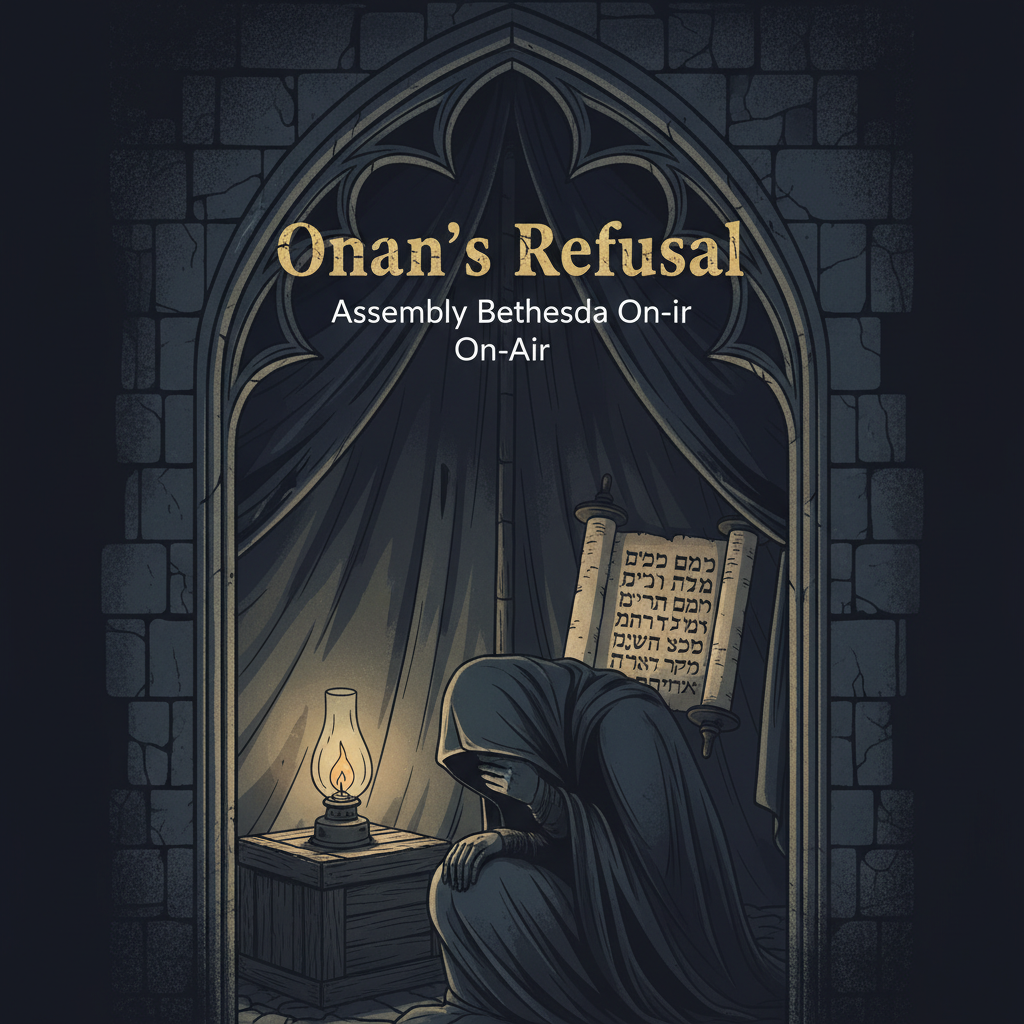
There’s a story that’s been twisted and turned by modern eyes in the shadowy corridors of scripture, where light and darkness dance in eternal tension. The story is about Onan in Genesis 38. You’ve probably heard the phrase spilling his seed in conversations about morality, but let’s take a closer look at what’s going on here. This isn’t just an account of personal habits.
The book is a deep look at duty and refusal, and God’s power in the face of failure. And for those of us who walk the Gothic Christian path, it resonates with that deep, melancholic beauty where sorrow meets hope, where the black of night gives way to the promise of dawn.
The scene is set. Judah has left his brothers and built a life in a new place. He marries a Canaanite woman, and they have three sons, Er, Onan, and Shelah. It says in the Bible that Er took a wife named Tamar, but God took him because he was wicked in the eyes of God. Judah told his second son, Onan, to visit the widow of his brother. The command is clear. It’s Onan’s duty to raise up offspring for his dead brother, keeping the family line from being erased. He’s supposed to marry Tamar and raise offspring for Er.
Onan agrees to go in with Tamar, but his heart isn’t in it. According to the text, Onan knew the offspring wouldn’t be his. So whenever he went in with his brother’s wife, he spilled his seed on the ground to avoid giving offspring to his brother. God put him to death for this act, which displeased him even more.
This is where misinterpretation creeps in like fog over a graveyard. Today, people take this passage out of context to condemn things like certain personal moments or birth control. People say, see, spilling seed is a sin that brings death. But if you sit with the text, if you read it in the flow of the chapter and the culture of the time, you see the issue wasn’t the method. It was the motive. Onan wouldn’t honor the levirate duty. Using Tamar for his own gratification and ignoring his family was a defiance against the command to provide for his brother’s legacy.
This levirate custom wasn’t some weird rule. It was part of how families survived in ancient times. Without a son to carry on the name, a widow could be left destitute and her line may die out. It’s explained more in Deuteronomy 25. The widow can publicly shame the brother if he doesn’t. But God intervenes directly here because the refusal is so blatant, and the selfishness so complete.
As Gothic Christians, we love these stories because they do not shy away from the dark. The image of seed spilled on the cold ground, wasted in the dust, paints a picture of potential lost, duty shirked in the shadows. We wear the veil, black clothing that honors suffering and death while also pointing to resurrection. Even though two sons are gone, God doesn’t abandon Judah, so Onan’s story is a warning. Later, Tamar takes matters into her own hands by disguising herself, securing the family’s continuation through Judah himself. From him come Perez and Zerah, and eventually the kings of Israel.
The heart of the matter is obedience in the face of personal cost. Onan went through the motions, but he withheld something that would have honored his brother and obeyed God. We’re all guilty of that same refusal in our own lives. We show up for the easy parts of faith, but we hold back when duty calls for sacrifice of comfort or preference. Gothic Christians don’t run from this truth. We sit with the weight in candlelight and let it press on our skin like black lace. We feel the melancholy of judgment, and we surrender.
The same chapter that records Onan’s death also records the birth of the line that leads straight to the cross. God’s justice is swift and final, but it doesn’t cancel His bigger plan. That’s what makes Scripture Gothic. We don’t have to pretend the story is neat. Darkness is always the canvas on which redemption is painted in bold, blood-red strokes. We can call the refusal what it was, selfish and destructive, and still marvel at how God weaves even failure into glory.
The passage invites believers today to examine their hearts. Do we fulfill our duties, or do we spill our efforts on the ground because the outcome doesn’t feel like it belongs to us? No matter where you live, whether it’s in family, church, or in the quiet corners of daily obedience, the call is the same. Stand up, no matter what the shadows say. It’s the same God who struck Onan that raises the dead. Even when the shadows feel heavy, he’s still writing the story, still turning mourning into morning.
When we read Genesis 38 through Gothic eyes, we find a faith that’s honest about the grave and hopeful about the garden beyond it. Onan refused the call, and death followed. Tamar pressed through the refusal, and life emerged. Every one of us who loves the darkness and beauty of the cross lives under that tension. We wear the black, we light the candles, and we sing the minor keys, and we declare duty embraced in the night becomes the seed of eternal day.