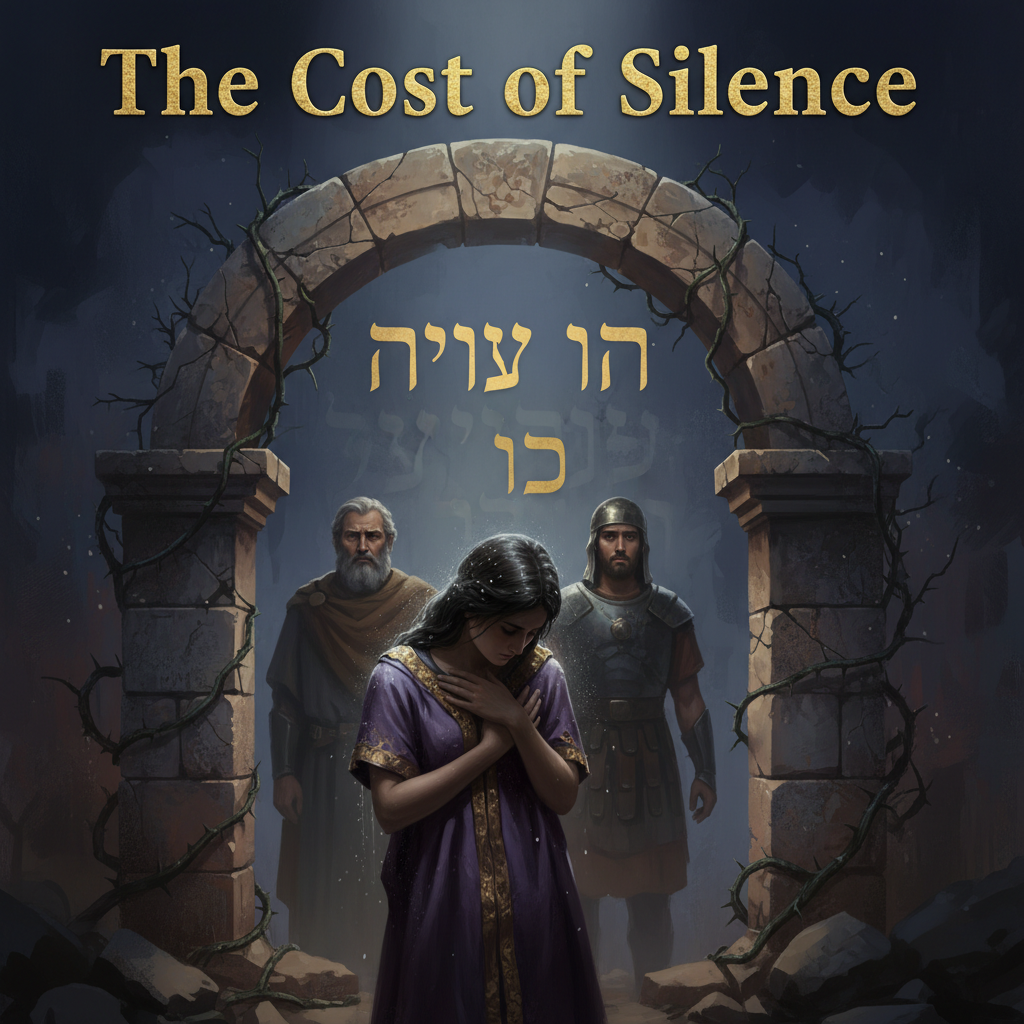
A story unfolds in ancient Israel under King David, full of forbidden desires, betrayal, and bloody revenge that feels like it’s from a Gothic novel. It’s in 2 Samuel 13, where David’s oldest son Amnon gets obsessed with Tamar, and things spiral out of control.
There’s nothing we hear about it in Sunday school, but it hits hard because it’s honest about sin, broken families, and the consequences that ripple out like stones in a dark pond. Let’s walk through this chapter like friends sitting in the shadows, unpacking what happened, why it matters, and how it echoes Gothic themes like decay, hidden evil, and unchecked passion.
Here’s a picture of King David’s family. After all the victories and the psalms, his household starts to go bad. Amnon, the firstborn, sees Tamar, his beautiful sister from another mother, and he can’t stop thinking about her. In the Bible, they say he loved her, but it’s that kind of love that turns into lust that consumes him. He gets so lovesick he lies around all day thinking about her, and he makes himself ill.
That’s where his cousin Jonadab comes in, a crafty guy who notices Amnon moping and suggests a sneaky plan. It sounds harmless enough on the surface, like a caring sister helping her brother, but it’s all a setup for something much darker, “Pretend you’re sick, and ask your father David to bring Tamar over to cook for you and feed you.”
After Amnon follows his advice, King David sends Tamar to his house. She arrives, kind and diligent, kneading dough, baking cake, trying to heal him. But when the moment comes, Amnon grabs her and says, “Come to bed with me, my sister.” Tamar pushes back. She begs him not to do this disgraceful thing, telling him it would be a wicked act in Israel, something that would make her ashamed and make him look foolish.
She even suggests he talk to the king, saying David might allow them to marry since they’re half-siblings, but Amnon doesn’t like that. He becomes violent. He overpowers her, rapes her, and then, the Bible tells us, his “love” turns to hatred, stronger than the lust. He calls his servant and gets Tamar thrown out, ending her shame.
When Tamar leaves, she tears her ornate robe, the one virgin daughters of the king wore, puts ashes on her head, and walks away crying loudly. Her brother Absalom sees her cry loudly. In his heart, Absalom hates Amnon for what he did to his sister and tells her to stay quiet for now and live in his house. He tells her to stay quiet and live in his house, but inside, he’s filled with cold fury.
After two years, Absalom waits, letting his anger simmer like a Gothic storm building on the horizon. He then throws a big sheep-shearing feast and invites all the king’s sons. He specifically asked David to let Amnon come too. He hesitates a bit but agrees. Absalom tells his servants, “Strike Amnon down!” They kill him right there, and the brothers flee in terror on their mules.
At first, it seemed like all his sons were dead, which crushed David, then he learned it’s just Amnon. Absalom leaves for Geshur for three years, and David grieves for both his dead son and his exiled son. As grief hangs over the palace, the family fractures even more. It’s a cycle of sin begetting more sin, lust leading to rape, rape fueling murder, and it exposes the cracks in David’s own house.
This story hits because it’s so unflinchingly real. The Bible doesn’t sugarcoat the evil in David’s family. Amnon’s crime is brutal and selfish. He ignores Tamar’s pleas and tramps on her dignity. There was once a time when a woman’s honor was tied to her virginity and reputation, but Amnon left Tamar desolate, living in her brother’s house as a widow. Absalom’s revenge seems almost understandable in a way, but it just piles on more blood and pain. And David?
When he hears about the rape, he doesn’t do much. The text says he was furious, but there’s no record of him punishing Amnon or comforting Tamar. That inaction leads straight to Absalom’s rebellion.
It’s full of Gothic vibes. Think crumbling castles, forbidden love that turns to horror, family secrets that ruin everything. David’s palace becomes haunted. The robe Tamar wears gets torn, symbolizing lost innocence. It’s all dramatic and visual, like scenes from a dark romance novel. Ashes on her head, public weeping, Absalom’s long wait for revenge builds tension until it turns deadly.
Even the way the brothers scatter on mules under the moonlight makes it seem chaotic. Casually, this chapter reminds us that even the greatest kings and families aren’t immune from human brokenness. David, the man after God’s own heart, made a mistake with Bathsheba, and his kids are doing the same. The consequences of sin don’t stay contained, they leak out and infect the next generation.
Seeing Tamar cry out is a powerful moment, showing how victims suffer in silence or get told to hush while the world goes on. Absalom’s cold calculation shows revenge feels satisfying in the moment, but it doesn’t heal the wound, it just creates new ones. Let’s delve deeper into the casual flow of the narrative, and take a moment to think about Tamar’s perspective.
As she begins the day, she’s probably excited or at least willing to help her brother. By the end, she’s violated, discarded like trash, and forced to live alone. The Bible calls her “desolate” after that, a word that carries so much weight, like a Gothic heroine locked in a tower mourning what was stolen from her.
It’s a logical and desperate plea to Amnon: “Don’t do this wicked thing. It’s wrong for Israel to do such a thing, don’t do it. Where could I go with my shame? You’d be like one of the wicked fools in Israel.” But his lust blinded him and his power made him think he could get what he wanted. Amnon’s turn from “love” to hate is classic in these dark tales. He can’t stand seeing her after the act.
It’s as if the object of his obsession becomes a mirror reflecting his own guilt, so he pushes her away violently. The servant tosses her out, bolts the door, demonstrating how desire can turn into disgust in a matter of seconds. In a Gothic sense, it’s like the monster in the attic finally revealing itself, only to reject its own creation. Absalom plays the protective brother, but his protection turns vengeful. He doesn’t rush in with immediate justice.
The sheep-shearing festival makes a perfect setting for Gothic drama, a seemingly joyous event in the country that masks murder. He lets two years pass, perhaps to let David cool off or to plan carefully. It’s calculated, almost ritualistic, converting a family gathering into a bloodbath. Absalom tells his men to wait until Amnon’s heart is merry with wine, then strike.
King David’s reaction adds another layer of tragedy when the other sons hear the news and flee. Messengers race with garbled reports that amplify the horror. It was his earlier passivity that contributed to the mess. David knows the sword won’t leave his house once Nathan the prophet confronts him about Bathsheba and Uriah. That prophecy was fulfilled by this event.
The family tree, once strong under God’s blessing, now branches into thorns and shadows. This story fits right into the Gothic tradition of exploring the dark side of humanity without getting too stuffy. Despite the darkness, there’s a quiet truth that God sees it all. It’s about forbidden attractions, incestuous undertones, rape used as a tool of power, revenge that consumes the avenger.
The Bible records these events not to glorify them, but to show the reality of life under sin’s curse. Even in David’s flawed reign, God’s redemption plan marches forward, pointing ultimately to a better King who would handle sin better. When you’re reading 2 Samuel and come across this chapter, it might shock you. Why included such a graphic story? Because the Bible is honest about life. Heroes aren’t perfect in the Bible.
Those people chose to do things their own way, not because God failed, not because God failed. Amnon chooses lust over love. Tamar suffers innocently. Absalom kills instead of forgives. David chooses inaction at crucial moments. There’s a Gothic feel to the palace, which makes it feel like a prison of regrets. Let’s talk more about revenge. Absalom hates Amnon not just for brotherly protection, but for personal reasons, too. Since Tamar’s full sister, Absalom hates Amnon not just for brotherly protection.
According to the text, Absalom never spoke harshly or nice to Amnon after the incident, just let the silence build. After the feast, Amnon is dead, and Absalom becomes a fugitive. He’s in exile for three years, and when he returns, it sets up his eventual coup against David. In the end, revenge breeds more rebellion and death. Tamar’s desolation stands out the most.
The princess couldn’t just move on and marry someone else in that culture. Her future and virginity were gone, so she lives in Absalom’s house, a shadow of the vibrant princess she was once. It’s a reminder that sexual sin doesn’t just affect the moment, it scars lives forever. Broken families, unreported abuse, and cycles of violence are all echoes of this story in today’s world.
The Gothic lens makes it vivid: imagine the palace halls echoing with Tamar’s cries, blood staining the floor, David’s throne room heavy with unspoken grief. It’s dramatic, almost theatrical, but it’s rooted in history. As we wrap up this section, notice how the story doesn’t end neatly. The narrative style in 2 Samuel is straightforward but loaded with emotion, letting the events speak for themselves. Absalom’s return and later events show how it’s lingers.
David’s family never fully recovers the unity it might have had. Sin’s consequences haunt the living like ghosts in a Gothic mansion. This tale from 2 Samuel 13 is a stark warning. It shows the destructive power of unchecked desires, the pain of violation, the futility of vengeful justice, and the importance of righteous leadership in the home.
Ultimately, God’s light breaks through in the larger story of Scripture, offering hope beyond human failure.
A story unfolds in ancient Israel under King David, full of forbidden desires, betrayal, and bloody revenge that feels like it’s from a Gothic novel. It’s in 2 Samuel 13, where David’s oldest son Amnon gets obsessed with Tamar, and things spiral out of control.
There’s nothing we hear about it in Sunday school, but it hits hard because it’s honest about sin, broken families, and the consequences that ripple out like stones in a dark pond. Let’s walk through this chapter like friends sitting in the shadows, unpacking what happened, why it matters, and how it echoes Gothic themes like decay, hidden evil, and unchecked passion.
Here’s a picture of King David’s family. After all the victories and the psalms, his household starts to go bad. Amnon, the firstborn, sees Tamar, his beautiful sister from another mother, and he can’t stop thinking about her. In the Bible, they say he loved her, but it’s that kind of love that turns into lust that consumes him. He gets so lovesick he lies around all day thinking about her, and he makes himself ill.
That’s where his cousin Jonadab comes in, a crafty guy who notices Amnon moping and suggests a sneaky plan. It sounds harmless enough on the surface, like a caring sister helping her brother, but it’s all a setup for something much darker, “Pretend you’re sick, and ask your father David to bring Tamar over to cook for you and feed you.”
After Amnon follows his advice, King David sends Tamar to his house. She arrives, kind and diligent, kneading dough, baking cake, trying to heal him. But when the moment comes, Amnon grabs her and says, “Come to bed with me, my sister.” Tamar pushes back. She begs him not to do this disgraceful thing, telling him it would be a wicked act in Israel, something that would make her ashamed and make him look foolish.
She even suggests he talk to the king, saying David might allow them to marry since they’re half-siblings, but Amnon doesn’t like that. He becomes violent. He overpowers her, rapes her, and then, the Bible tells us, his “love” turns to hatred, stronger than the lust. He calls his servant and gets Tamar thrown out, ending her shame.
When Tamar leaves, she tears her ornate robe, the one virgin daughters of the king wore, puts ashes on her head, and walks away crying loudly. Her brother Absalom sees her cry loudly. In his heart, Absalom hates Amnon for what he did to his sister and tells her to stay quiet for now and live in his house. He tells her to stay quiet and live in his house, but inside, he’s filled with cold fury.
After two years, Absalom waits, letting his anger simmer like a Gothic storm building on the horizon. He then throws a big sheep-shearing feast and invites all the king’s sons. He specifically asked David to let Amnon come too. He hesitates a bit but agrees. Absalom tells his servants, “Strike Amnon down!” They kill him right there, and the brothers flee in terror on their mules.