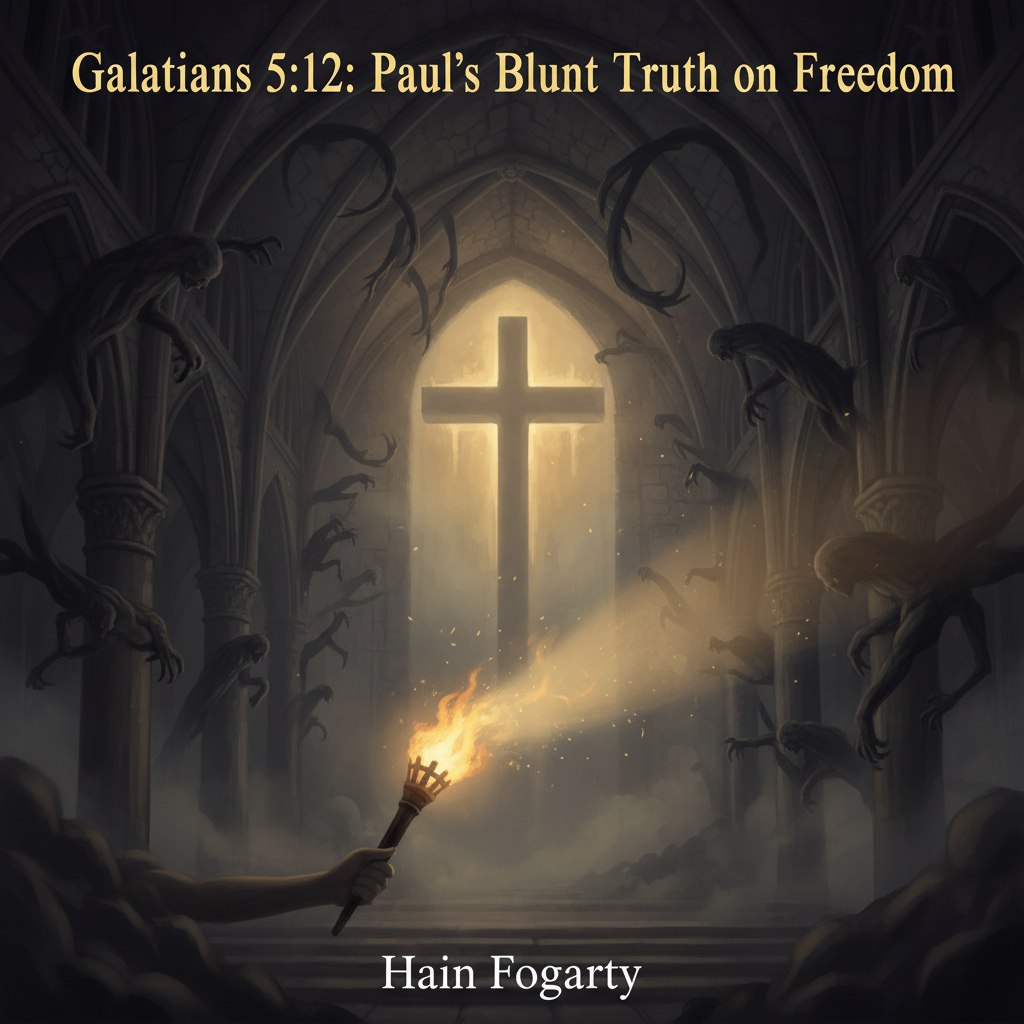
In the flickering candlelight of an old stone chapel where shadows cling to the walls like forgotten sins, we turn to Galatians 5:12 and feel the weight of Paul’s words hit us like a cold wind through cracked stained glass. Paul wants the agitators to go all out and emasculate themselves. This is raw, it’s fierce, and it cuts right through the comfortable fog that sometimes settles over our faith. You won’t find fancy robes or polite smiles here, just the unfiltered heart of a man fighting for the gospel in a world that wants to enslave you.
As you know, Galatians unfolds like a letter written in haste in a storm. The churches in Galatia had welcomed Jesus with open arms, but then these outsiders slipped in, stirring trouble. Faith alone wouldn’t do. You had to follow the old rules, starting with circumcision, or you weren’t part of the family.
Paul calls them agitators because that’s exactly what they were, troublemakers who twisted grace into something heavy and burdensome. And in chapter 5 he has already laid out the beautiful truth of liberty in Christ, how we can be free from the law that could never save us. It’s like a thunderclap in the dark when verse 12 hits. Paul says he wishes those pushing this cutting ritual would emasculate themselves. This is strong language, the kind that makes you pause and feel the intensity.
Think about the atmosphere of those early churches, where believers huddled together in dim rooms with the world outside pressing in. The agitators weren’t innocent questioners, they were actively pulling people back into bondage, insisting that Jesus plus something else was the real path. Paul sees the danger clearly. Adding even one rule to the finished work of the cross turns grace into a transaction, and a believer should never enter that dark place.
This isn’t just a joke; it’s a passionate cry to show that their demand is ridiculous and harmful. If they’re so into the knife, why not finish it, so no one gets misled? In a gothic setting, where light and shadow fight across ancient arches, the cross stands tall against the dark, it’s the kind of bold, unapologetic stand that feels right at home.
In a nutshell, this verse reminds us that the gospel doesn’t play nice with compromises. It’s free, it’s complete, and it doesn’t need to be improved. The light that Jesus brought is dimmed when people start adding requirements, whether they’re rules, rituals, or self-made standards. Paul’s not being polite here, he’s protecting the church like a guardian in the fog.
The agitators thought they were helping, but actually they were tearing down what Christ had built. It shows how seriously Paul took the purity of his message. No half measures, no gentle suggestions. The freedom of Christ is worth fighting for.
With this verse, we get a sense of its gothic heart. Imagine the scene, ancient scrolls unrolled by lamplight, Paul’s hand steady as he writes words that still resonate today. After we’ve been freed, the agitators represent every force that tries to bind us again. With one sharp sentence, Paul cuts it back like ivy on a crumbling cathedral wall that looks beautiful at first, but eventually chokes it out.
Circumcision was never the issue, but the heart behind it, the belief that human effort could add to what Jesus already achieved, that was the real poison.
Today we don’t have literal circumcision demands, but the spirit of agitators is alive whenever someone says you need more to be a believer. Paul’s words invite us to reject that shadow and stand in the full light of grace. It’s not about earning, it’s about receiving. There’s a gothic intensity to the verse that won’t go away. No personal stories here, just the plain truth of scripture showing us that sometimes speaking truth without filter is the most loving thing we can do.
The rest of Galatians 5 flows right into this moment, talking about how Christ set us free for freedom itself. Paul tells the believers to stand firm and not be burdened by slavery again. Paul flips the script and wishes they’d take their own advice to the extreme. The agitators want to glory in the flesh, to point to outward marks as proof of righteousness. His rhetorical punch leaves no doubt where he stands. Grace wins, law loses, and anything that tries to mix the two is called out.
In the imagery, imagine a gothic cathedral of faith, with tall spires reaching into the stormy sky, with incense and the weight of eternal things filling the air. In Paul’s letter, the cross glows faintly at midnight, and the only light is the cross. The agitators whisper their additions, but the apostle won’t let darkness win. He’s not being cruel, he’s just being clear. This exposes the emptiness of their teaching so everyone can see it for what it is, a dead end that leads away from Christ.
It’s easy to spend hours thinking about this verse, trying to figure out how it fits into redemption’s bigger picture. From the garden where humanity first chose its own way, through the law to show us our need, to the cross where everything was fulfilled. Galtians 5,12 reminds us that we don’t go back. We keep moving forward in freedom bought with blood.
Paul cared about these churches so much that he wrote with fire. We’re called to care the same way about the truth today.
Ultimately, this verse gives us a sense of awe at God’s protective love through his servant. Scripture silences the agitators, but their influence tries to rise again every generation. Paul’s words are a lantern in the Gothic night, guiding us back to the simple, powerful reality of grace alone. Let them sink in, let them stir your heart, and let them keep you walking in the light no matter what’s going on. It’s real, the cross stands, and the tomb is empty.