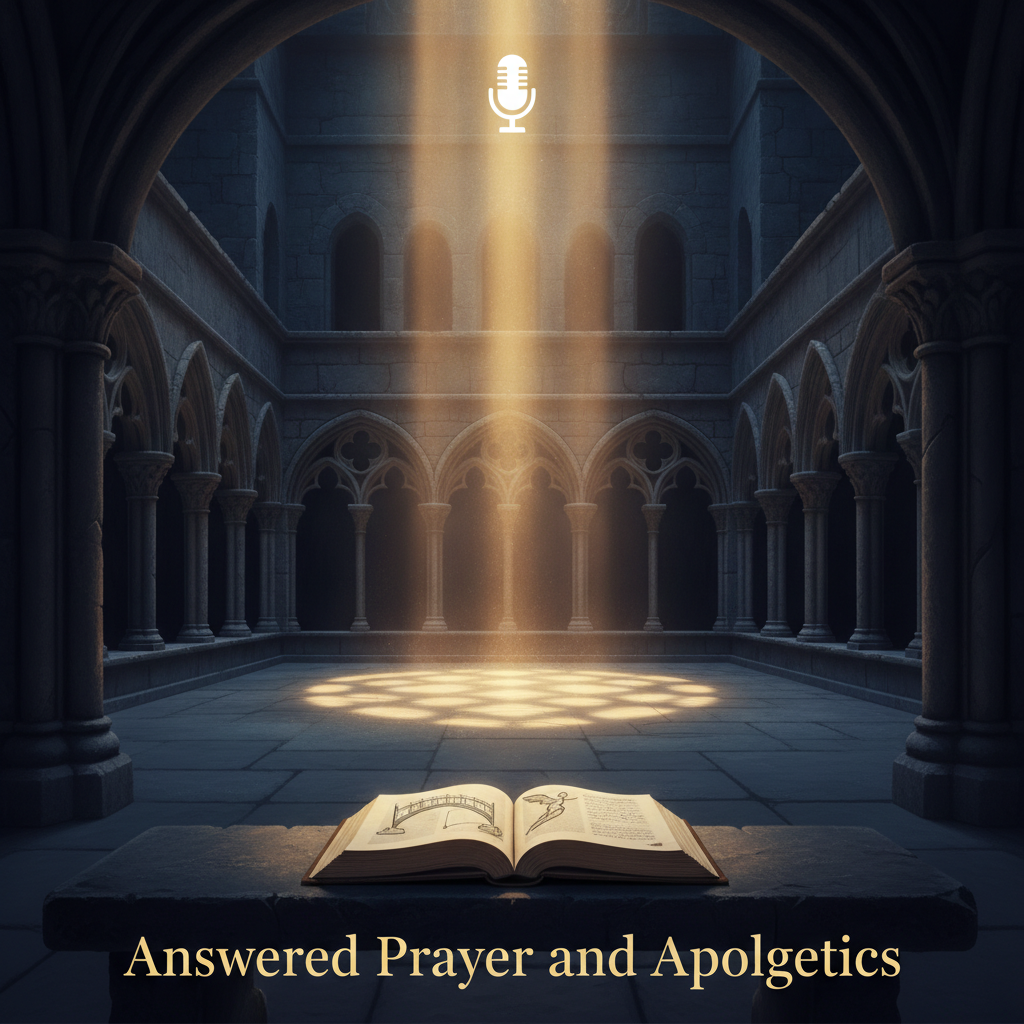
There comes a moment when the carefully stacked arguments about faith start to feel thin, like fog rolling through an old cathedral. Apologetics has its place, a solid stone floor beneath your feet. You’ve read the books, read the clever defenses, listened to the measured voices explaining why belief makes sense. The quiet dark stirs something deeper when a prayer is answered, when the request that hung in the air for so long gets a reply nobody could have predicted.
The answer to prayer doesn’t come with footnotes. It comes as a shift in the atmosphere, a door that was locked now standing open, a weight lifted from the chest that logic alone couldn’t get rid of. This is where the limits of apologetics get clear. It can clear the path of obstacles, remove the obvious doubts, prove that the Christian claim isn’t foolish. But it can’t make the heart feel close to the One who hears. In that nearness, prayer is answered, the Gothic arches of the soul fill with unexpected light.
Apologetics walks through long corridors of doubt with a lantern, showing you the carvings on the walls, the historical markers, the philosophical stuff. It’s a good, necessary thing to do. Those careful explanations have kept many from walking away. But when the answer comes, the corridor still echoes. What is the answer? It’s presence, not another argument. It’s the feeling of turning, listening, moving.
This tension has always been there in the Christian faith. The mind is invited to love God with all its strength, and the defenses of the faith honor that invitation. Yet the heart knows a different language, one that speaks the language of request and reply. Once the reply arrives, you can put away the books for a while. Not thrown out, never thrown out, but put back where they belong. They prepared the ground. Answered prayers are what make everything grow.
A downside to leaning too hard on defenses alone is that faith becomes a matter of winning debates instead of receiving a relationship. Gothic spirits know exactly what that means. Apologetics keeps the outer walls strong. Answered prayer opens the inner chambers, where the air feels different. Despite the shadowy beauty of the sanctuary, the flicker of candles against the stone, the sense that mystery isn’t an enemy of truth but its deeper room, it loves it.
You pray when it looks like everything’s set in stone, when it seems as though there’s only one way to go, and then the shift happens. Sometimes it’s not dramatic. Sometimes it’s a slow turn, a conversation that softens, a closed door that’s no longer closed, a peace that just happens. You can’t manufacture peace with clever reasoning. You can only point in the right direction. We get to know God through prayer.
A faith that doesn’t allow for questions will grow brittle. The defenses matter. They keep the community safe from shallow critiques and easy dismissals. But they’re only secondary. They’re like scaffolding. Whenever the scaffolding gives an answer to the living God, it’s done its job and you can step back. The living structure is the ongoing exchange between the believer and the living God.
It’s got both the weight of stone and the lift of light. The Christian Gothic imagination doesn’t pretend the world is always bright. It knows the long nights, the unanswered stretches, the seasons when the ceiling seems made of lead. Because of that, answered prayers carry a special weight. You receive it as a gift, evidence that the conversation is real, that the One on the other side isn’t just a projection of human need.
Apogetics can describe God’s character. It can gather the testimonies of history and make the claims coherent, but it can’t replace being heard. Those experiences belong to prayer. When the answer comes, it has its own authority. It doesn’t need to be argued into existence. It just happens. People who know it walk differently afterward, not because the arguments have suddenly become more airtight, but because the relationship has been confirmed in the only way that matters.
The mind is a gift, and it’s good to use it well, but the mind is not the whole. The heart, the will, the capacity for trust and request are all part of the image of God. Answered prayer engages all of them. Apologetics focuses on the mind, but prayer focuses on the whole person.
In the quiet of a dimly lit chapel, or in the ordinary room where a person kneels beside a bed, the distinction becomes obvious. The books stay on the shelf. The arguments remain available if they’re needed. But the living conversation continues. When the answer arrives, it doesn’t need to justify itself against every possible objection. It just gets there, and the soul knows.
The knowing doesn’t erase every struggle. Faith still walks through valleys. Questions still come up. Just now the questions come up in a relationship that’s already proven capable of answering them. It’s not that apologetics is weak; it’s that the defenses only go so far. Beyond them lie the territory of answered prayer, where Gothic shadows give way to a light that could not be produced by argument, only received.
You’re invited. Keep reading and thinking. And keep praying. When the answer comes, let it remind you that the One who listens isn’t an idea that needs to be defended, but a presence that needs to be known. By knowing the limits, you start seeing the bigger picture.