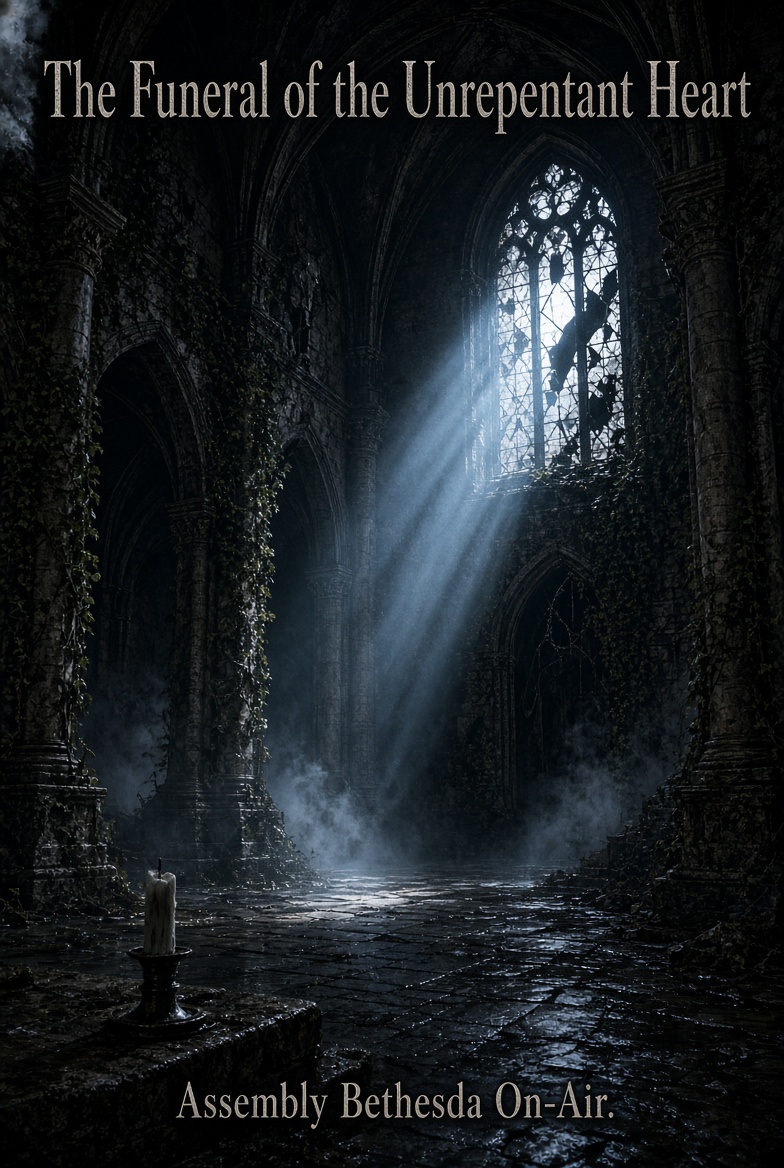
There’s a funeral that doesn’t make the papers. No one wears black clothes. No one brings flowers. No one stands up to speak about the life. When a person realizes something inside them has been dead for a long time and they didn’t call the hearse, it happens in quiet rooms, late nights, and every day mornings.
Unrepentant hearts are that something.
In church circles, we talk a lot about repentance. It’s like a door you walk through once, or a feeling that comes and goes with the music. Scripture treats it like a funeral. Something has to die. Something has to be buried.
The unrepentant heart keeps showing up to its own funeral dressed for a party. It refuses the coffin. It argues with the preacher. It insists that the body still has a lot of good years left. While the pulse has been gone for years, it keeps saying, “I’m fine. I’m growing. I’m working on things.”
We don’t get it enough credit for how well Gothic stories understand this. They know some rooms stay cold no matter how many fires you light. They know that some doors only open one way. Pride can look strong until the floor gives way. The unrepentant heart is that cold room. It’s the door that opens out into darkness. It’s pride that refuses to kneel even when your knees are already weak.
Those two guys aren’t cartoon villains. They’re just people who can’t bear the thought of being wrong in a way that cost them something. Pharaoh. Look at the rich young ruler. Look at the older brother who doesn’t go to the feast. Sometimes the unrepentant heart isn’t loud, but rather soft and reasonable, able to explain why surrender isn’t the right thing to do right now.
Still, the funeral has to happen.
“Unless a grain of wheat falls into the earth and dies, it remains alone.” That’s not poetry for the sensitive. That’s the operating system of the kingdom. The old heart doesn’t get a makeover, it gets a death certificate. The new heart doesn’t rise with better habits, it’s the same heart with better habits. It’s a different creature, one that knows when to bleed and when to stay quiet when the old voice tries to take the mic back.
The problem is that the unrepentant heart is an expert at looking alive. It can quote Scripture. It can serve in the church. It can feel genuine sorrow for the consequences of sin yet refuse to hate it. The corpse can cry at the altar and walk away unchanged because the tears didn’t reach it. It’s the most gothic part of the story. The corpse can still move. It can still talk. It can still convince the living that it belongs there.
The funeral is finally called to order by holy fear. Not punishment. Fear that comes from seeing the real condition of the heart through the eyes of a holy God. That fear that says, “If this thing doesn’t bury me, it’ll bury me.” That fear is a gift. It’s the moment the lights come on in the cold room and you see the body.
Some of us have been hosting that body for years. We’ve given it a seat at the table. We’ve listened to its counsel. We’ve let it decide what we’ll surrender and what we won’t. Yet all the while it’s dead. There’s a strong smell. The guests are leaving.
It’s good to know that God doesn’t wait for the unrepentant heart to improve. He just waits for it to die. He’s ready with the new heart the moment the old one is finally buried. Resurrection isn’t a reward for hard work, it’s the only thing that can happen after the funeral.
Here’s my simple and severe invitation: Stop arguing with the preacher. Stop rearranging flowers on a corpse. Let the unrepentant heart get buried. Let the dirt fall. Let the silence settle. When the voice that calls the dead rises, you can bet that it has never lost a single person who stayed in the ground long enough for the miracle to happen.
Some things only become beautiful after they’ve been buried. The Christian truth is that the burial isn’t the end of the story. It’s only the beginning.