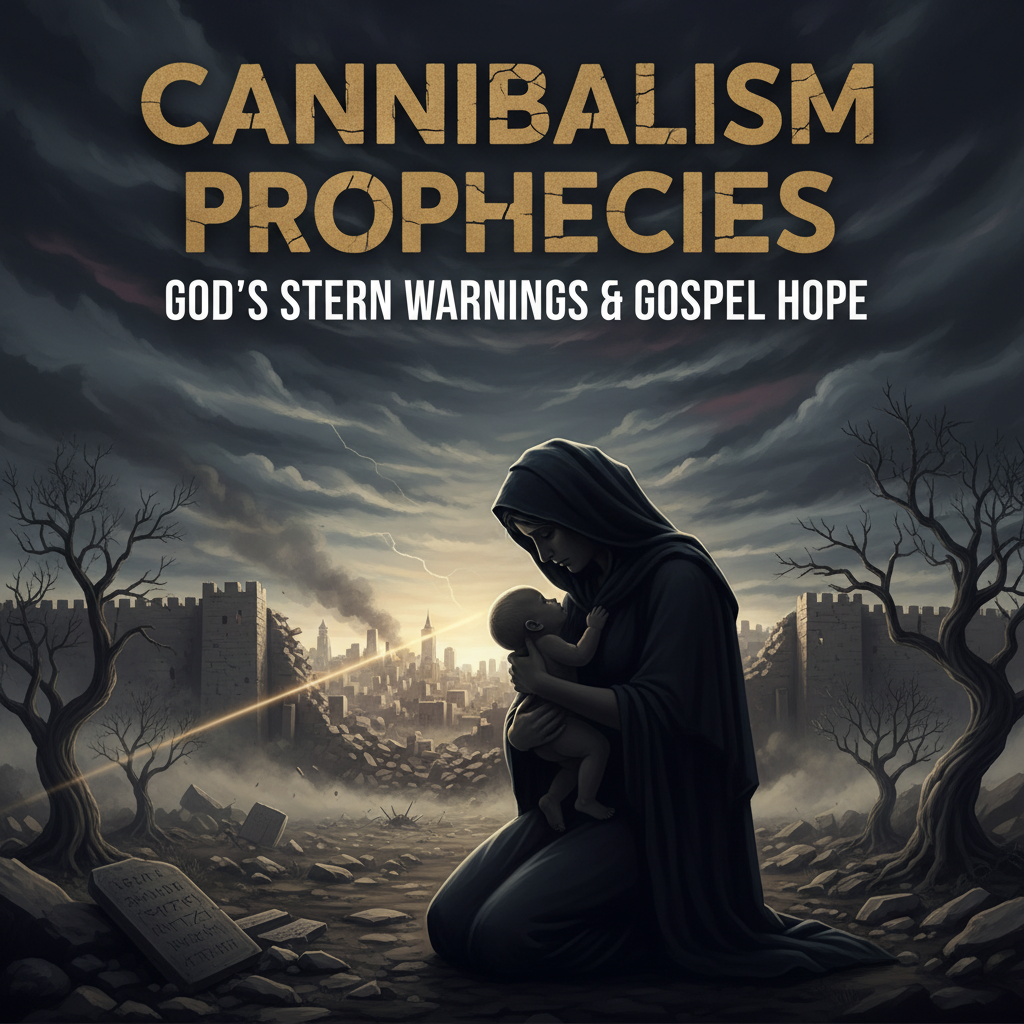
There are some passages in the Bible that really hit you and make you stop and think. These aren’t light reading. They talk about cannibalism prophecies and threats found in places like Deuteronomy 28:53-57, Leviticus 26:29, Jeremiah 19:9, and that gut-wrenching account in 2 Kings 6:28-29. They show what happens when people turn away from God and face the full weight of the consequences. Let’s look at these verses in a real, casual way and see what they reveal about judgment, desperation, and God’s heart today.
Deuteronomy 28 is full of warnings. God gives blessings for obedience, but he also gives curses for turning away. Verse 53 through 57 paint a picture so grim, it’s almost unreal. There’s a saying that when enemies close in and food runs out, a man’s going to eat his own children. There’s no point in eating your own kids if you’re tender and delicate, even the one who won’t touch the ground because of how refined you are. It’s like a horror scene straight out of the darkest tales, but it’s written as a direct warning from God to His people if they break the covenant.
Leviticus 26:29 echoes this in a shorter, sharper way. God says He’ll make the people eat the flesh of their kids. That’s part of covenant curses. These aren’t random threats. They’re tied to the idea that if you reject God’s ways, his protection and provision dry up, and chaos takes over.
It goes on to the streets of Jerusalem in Jeremiah 19:9. The prophet warns the people that they’ll eat their own kids and friends’ flesh during the siege. It’s connected to the upcoming Babylonian invasion, and it feels personal because Jeremiah is right there in the middle of it all, begging the people to turn back.
Two women make a deal in 2 Kings 6:28-29 to eat each other’s sons during the siege of Samaria. When the king hears about it, he tears his clothes in horror. It’s not prophecy anymore. It’s reality. The Bible records it without flinching. A woman boils her child, they eat him, and the other woman hides him the next day.
These passages feel Gothic in the truest sense, dark, foreboding, full of shadows and moral weight. Sin isn’t just a little mistake. It leads to a breakdown of everything human and decent. A society or a people stepping away from God’s standards isn’t free. It’s famine, fear, and eventually, what’s impossible.
Let’s look at Deuteronomy 28 a bit more casually. God is talking to Israel as they stand on the edge of the Promised Land. It says, if you obey him, things will go well. Your enemies will flee, your fields will produce, and your families will flourish. You have to watch out if you don’t, if you chase other gods and forget who brought you out of Egypt. The curses build like a storm. It’s disease, defeat, confusion, and then this point when parents turn on their own kids.
Cannibalism here isn’t about monsters in the woods, it’s about what happens in a community that’s completely lost its way. God isn’t being cruel just for fun. He’s showing the natural end of rebellion. Now the tender woman who once lived in comfort is hiding in the dark, eating what should be her greatest treasure, her kids. It’s a reversal of everything good and nurturing.
There are promises in Leviticus 26 that rain will fall in season, peace will be in the land, and victory over enemies will happen. But when it comes to curses, they just keep getting worse. It’s like God is saying, I’ll let the consequences play out so you understand how serious this is. Terror, wasting disease, defeat, and then the eating of sons and daughters.
A prophet’s voice comes into play in Jeremiah 19:9. He’s not just saying law. He’s actually living during the days leading up to Judah’s fall. The people ignore him, mock his warnings, and rely on alliances and idols instead. God tells Jeremiah that he’s going to make them eat the flesh of their sons and daughters and their neighbors. It’s not abstract. It’s right outside their city gates.
2 Kings 6 shows that it wasn’t empty talk either. Mothers resorted to this during the siege of Samaria under the Arameans. The king’s reaction shows how shocking it was even in that brutal ancient world. He recognizes it as a sign that the nation has hit the bottom.
There’s a contrast between these passages, which is what makes them Christian Gothic. When God feeds thousands with a few loaves and fish, He also warns that people will devour each other if He doesn’t. We need grace so much because of the shadow side. In this broken world, Jesus knows full well how deep human sin and desperation are. The cross itself is a kind of horror, the innocent Son dying, but it’s the answer to everything.
The prophecies and threats aren’t just there to scare us into submission. They’re invitations to live. Even in the midst of judgment, God always holds out mercy. You see His heart breaking in these dark verses over what His people are doing.
The cannibalism theme also points to a deeper spiritual reality. Jesus says He wants us to be in total union with Him when we eat His flesh and drink His blood, not literally cannibalistic. It’s the opposite of the desperate, destructive eating in the Old Testament curses. One is life through self-giving love. The other is death through selfishness and rebellion.
Is there a way our culture is heading toward its own kind of famine, not just of food but of truth, compassion, and basic humanity, when we read these passages casually but honestly? When families break down, when communities turn on each other, when we consume one another through words, cancellations, or exploitation, it’s like those ancient warnings.
It’s not God’s pleasure to do horror. God warns so we can repent. The Gothic darkness serves to make the gospel brighter. Jesus took the curse on Himself so we don’t have to live that nightmare. He offers forgiveness, restoration, and a new way to live where we love instead of devour.
They remind us covenant with God isn’t casual religion. It’s everything. Obedience brings life. Rebellion brings death, sometimes in the most horrifying ways.
We need to remember that the Bible doesn’t shy away from the ugly truth about the human heart apart from God. It shows it raw so that we can run to the Savior who redeems even the darkest chapters.