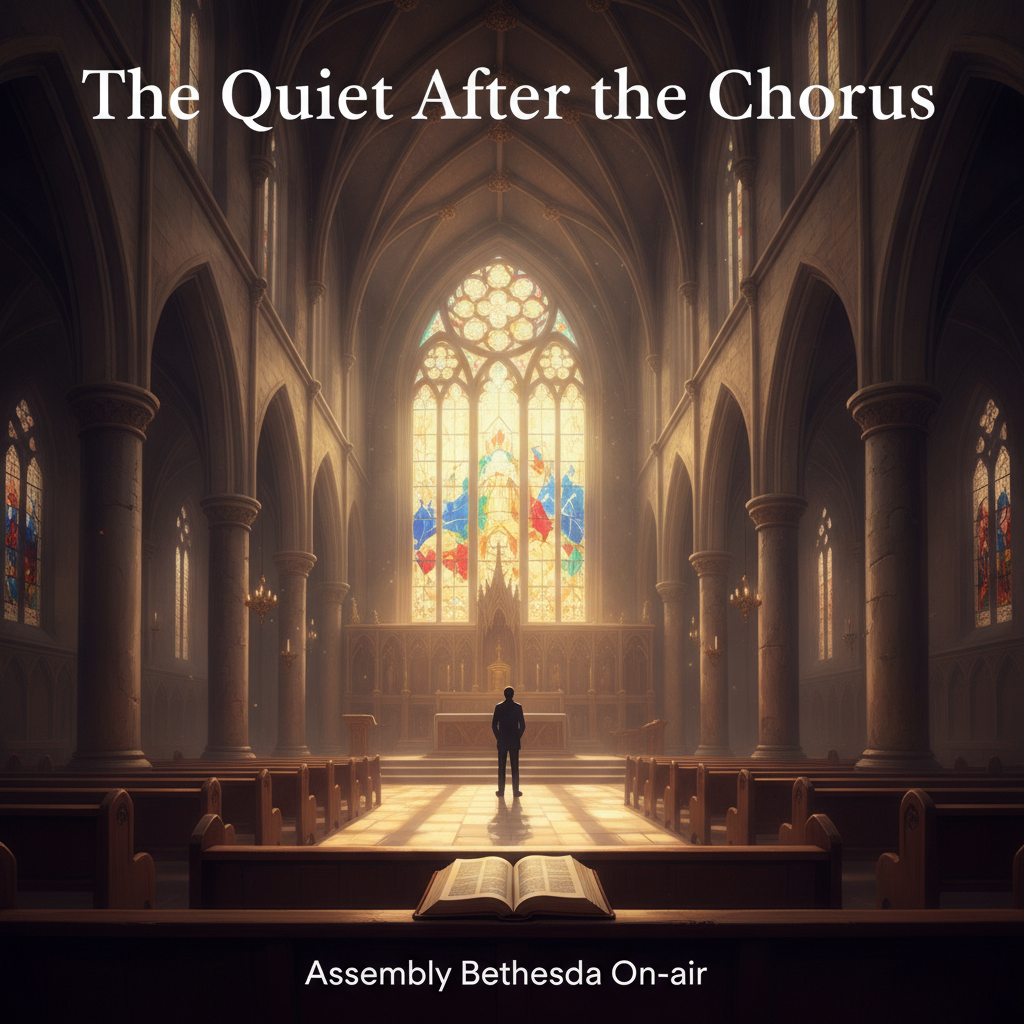
There’s a moment after the final hymn fades away in old stone churches where shadows dance along the walls. The voices that raised in praise quiet, and all that’s left is this deep, echoing silence. It’s not empty, friends. It’s the silence that follows the final hymn, where you sit with what just happened in worship and think about it. It’s the silence after the last hymn. In the quiet, the organ pipes still hum, the candles flicker lower, and you feel the weight of the divine.
Think about stepping into one of those Gothic cathedrals with their tall arches reaching up like hands lifted in prayer. The air is cool and heavy with incense from the service. You sang those words of faith, letting them carry your worries and hopes upward. You hear the last chord die out, and everything stops. You hear the echoes, and your mind starts to wander. This isn’t a void, just a space where God meets you. It’s like sitting on the back porch after a long day, but here the porch is made of ancient faith and the day was filled with singing.
In the silence, you think about the hymns you just sung. They talk about redemption, light piercing the darkness, a savior who walks with us through the valleys. In the quiet, those truths sink in rather than rush past in the melody. You might feel the Gothic pull here, the mystery of old stones that have heard centuries of prayers. Despite the shadows pooling in the corners like forgotten sins, the cross stands strong in the center, reminding us that light always wins. Just you and the stillness. No fancy words or big ideas.
Often, there’s a pause after a big event, a celebration or even a tough day. The silence after a hymn teaches us not to fill it up right away with chatter or plans. During the pause, the Holy Spirit lingers, comforts, challenges, and loves us. It’s like the calm after a summer storm, where the air feels fresh and clean. Casual conversations with God are best here, no script required. In the quiet, just honest thoughts.
Imagine the saints of old, sitting in their monasteries after chanting psalms late at night. The world outside slept, but they rested in the same kind of holy hush. We can do the same thing in our modern lives with screens and noise. Turn off the distractions after worship and let the silence wrap around you like a warm cloak on a foggy evening. Gothic faith reminds us that beauty is often found in the darkest places. Silence isn’t scary. A friend, a place to hear Elijah’s still small voice.
Keep exploring this idea. The final hymn marks the end of one part of the service but opens up the door to personal encounter. You might feel heavy with conviction or light with joy. The quiet holds space for both. You don’t have to leave or turn on the radio. Let the architecture of faith, those vaulted ceilings and stained glass now dim, speak for itself. Casual Christianity at its best. Raw and unpolished.
Thank you for the voices of the community that blended with yours, for the words of scripture read aloud, and for the simple bread and cup if it was communion day. It’s easy to see how beauty and solemnity mix in the Gothic style, creating awe. The silence after the final hymn carries that awe into your everyday steps. You walk out into the world changed, carrying that quiet inside like a secret ember.
This theme runs deep through Christian history. From desert fathers to medieval monks to today’s believers in city chapels, silence after praise shows up time and time again. Being present with God isn’t about being fancy or distant. It’s about being present with him during these moments. Just you and the divine in the afterglow of song, no performance.
The shadows in the church might lengthen as evening comes, but they won’t stop the light. The silence reinforces it, letting truth sit without competition from other sounds. If you listen to the last hymn, lean into that pause. Feel the Gothic wonder of it all, the ancient faith meeting your modern heart. It’s simple, powerful, and beautiful.