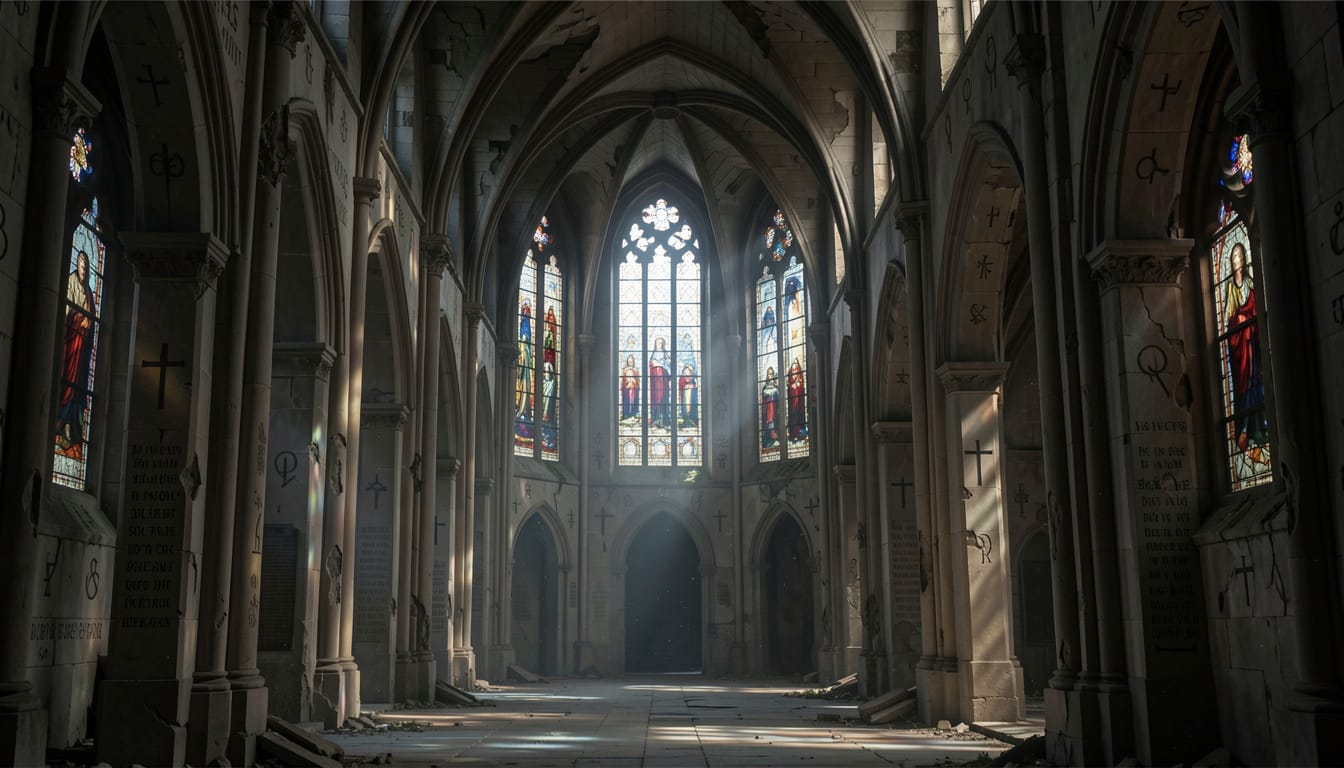
An abandoned church can stir powerful emotions. Broken stained glass, weathered pews, cracked stone walls, and silent bell towers often evoke sadness and mystery. While these buildings may no longer host worship services, they continue to tell a story. For Christians, an abandoned church can become a profound symbol of both spiritual warning and enduring hope.
Scripture consistently reminds us that God’s presence is not confined to buildings. Solomon declared at the dedication of the temple, “The heavens, even the highest heaven, cannot contain you. How much less this temple I have built!” The New Testament goes even further, teaching that believers themselves are the temple of the Holy Spirit. A church building is sacred because it has been set apart for worship, but it is never meant to replace a living relationship with Christ.
An abandoned church serves as a reminder that faith cannot survive on tradition alone. Many once-thriving congregations eventually closed because generations passed without preserving the gospel or maintaining vibrant discipleship. Empty sanctuaries can illustrate what happens when spiritual passion fades and outward religion replaces genuine devotion.
At the same time, these forgotten buildings testify to the faith of those who came before us. Their walls once echoed with hymns, prayers, baptisms, weddings, funerals, and sermons proclaiming the good news of Jesus Christ. Though the congregation may be gone, the legacy of faithful believers often continues through lives that were transformed within those walls.
Nature slowly reclaiming abandoned churches also offers rich symbolism. Vines climbing stone walls and trees growing through collapsed roofs remind us that earthly structures are temporary. Jesus taught that treasures on earth do not last forever. Every building eventually decays, but God’s kingdom remains forever.
There is also something deeply biblical about ruins. Throughout Scripture, ruined cities and broken places often became settings for repentance, restoration, and renewal. The prophets spoke of devastated places being rebuilt by God’s people. Ruins were never intended to be the end of the story. They pointed toward redemption.
The silence inside an abandoned sanctuary can also invite reflection. In a noisy world, empty spaces often encourage prayer, contemplation, and self-examination. Rather than simply mourning what has been lost, Christians can ask whether their own hearts remain fully devoted to Christ.
These forgotten churches also challenge modern assumptions about success. Large attendance, impressive buildings, and cultural influence do not necessarily measure spiritual health. Some of history’s greatest revivals began in humble places with small groups of faithful believers. God has often chosen what appears weak to accomplish His greatest purposes.
Perhaps the greatest lesson is one of hope. An abandoned church is not evidence that God has abandoned His people. Throughout history, Christianity has endured persecution, cultural change, and the collapse of countless buildings. Yet the Church—the body of Christ—continues to grow around the world because its foundation is Jesus Himself.
The weathered walls of an abandoned church remind us that every earthly structure will one day pass away. They also remind us that God’s promises never fail. Buildings may crumble, congregations may relocate, and generations may change, but Christ remains the same yesterday, today, and forever.
Instead of seeing abandoned churches merely as relics of the past, Christians can view them as visual parables. They warn against spiritual complacency, honor the faithfulness of previous generations, point toward the temporary nature of earthly things, and ultimately direct our eyes to the eternal kingdom that can never be shaken.