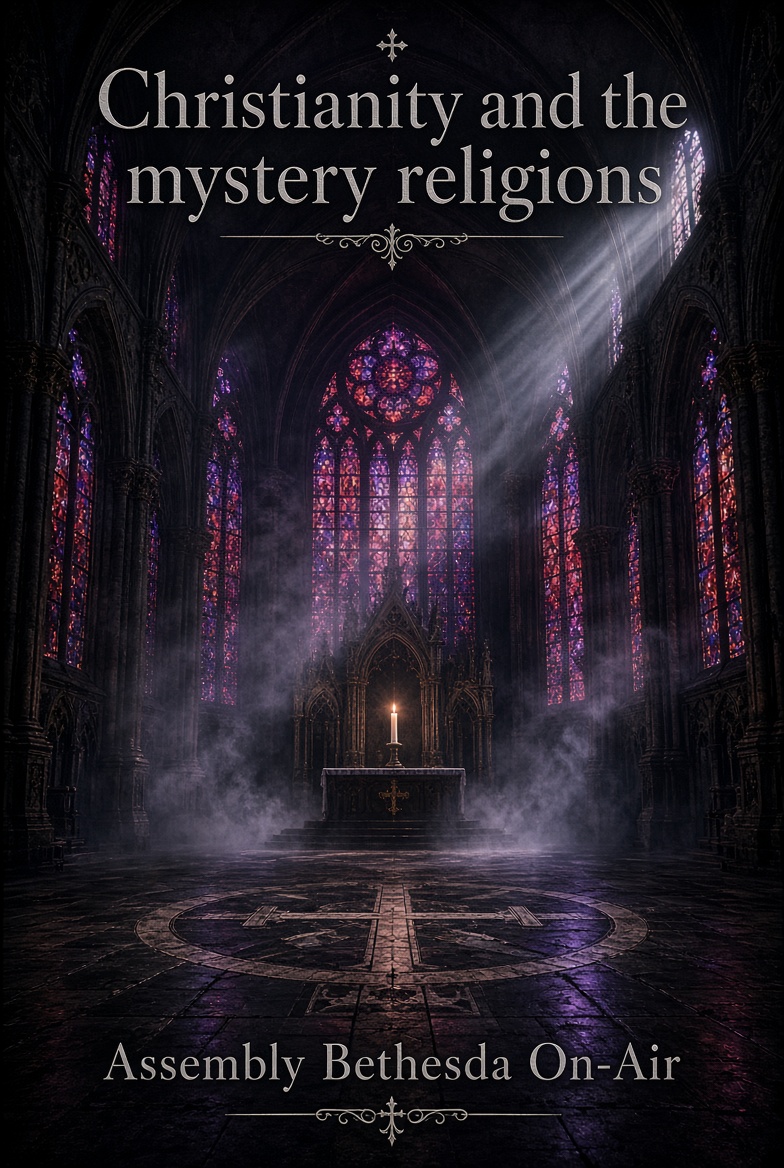
A few centuries ago, the mystery religions held sway in the quiet corners of history, where torchlight flickered against stone walls and ancient rituals whispered about hidden knowledge. Throughout the Greco-Roman world, these secretive cults promised initiates rebirth, salvation, and union with God through darkness. The Eleusinian rites, Mithraic banquets, the Isis cult, and others attracted seekers who wanted something more. It’s been tempting to compare their dying and rising gods, sacred meals, and purifying baptisms with the Christian faith. But when the gospel shines into those shadowy chambers, the differences are stark.
Unlike the mysteries, Christianity isn’t rooted in a private initiation. It’s rooted in public history, not private initiation. He lived, taught, suffered under Pontius Pilate, died on the cross, and then rose again in a body we could touch and see. It was proclaimed openly in the streets and synagogues by the apostles. No secret passwords or rituals were needed to hear the good news. The invitation was, and is, free and universal. Come and see.
The mystery religions guarded their truths behind closed doors. Only the initiated could access the deeper secrets. Christianity throws open doors. The temple veil was torn at Christ’s death. There’s no longer a priestly class or a select few who can access God. By believing in Jesus, anyone can enter the holy place with confidence. That openness wasn’t created later. It was there from the start.
There are myths about dying and rising gods. Attis, Osiris, Dionysus, and Mithras are all mentioned in those myths. But they’re still myths. Seasons come and go, plantings and harvests, waxings and wanings of the moon. There is a singular event in time in the resurrection of Jesus. His tomb was empty one particular morning in Jerusalem. People saw him, talked to him, and ate with him.
The early church did not treat the resurrection as a poetic metaphor for spiritual awakening. They staked everything on its concrete reality. If Christ hasn’t been raised, Paul wrote, we’re wasting our time and faith. That’s not the language of mystery cult symbolism. That’s the language of historical claim.
Christians gathered around the Lord’s Table to remember Christ’s broken body and blood poured out. Initiates of the mysteries shared ritual food that somehow connected them with their deity. The difference goes deeper than symbolism. The Eucharist gives the church what Christ Himself did: He gave His life once for all. It doesn’t grant salvation. Until He comes, it proclaims the Lord’s death. Not the mechanical power of the rite, but the finished work of the cross.
There’s also a comparison between baptism and mystery religions. Christian baptism marks entry into Jesus’ death and resurrection. It’s not a secret ordeal, but a public declaration that you’re a Christian. It’s not the water that saves by itself. It’s God’s promise attached to the word that does. It’s the same Spirit that brought Jesus back to life.
There are some modern voices that say Christianity just absorbed all the best bits from the surrounding religions and rebranded them. That view underestimates both the Jewish roots and the radical newness of the gospel. Christianity is the true Passover Lamb, the true Temple, and the true High Priest. Mystery religions offered private enlightenment. Christianity offers reconciliation with God through a crucified and risen Messiah. A path leads inward toward hidden knowledge, and another leads outward toward a new creation that will one day be visible to everyone.
While the empire still favored old gods, the early church faced the darkness with Gothic beauty. Christians met in catacombs and house churches. In the face of persecution, they sang hymns to Christ as God. They cared for the poor and sick when the mystery cults mostly ignored them. Their hope wasn’t escape into secret wisdom, but the return of the King who would make all things new.
There’s still a contrast today. Many people are still looking for hidden meanings, esoteric paths, or spiritual techniques that promise transformation without repentance. It’s still the gospel. It’s not a ladder of secret knowledge, but a cross. It’s not a closed circle for the enlightened, it’s an open invitation to everyone. Light shines through darkness, and darkness hasn’t gotten to it.
It was time for the mystery religions to fade as the empire changed. Their temples crumbled. Their secrets were lost or reduced to footnotes. The church stayed because it was built on divine revelation, not human invention. The Word became flesh and dwelt among us. The glory of God doesn’t need to be hidden behind veils. It can be offered freely to anyone who turns to the light.
Ultimately, the comparison only emphasizes Christ’s uniqueness. The dying and rising gods of myth remain stories told in the dark. The crucified and risen Lord stands in the open air of history and calls everyone by name. There’s no need for midnight initiations or secret handshakes. The door is open. The table is set. There’s enough light.
The shadows may still whisper, but they can’t hold the one who belongs to Jesus. The mystery has been revealed. God is with us. The veil is gone. The deep night has already given way to the light.