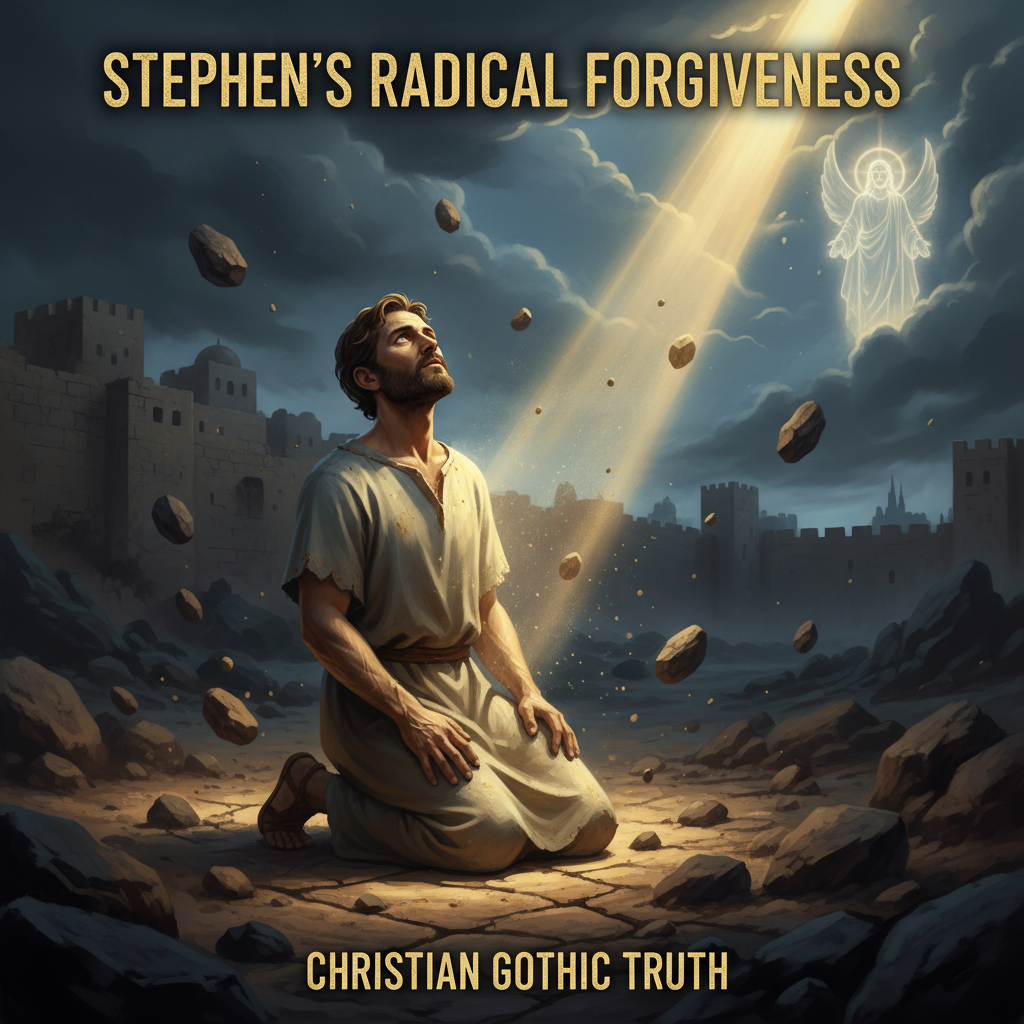
One of the most haunting moments in the early church occurs in the dim glow of flickering candlelight, where ancient truths whisper through the cracks of time. While the stones fly, Stephen stands tall without a sword or shield. His story from Acts 7 hits differently when you picture the scene, the rage of the crowd, the blood on the ground, and those final words of mercy that echo across the centuries like a Gothic hymn. In the darkest hour, faith shines brightest. This isn’t just history.
Stephen was full of grace and power, doing great wonders among the people. But his light bothered those who loved the shadows of tradition without true heart change. They dragged him before the council, false witnesses rising like mist from a graveyard to accuse him of speaking against the holy place and the law. However, Stephen’s face glowed like an angel’s as he started talking. From Abraham in the far land to Moses in the wilderness, he showed them how God had always been moving, bigger than temples made with hands.
The air must have grown thick with tension as Stephen’s voice rose. He reminded them of their fathers who resisted the Holy Spirit, persecuted the prophets, and even killed those who announced the coming of the Righteous One. It was then that sealed his fate. “You stiff-necked people,” he said, “you always resist the Holy Spirit. Just like your fathers did.” The words cut deep. They gritted their teeth at him, and their hearts burned with anger. As Stephen looked up, full of the Holy Spirit, he saw the glory of God with Jesus standing at the right hand of the throne. “Look,” he cried, “I see the heavens opened and the Son of Man standing there.”
Their vision lit the fuse. They shouted, covered their ears, and rushed at him with one mind. They dragged him outside the city and stoned him, heavy and cruel rocks bruising flesh and cracking bones. In that moment of pure agony, Stephen called out, “Lord Jesus, receive my spirit.” Then he fell to his knees and cried, “Lord, don’t hold this sin against them.” And then he went to sleep. Forgiven his killers and then stoned to death. That’s a powerful, haunting image for us today.
It’s a Gothic scene with a cloudy sky, long shadows cast by city walls, and dust mixed with blood. Stephen’s body broken but his spirit soaring. Forgiveness wasn’t weak; it was strength born of seeing Jesus. He didn’t curse his attackers, but he prayed for them, echoing Christ’s words on the cross. Love like that feels almost otherworldly, like a candle burning in a neverending night.
His focus stayed on eternity as the stones rained down. He didn’t beg for his life or fight back. He surrendered completely to the One he saw in heaven. This challenges us in our own trials. When opposing words or actions hurt us deeply, do we look up or lash out? Stephen looked up and found the strength to forgive. His martyrdom marked a turning point for the church. It faced more persecution, but the gospel spread like fire through dry grass. Even Saul, who approved of the death, would later become the great apostle Paul.
We can linger on the details for a while, friends. The Sanhedrin, those respected leaders, became a mob. Their fine robes probably got dusty as they hurled stones. It’s likely that Stephen’s calm in the storm haunted some of them forever. In the Christian Gothic view, death isn’t the end. It’s the doorway. His speech was bold truth, spoken in love, and it cost him everything earthly. The grave is a place of rest for believers before the great awakening, as Stephen fell asleep.
Stephen taught us what it’s like to suffer for faith. Not everyone gets a peaceful end. Some face violence and hatred. But he shows us how to face it, with eyes on Jesus and a heart of forgiveness. The early church learned from this. They spread, but they preached everywhere they went. A martyr’s blood is often a seed for the church, and Stephen’s was one of the first drops.
Consider the physical pain. Stones don’t cut like knives. They bruise, break, and crush over time. Each impact reminds us of human cruelty. Despite all this, Stephen’s spirit remained anchored in Christ. That is the power we can draw from today. In our modern world, with its own kinds of stones, words, rejection, pressure, we can remember Stephen and choose forgiveness too.
He saw Jesus standing, not sitting. Some say he was greeting his faithful servant. It’s a comforting picture in the middle of horror. Heaven was right there in the execution room. This Gothic intersection of heaven and earth, glory and gore, is what makes it so compelling.
It was a short but impactful life for Stephen. He was a deacon who helped with practical needs, but he ended up preaching with power. His wisdom and Spirit-filled words stirred the pot, but that stirring led to bigger things. Today, we need more Stephenses, people who are filled with faith and the Holy Spirit and speak the truth no matter what.
In the final moments of his life, Stephen did not see enemies alone. He saw lost souls who needed prayer. Forgiveness is at the core of the gospel, and Stephen lived it out fully.
Acts 7 is more than just a chapter. It’s a mirror for our souls. How do we deal with pressures? How do we see Jesus in the midst of it all? Are we able to forgive as we are hurt? We’re called to deeper faith, bolder witness, and radical love by Stephen’s story.
Take a moment to remember the image in the quiet hours when you’re reflecting. A man on his knees, stones all around him, face shining, voice lifted in prayer to his killers. It’s Christian Gothic at its best, beauty in brokenness, light in darkness, victory in apparent defeat.