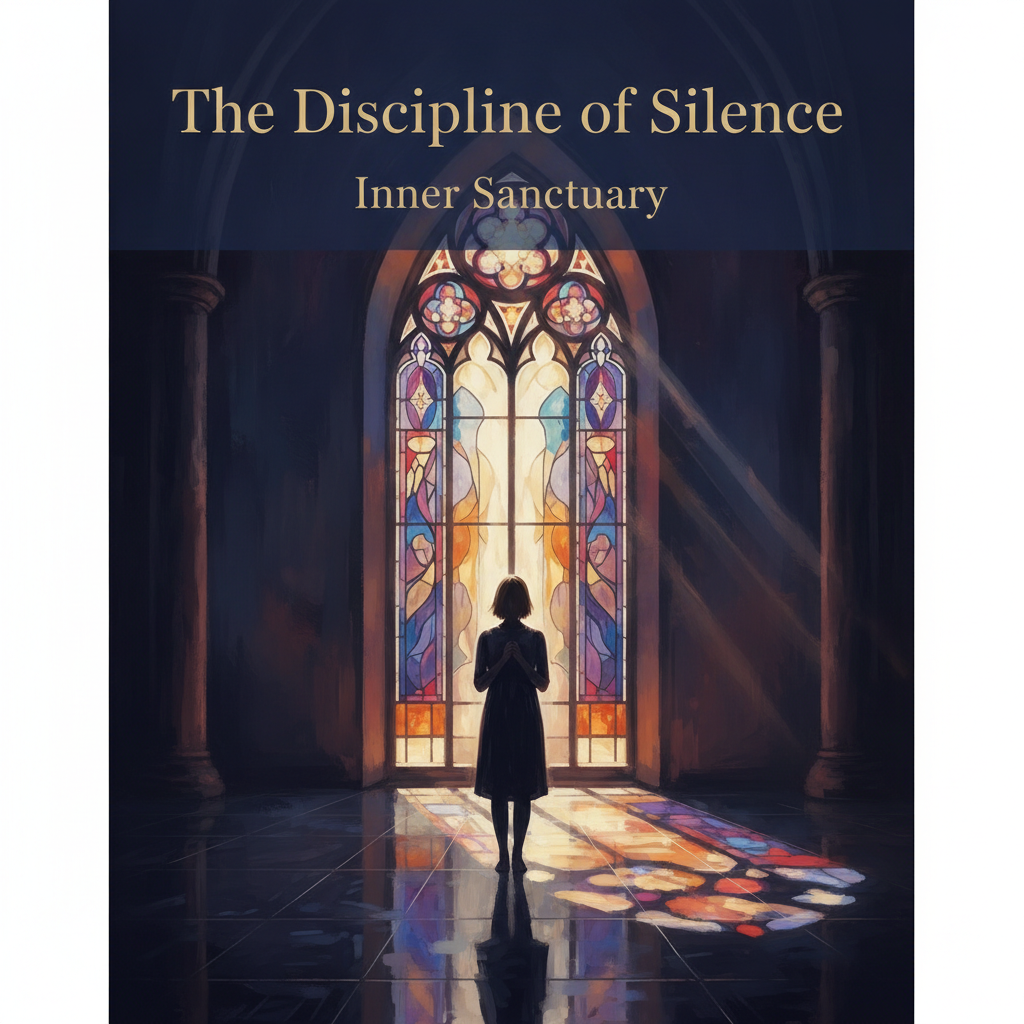
In the shadowed halls of ancient stone, where candlelight flickers against cold walls and the air carries the faint scent of incense and rain, silence waits like an old friend. Silence isn’t empty. It’s stepping into the silence where you can finally hear what you’ve always been saying, away from the noise that’s in every corner of modern life.
Think of those great gothic spaces, those high vaults that seem to swallow sound yet somehow amplify the smallest breath. The discipline of silence feels natural in such places. The world outside rushes with traffic, screens, endless talk, but inside the stone, the quiet holds steady. This quiet can also be carried into everyday life. At first, you don’t talk on your phone. The radio doesn’t go on during the morning drive. The conversation that could fill every spare minute is left unspoken. These aren’t grand gestures. They’re windows into something bigger.
When the mind races ahead, inventing replies before the other person finishes speaking, or rehearsing worries that may never happen, silence is a teacher who doesn’t raise its voice. Quiet makes those patterns visible. In time, the mind learns to settle the way dust settles in an empty chapel after the last footstep fades. Discipline asks only that you notice the patterns without judgement, then gently let go. There’s only space left, and something sacred moves there.
Jesus himself sought out lonely hillsides before dawn. The prophets retreated to wilderness places where the only sounds were wind and birds. Early desert dads and moms built their lives around long stretches of wordless presence. They understood that words, even holy ones, can become noise if they don’t get a chance to rest. The silence lets the words sink in, lets them become more than information.
In a gothic sensibility, this practice carries a certain beauty of shadow. No constant brightness or forced cheer is needed. The soul can live in its twilight hours. Candles are preferable to floodlights. Mystery is welcomed rather than explained away. Silence honors that preference. It doesn’t insist that every moment be filled with insight or comfort. Sometimes there’s just silence. That’s enough. Often it feels heavy, almost mournful, like the long pause between the last note of an organ and the soft shuffle of feet leaving the nave. But even then, it’s still a gift, because it doesn’t distract from what’s right now.
This doesn’t have to be in a monastery or a remote retreat to practice it. It can be in the kitchen before the kettle boils, or in the car parked a few extra minutes after you get home. It can be the choice to walk without headphones, letting the city’s distant hum become an ambient prayer. It can be a choice to sit with one verse of scripture and not move forward until it’s gotten a chance to breathe. The length doesn’t matter as much as the intention. An afternoon can be changed by five minutes of quiet.
A cost, of course. No matter how hard one tries, the world’s noise doesn’t give up easily. Notifications will keep coming. Obligations will keep pressing. The habit of filling every silence with talk or entertainment will tug hard. Yet every time you choose to be still, the muscle of attention grows stronger. You can’t tell the difference between loneliness and solitude. Loneliness is an ache of absence. Solitude is a quiet companion who doesn’t need any introduction.
Gothic Christians have always had this companion nearby. The same Presence that filled the upper room with a sudden rush of wind also waits in the quietest places. Making space for Presence is silence. It’s not about achieving perfect mental blankness. You’ll have thoughts that come and go like visitors to a cathedral that pause, look up, then move on. Keeping the doors of attention open, letting the sacred linger inside the heart, is the practice.
Over weeks and months the effects accumulate. The urge to fill every gap with opinion softens. There’s less need to defend or explain. There’s a quieter confidence, the kind that doesn’t need constant affirmation. It changes relationships too. Rather than being an awkward void, silence between sentences becomes part of the exchange, a shared breath.
The gothic atmosphere reminds us that beauty often lives in the half-light. Stained glass looks best when the sun is low. Stone carvings look their best when shadows longen. In the same way, silence reveals the contours of the soul that constant noise keeps hidden. Both old griefs and forgotten joys are welcome. The silence holds them just like an old church holds centuries of prayer, neither rejecting nor holding on.
No special technique is required, just a willingness to stop filling the air for a little while. You can start right where you are. Protect one ordinary moment each day from intrusion and let the quiet come in on its own terms. Don’t force insights or demand comfort. Just remain. It won’t feel like deprivation when the interior cathedral becomes more familiar, its arches higher, its atmosphere more settled. It’ll feel like coming home.
The world will keep shouting. Screens will keep glowing. But somewhere inside the stone and shadow of the heart, a different rhythm continues, steady and unhurried. It’s the sound of the soul remembering to listen. And it’s the sound of the ancient promise being renewed: Be still, and know.