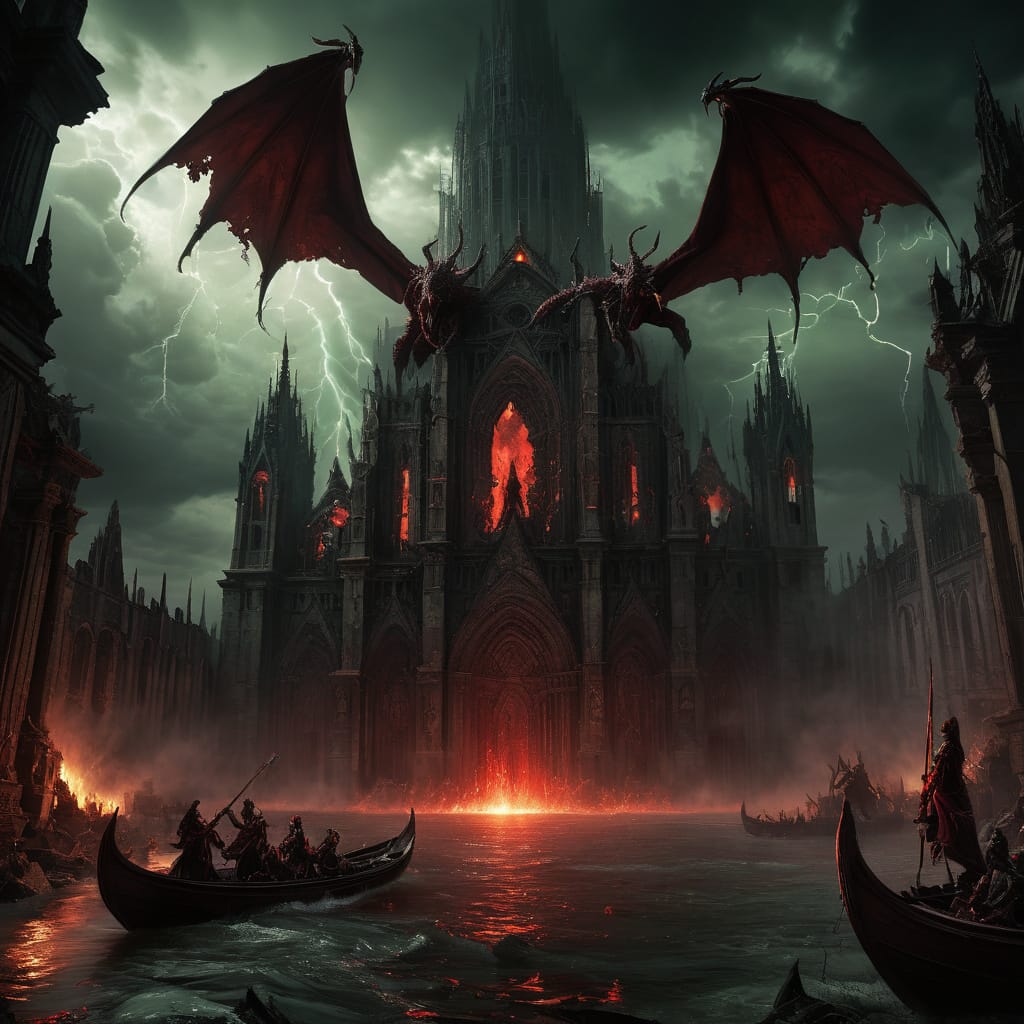
We get to see the entire cosmos unraveling in the most terrifying, yet strangely beautiful way in the Book of Revelation. Instead of a creepy castle filled with ghosts, it’s like the ultimate gothic horror novel with a divine twist. It feels like John’s visions are from a nightmare, but they’re full of holy weight that makes them different from other scary stories.
The four horsemen charged out: Conquest on a white horse, War on a red one, Famine on a black one, and Death on a pale one, followed by Hades. There’s no subtle metaphor here, these are full-on apocalyptic riders bringing plagues, violence, starvation, and mass death. People hide in caves begging rocks to fall on them, the sky turns black, stars fall like figs in a storm, mountains move. That’s pure cosmic dread, the kind that makes you feel small and powerless against forces way bigger than you.
Those beasts come from the sea with seven heads, ten horns, and crowns everywhere. They’re like a leopard, bear, and lion mashed up. Another beast from the earth makes the first one worshipped, forces everyone to take a mark or starve. The dragon, that ancient serpent, gets thrown down and chases the sun-clad woman. They’re grotesque, powerful, and completely otherworldly. They look like monster movie villains, but they represent real spiritual battles, evil systems, and power’s seductive pull.
In the plagues, seven seals open, seven trumpets blast disasters like hail mixed with fire, oceans turn blood, and a star called Wormwood poisons the seas. Then the seven bowls of wrath, sores breaking out on people who took the mark, seas and rivers turned blood again, scorching heat, and darkness so thick people could gnaw their tongues in agony. There’s a lot of body-horror in here, stuff that lingers and makes you uncomfortable.
It’s the atmosphere that makes Revelation gothic horror. Dark skies, blood moons, earthquakes, thunder, lightning, a constant sense of doom hanging over everything. It feels medieval, like old cathedral carvings of the Last Judgment with demons dragging souls to hell. Yet it’s holy horror because the terror has a purpose. There’s no random monsters, there’s a solution. The Lamb who was slain wins, the dragon gets chained, thrown into the lake of fire, and death itself dies.
The book isn’t just about fear. It’s fear that leads to awe. It shows the ugliness of evil so vividly that we see how serious sin is, how destructive rebellion against God can be. But the real payoff is hope underneath the horror. The scary parts build up to this massive, triumphant resolution, where God dwells among people. After all the chaos, a new heaven and a new earth appear.
Modern horror explores fears about society, mortality, power by using dread, monsters, and apocalypse. The Beasts symbolize corrupt empires, the mark represents allegiance to anti-God systems, the plagues show justice. The Revelation warns, terrifies, but ultimately comforts those who stay faithful.
The gothic vibe comes through in the ruined grandeur, Babylon described as a great city drunk on the blood of saints, collapsing in flames while merchants mourn lost luxuries. Dramatic, operatic, full of incense, harps, angels with trumpets, and a throne room that mix splendor with horror.
Revelation’s imagery sticks with you because it taps into that primal fear of the unknown, the end, the uncontrollable. However, it flips the script. The Lamb wins, evil gets judged, creation gets renewed. This is holy horror at its best. It’s scary enough to wake you up, beautiful enough to make you smile.
It dives in, shows the worst, then pulls back the curtain to reveal the ultimate good. Revelation stands out in a world full of dark stories.