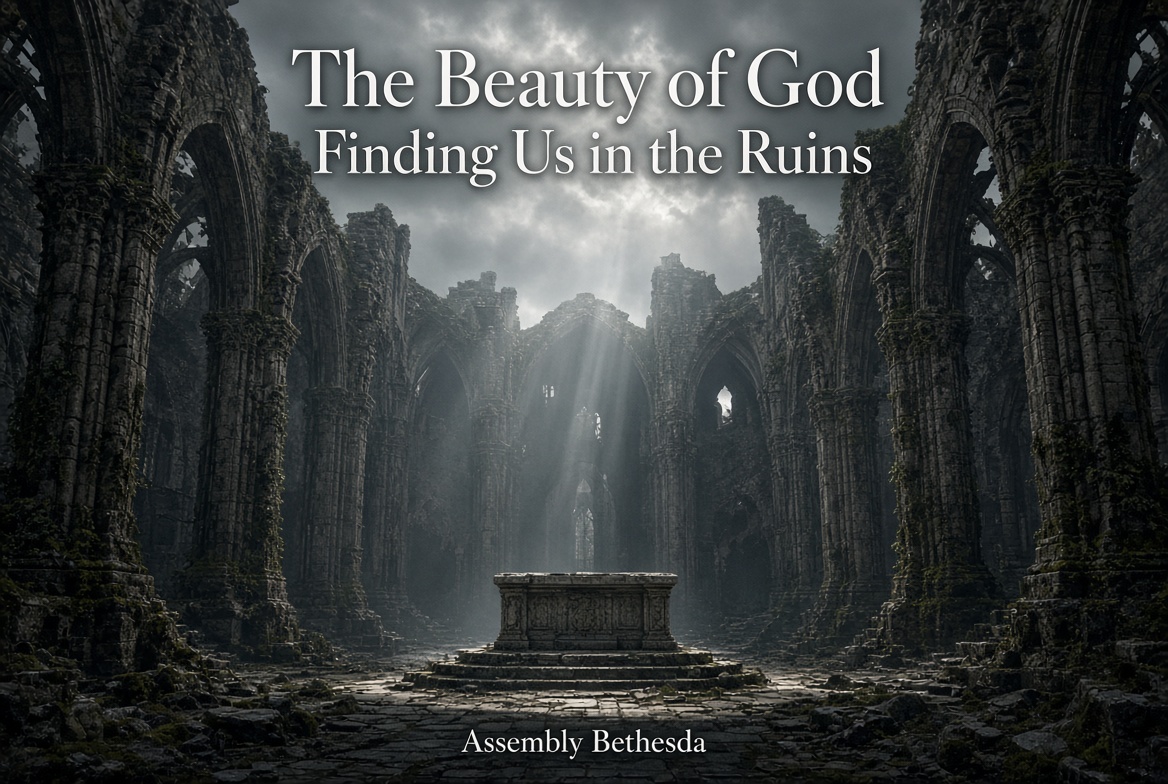
In the shadowed vaults of broken stone, where once proud arches now lean toward the earth, a quiet truth remains. God doesn’t turn away from the ruins. They stand open, cracked, and waiting. With a light that doesn’t blind, a presence that doesn’t wait for perfection before it draws near, He walks among them.
It’s not about the fallen columns, the moss that softens every crack, or the wind blowing through empty windows like a low hymn. These aren’t monuments to defeat, they’re the landscape where grace takes root. It’s not loud or fanfare that God finds us here, but rather a steady hand on the cold stone, a warmth that seeps into the marrow of what’s broken.
These places are mentioned in Scripture without apology. The prophet walks through Jerusalem’s desolation and still hears the voice that won’t abandon the remnant. The Psalmist lifts his eyes from the dust and finds that the Lord is close to the crushed in spirit. As the gospel begins, the world has already been destroyed by the fall, but the Word still becomes flesh and lives among the wreckage. God doesn’t wait for the walls to be rebuilt to come in. Because the walls have fallen, he gets in.
There’s a cathedral that once shined and now lies half-swallowed by time. Its nave is open to the sky. Rain falls where incense used to rise. Despite the broken roof, the light that streams through it isn’t judgmental. It’s the light that shows every scar and still calls the place holy. When the soul sees itself in that light, it’s no longer something to discard, but something to embrace.
These ruins have a particular melancholy, and it doesn’t end in despair. The ache of being Christian becomes a kind of prayer. It’s admitting things aren’t what they were meant to be, but refusing to believe that the story ends there. The beauty of God finding us here is the beauty of a love that doesn’t require us to climb out first. He descends, kneels in the dust, gathers the fragments without asking them how they got broken.
In the end, the cross itself is a mix of ruin and beauty. It used to be wood that lived, now dead and raised. Nails that once held nothing, now hold the world’s weight. Blood that should have remained hidden, now spilled out in public. It is in that place of absolute ruin that the resurrection begins. The empty tomb is the first new stone laid in the restoration of all things, but it starts in death. He finds us in the ruins because He’s already been there, and He’s already made a way through.
During the quietest hours of the day, when the heart feels most abandoned, the ruins speak. They say that God doesn’t disappear when what once was is gone. The silence of an empty sanctuary isn’t the silence of neglect. It’s the silence where the still, small voice finally comes through. It’s not that we make the ruins beautiful. It’s that God finds us while they’re ruins and, after finding us, begins to make all things new slowly.
Walk among the broken arches. Feel the cool air that moves through the gaps. Notice how the light falls unevenly, how it touches the floor in places they didn’t intend. Grace doesn’t follow the original plan. It comes through the cracks. It claims the floor where the roof has given way. It calls the place sacred because God has chosen to live there, not because it’s whole.
If you’ve ever collapsed, you understand this language. The soul that has watched their certainties fall, their hopes lean and then break, their walls give way under the weight of sorrow or failure or time, that soul already stands in the place where God most delights to come. Because when the only thing left to lean on is God, it’s the love of God that shines through most clearly.
You don’t have to polish the stones before He gets here. You don’t have to sweep the dust into neat piles. God’s presence in the ruins is the beauty of an unearned presence. It’s the beauty of a God who doesn’t wait till the restoration is complete before He starts restoring. The stones seem to hear him speak, and the air gets hotter as he walks the length of the fallen nave. He places His hand on the cracked pillar.
Those ruins aren’t just great cathedrals of history. They’re the daily reality of every heart that’s brought low. They’re the private chambers of the spirit, the places where pride once stood but now lies scattered, where self-sufficiency once rose and now lies open to the sky. God doesn’t turn away from those chambers. He walks among tombs with the same quiet authority he used to call dead names.
It’s not a flaw to be melancholy after knowing so much. It’s the right response for someone who sees the depth of a fall, but the greater depth of mercy that follows as well. Tears that fall in the ruins don’t go to waste. They water the ground where new growth will one day grow. But even before it shows up, the beauty is already there.
Because the ruins are where we finally stop pretending, God finds us there. In those ruins, we finally lay down our last defenses, our last claims of self-sufficiency, our last illusions of control, and surrender our soul. It’s a steady, patient nearness that persists even though the stones still lean and the roof still gapes. It’s not a sudden flash of glory that erases the past.
In the remaining, there’s beauty. In the God who stays. In the love that doesn’t have to make the ruins into a palace before it takes up residence. The kingdom of heaven is among the broken arches. The presence of the Lord is in the nave. Like a breath that doesn’t ask for permission, the comfort of the Spirit moves through the empty windows.
Therefore, don’t despise the ruins. Don’t rush to rebuild them on your own strength. Sit among them for a while, listen to the silence that doesn’t ring empty. Feel the weight of the silence that doesn’t ring empty. Let the light that falls through the broken places rest on your face. In that light, you’ll see that you’re already found. Finding is the beginning of everything else.
Those ruins don’t have the final word. They’re just the place where it begins to be heard. It’s not abandonment. It’s presence. It’s love that’s walked through the valley of shadow without being overcome. The word is the God who finds us right where we are, in the dust, in the silence, in the open sky above the fallen stones, and who calls that place home until the day when every stone is raised again and the song of restoration fills the air.
There’s beauty until that day. There’s beauty in the finding. It’s beauty in the nearness. It’s beauty in the quiet certainty that no ruin is so complete that God can’t fill it with love, dwell in it, and begin the long, patient work of making everything new.