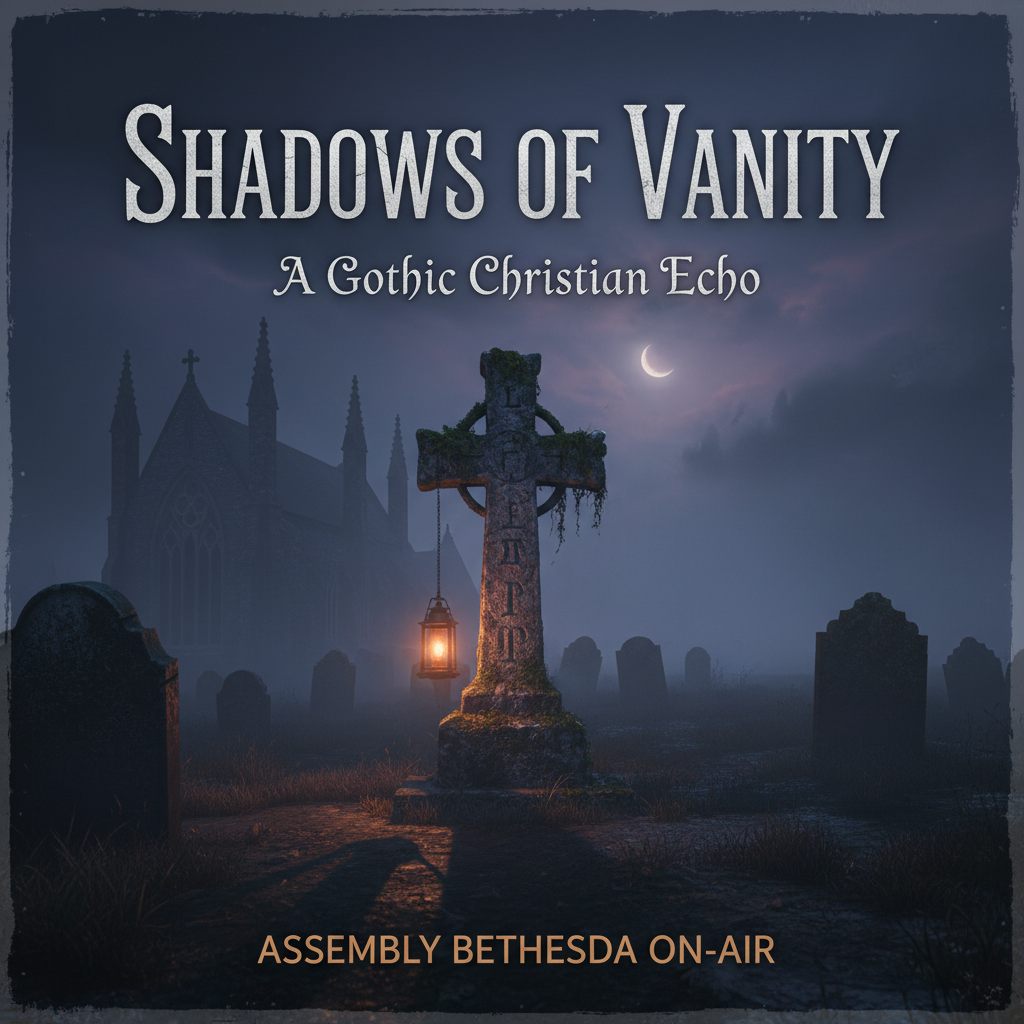
In the quiet corners of scripture, the book of Ecclesiastes waits like an old crypt overgrown with vines. It pulls you into the deep night of the soul where everything under the sun feels heavy and hollow. The preacher stares into the abyss and calls it all vanity. The words land like rain on a marble tomb. It gets lost in the fog when you chase it.
Darkness knows there’s nothing that lasts. The cross rises silent and steady right there in the middle of that gloom. A glimpse of light pokes through the cracks of decay and the veil thins just enough for hope to breathe. The Gothic soul knows about this dance between shadow and spark. A sigh echoes through empty halls as the preacher begins.
Vanity of vanities, he says, everything’s meaningless. The sun rises and sets the same way every day, so nothing new stays. You build houses and plant gardens, but they crumble back into dirt. Laughter fades before the candles go out. The grave waits with open arms at the end, and no one escapes its cold grasp.
Despite the darkness, our faith whispers that it’s not over. The black lace of mourning can frame the brightest resurrection. We wear the night like a garment and let it point us toward the day that never ends. Watch the preacher lay out the seasons. The tears cut rivers through the soot of the heart when it’s time to weep.
I know it’s time to mourn when it’s like a funeral procession. There’s a time to plant and a time to uproot things that you thought would last forever. The earth spins in its black rhythm, and we spin with it too. The Gothic lens sees beauty in that turning.
The wilting rose holds more truth than the perfect bloom. Decay shows that we’re bonded to something eternal. Oppression stalks the streets like a shadow with teeth. The poor cry out, and the powerful turn away with empty hands. A preacher watches as injustice grinds souls into dust.
Whenever you don’t have anyone to stand beside you in a storm, loneliness settles in. Two are better than one, he says, but even companionship can unravel like thread in the wind. The vanity bites deeper when you face the night alone. Wealth stacks up like stones in an abandoned mausoleum. In the small hours, it doesn’t bring peace.
Irony stings like thorns when the rich man lies awake while the laborer sleeps sound. The preacher warns about vows made in haste. Don’t make promises you can’t keep. In silence, God listens, and the debt hangs heavy in the air. He says you should enjoy the simple gifts: the food, drinks, and work you do.
Nevertheless, even these pleasures taste ash if you don’t remember the one who gave them to you. While the clock ticks toward the veil, the Gothic heart savors the moment while knowing the veil is fast approaching. Life stretches long for some and feels empty. When you don’t taste true joy for a hundred years, you die like unpaid rent. It’s called a grievous evil under the sun by the preacher.
Both wisdom and folly end up in darkness, even though they shine brighter. The wise man and the fool lie down together in the earth. Their names fade from the stones and the wind erases the rest. Death destroys every tower. The living know they’re gonna die, but the dead know nothing about it.
I think that a house of mourning teaches more than a house of feasting ever could. In Gothic tradition, we linger in that house of mourning. The black drapes and flickering candles speak the truth the bright halls try to hide. Here the soul learns to fear God and find its footing. For a season, injustice rules the courts and the wicked prosper.
He sees the righteous suffer while the cruel laugh. But he knows the final accounting lies beyond the sun. Youth calls with its fire and its illusions. Live boldly before the evil days come, he urges. The sun gets dim and the house keepers tremble.
Remember your creator before the silver cord snaps and the golden bowl breaks. The dust returns to the ground and the spirit rises to the one who made it. The preacher ends where he began with a call that cuts through the fog. He tells us to fear God and follow his commandments, and when we stand before the throne, we lose all vanity.
The light that pierced the tomb now pierces the heart and the shadows bow. Gothic Christians walk through these pages with wide eyes. They don’t run from the decay or the melancholy. They let it carve us into vessels that hold the light more deeply. The book leaves you in a graveyard at dusk with the moon rising over the crosses.
Everything under the sun has shown its fleeting face. But the faith that built this place refuses to let the darkness win. As soon as you close the ancient pages, the veil feels thinner than ever. After the preacher spoke, the soul listened. Now the cross stands ready to turn vanity into victory.
A journey through Ecclesiastes isn’t for the faint-hearted. In the honest dark, the hope of resurrection burns even brighter. We carry the melancholy like a sacred relic. It reminds us that true life begins at the end of the sun.
Gothic paths lead straight to empty tombs and open skies. Let the preacher tell you what to do here. Let vanity strip away all the false comforts, then you’re left with God’s steady hand holding you through every shadow. The book ends, but the meditation never ends.
It’s the same truths every night, wrapped in fresh mist. The light still shines and darkness still cannot overpower it. Gothic Christians don’t run from these pages. They sit with the melancholy and let it shape them. Every empty wind becomes a song of redemption when the cross stands in the center of the graveyard.
The preacher has shown us the night in all its honesty. He has stripped away the bright illusions and left us with the raw truth. Now the faith we hold weaves that truth into something eternal. We wear the darkness like a cloak of honor. The darkness reminds us that the light shines brightest when it’s the darkest.
Vanity doesn’t get erased by the resurrection, it gets redeemed. Every chapter brings another layer to the veil. Every verse shows us the beauty hidden inside the decay. Gothic is about walking straight through the shadows without blinking. As the book closes, the meditation lingers like incense in an old cathedral.
Each new night brings the same invitation to see clearly. The preacher spoke centuries ago, and his words still echo in the darkness. The pleasures, the work, the seasons, the loneliness all point to something bigger. Crosses are the only meaning that lasts, and they await us at the end of every futile road.
John talked about a light that darkness could not overcome, and it’s the same light that meets us here. Gothic hearts beat stronger because they’ve faced vanity and found the Savior waiting. Fear God, keep him in line, and let the rest fall into place. The vanity of vanities becomes the doorway to the eternal.
Shadows bow as the dawn breaks. This is the message that rises from the pages like a mist from the grave. It’s dark, honest, and full of hope for those who will listen. The preacher’s done his job, and now the cross does its own. The night has spoken, and the soul has answered.
In the Gothic Christian faith, the veil is torn just enough to let the light through. Well lovelies that is all for today. Until next time: Courage!