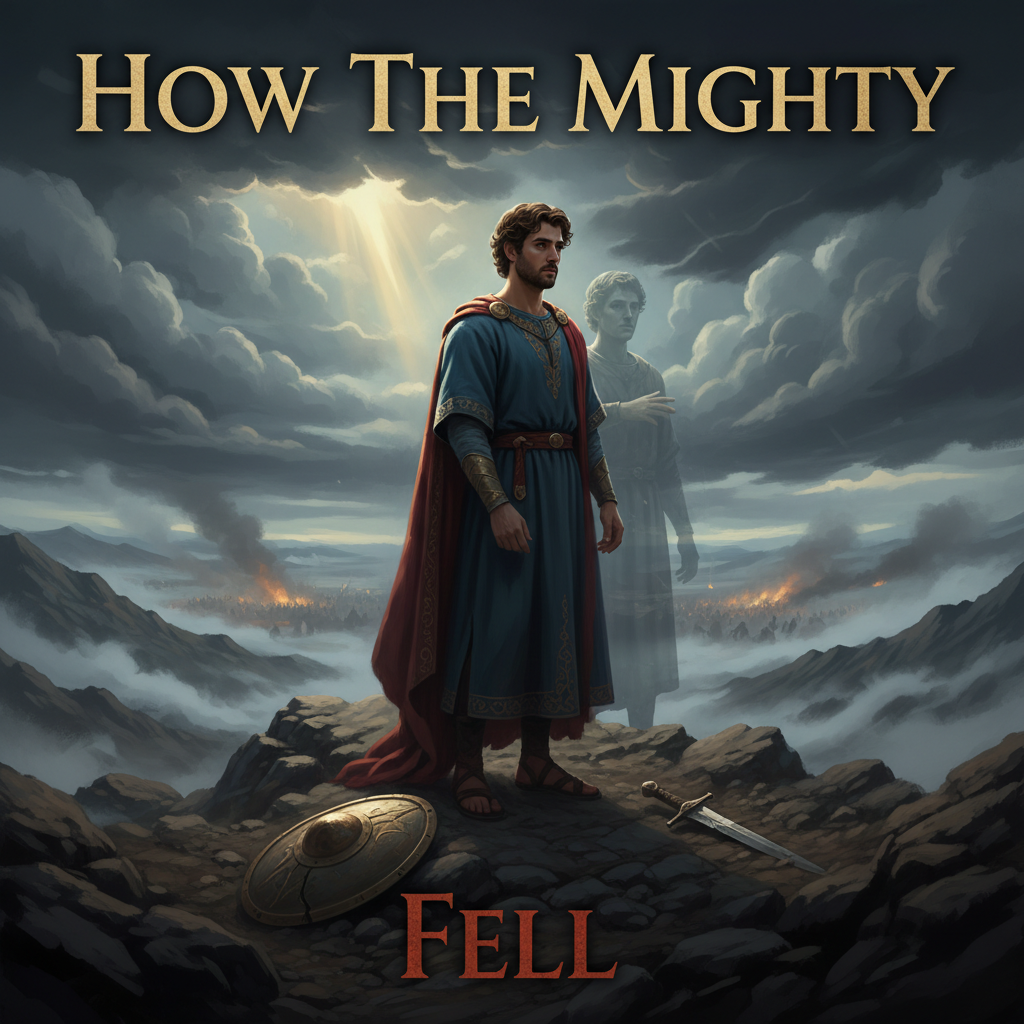
Shadows of the Fallen Crown: David’s Lament for Saul and Jonathan (2 Samuel 1)
An honest cry comes from a man after God’s own heart in the dim light of ancient hills where shadows stretch like cathedral spires reaching into stormy skies. In David’s lament, he mixes grief, loyalty, and a strange grace that refuses to dance on graves. It’s not polished theology, it’s a soul pouring out in the fog of loss, where enemies and brothers fall together on blood-soaked ground.
Those old days were dusty and bloody and kingship was as heavy as iron chains. David hears the news with torn clothes and a broken voice, not triumphant. Saul, the one who hunted him like a ghost in the night, has died. Jonathan, his friend, whose soul was entwined like ivy on ancient stone, is gone too. From this darkness, there’s a refrain: How the mighty have fallen.
I don’t think this is cold history. It’s a Gothic tapestry of human grief wrapped up in divine mercy. David could have been happy. His path to the throne just cleared in dramatic fashion. Instead, he weeps. He composes a song of sorrow that he teaches the people of Judah , a national dirge that lingers like incense in a candlelit chapel. There’s no gloating, no victory parade. Just deep, atmospheric mourning that honors what was lost , even from a troubled king.
Let’s walk through this passage casually, like friends gathered in a stone hall as rain beats against stained glass. As David curses the mountains of Gilboa where the battle happened, he says there is no dew and no rain on you, because the shields of the mighty were defiled there. Like a Gothic novel where nature mourns the fall of great ones, it feels dramatic , almost theatrical. Saul and Jonathan lie slain on the heights, their glory gone.
Even in death, David remembers the good, the provision, the battles he fought for the people. He calls the daughters of Israel to weep for him, the king who once dressed them in scarlet and put gold ornaments on their clothes. It takes God-shaped hearts, one that sees beyond vendettas into the big picture of a nation, and a God who anoints flawed leaders as well. Our own lives, when those who opposed us stumble, this lament whispers , grieve with dignity. Don’t let your heart turn bitter.
My heart aches for you, Jonathan. Your love for me was better than that of women. You were so dear to me. You were so close to me. It stood as a lonely tower in the mist, a bond of covenant loyalty that death couldn’t break. Jonathan’s steadfastness was light piercing the gloom in a world of shifting alliances and hidden daggers. That kind of friendship is rare, a gift from above that survives even the darkest chapters.
This lament is a Christian Gothic beauty that doesn’t despair but points to hope. Death is real, mighty ones do fall, yet God moves forward. David will rise as king, not through revenge, but through patient trust. Whether it’s from a friend or foe, his grief is a model for us of how to lament well, honest tears mixed with restraint and honor. When loss comes to us, whether it’s from a friend or a foe, we can bring it to the cross where ultimate grief meets ultimate love in the dim cathedrals of our hearts.
In Christ, our kingdom doesn’t fade, a friendship that outlasts the grave. How the mighty have fallen. These words carry weight even now. They remind us of our mortality, the fragility of power, the way earthly crowns tumble. In David’s song, we’re invited to that space of reflection, where grief over enemies softens our spirits, and grief over loved ones brings us closer to God.