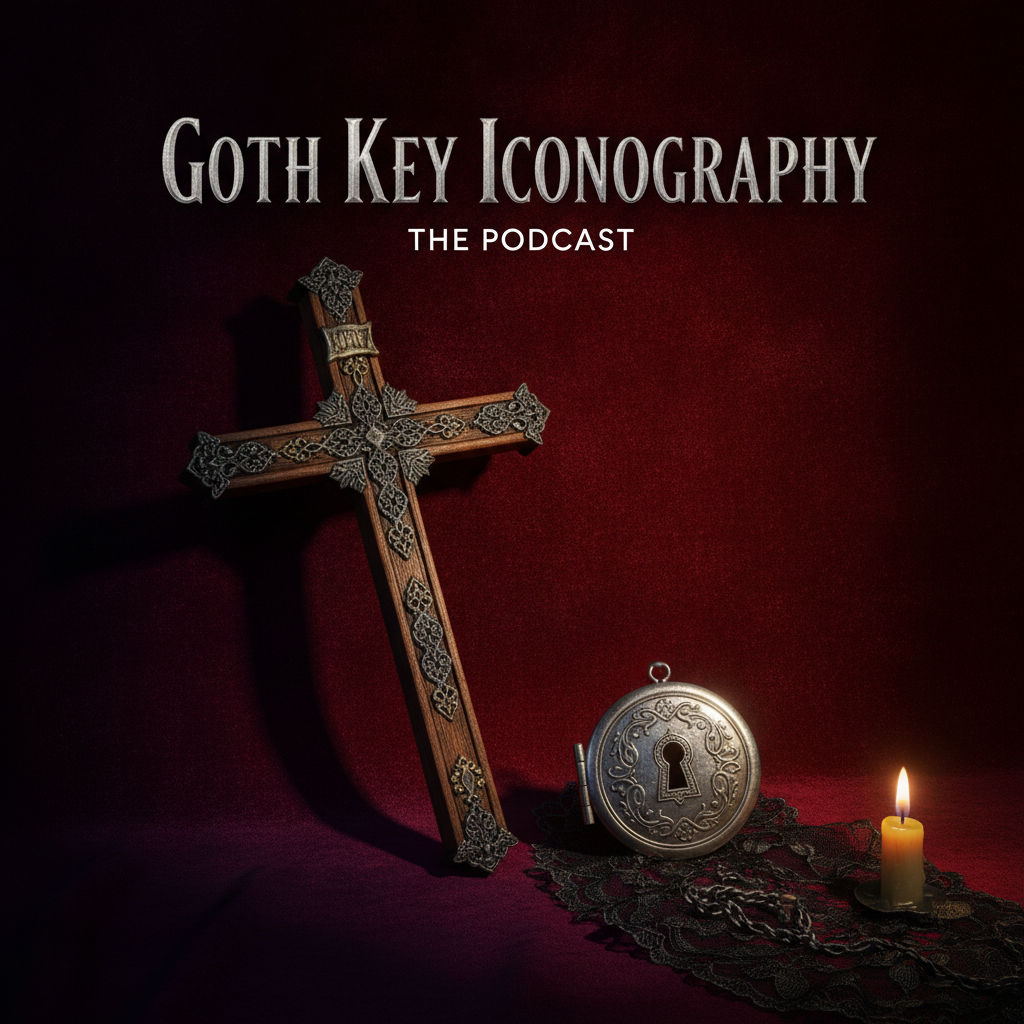
Here’s something cool, kind of unexpected, iconography in a gothic style. Think crucifixes, relics, and all that relic-like décor, but infused with that rich, moody gothic vibe. We’re not doing it to be spooky. We’re trying to find deep beauty and meaning in Christian symbols that have always been mysterious and powerful. It’ll be casual, like a candlelit room with coffee and a movie.
Those Crucifixes are the heart of it all. Imagine a huge, ornate cross hanging on a wall surrounded by deep red and black. It’s all about intricate details in goth style, so think about filigree on the cross’s arms or velvet draped around it. These aren’t just decorations. They remind us of sacrifice and hope in the middle of the darkness. Christianity embraces the idea of beauty in melancholy too. Suffering turned into victory on the cross.
Goth crucifixes are made from pewter or wood with carved details, so you can pair them with black candles and antique frames to make it feel sacred and atmospheric. People who love gothic aesthetics find comfort in these symbols because they acknowledge the shadows of life while pointing to the light.
Relics have been part of Christian tradition for centuries. They are physical connections to saints and to Christ. They take on an enigmatic quality in a goth key. Think small boxes or containers that hold meaningful items, displayed with care. Maybe a relic-like locket with a tiny cross inside or a framed old piece of embroidered cloth.
You can add layers of texture and drama with a gothic flair. Use dark wood shelves, lace coverings, or chains. It’s not about worshiping objects, it’s about drawing closer to the stories of faith through them. Saints went through dark times, and their relics remind us that God works through the broken. If you’re looking for a goth touch, you could have a small altar area with a relic-inspired piece surrounded by dried flowers or raven feathers. I feel reverent and personal.
Here’s where things get really fun and creative. You don’t have to use real relics. You can make your own meaningful display, like old keys symbolizing spiritual doors, antique books of prayers, or angel sculptures that look darker and more medieval. Gothic architecture is full of light and shadow, cathedrals with flying buttresses and stained glass that tells stories in light and shadow. It’s all about mixing textures like velvet, metal, and stone.
Think about deep purple walls, a cross centerpiece, and candles shaped like gargoyles with crosses incorporated on shelves. It sounds intense, but it creates a space for reflection. Gothic style celebrates the dramatic, and Christian iconography has always been dramatic. The suffering, the resurrection, the mystery of faith.
In order to understand how all this fits into Christian life, let’s talk about gothic aesthetics. People are drawn to gothic aesthetics because it lets them express their beliefs. There are seasons of grief, doubt, and longing in life. Gothic iconography honors that. It says that it’s okay to hold onto the cross while sitting with the shadows.
Gothic cruxes are often made of metal or silver with patina. You can find or make versions with roses entwined, symbolizing love and thorns, to stand out against black backgrounds. It’s visually striking and ties into the passion of Christ.
For relics, think about how early Christians venerated them. In modern goth spaces, you might use replicas or symbolic items. To represent mortality and eternal life, you can use a piece of cloth stained with symbolic red, or a small bone sculpture (ethically sourced of course). It’s all about intention. Decor like this turns a place into a place to pray and contemplate.
Adding religious relics to your décor can include prayer cards in ornate frames, rosaries hanging like jewelry, or even taxidermy butterflies with crosses to display transformation. Goth culture loves symbolism, and Christianity is rich in it.
Use dim lamps or fairy lights with a dark tint to set the mood. Incense or scented candles can enhance the sensory experience. Start small. Pick one crucifix that speaks to you, and build around it.
You don’t have to follow strict rules. Mix in personal touches that reflect your walk with God. Use music-inspired elements, like lyrics from hymns printed on dark paper.
When we go deeper, consider the historical side casually. Gothic art in churches was meant to inspire awe. Those arches and carvings pointed to heaven.
In a goth key, it all comes together in a way that feels authentic and authentic for those who love depth and atmosphere. Crucifixes remind us daily of redemption. Relics connect us to the cloud of witnesses.
The beauty is in the balance. Dark tones make the symbols of light stand out more. Black backgrounds highlight a cross’ shine. Velvet softness contrasts with hard metal.
Wear cross pendants with gothic chains or clothing with subtle religious motifs in dark colors.
In the end, gothic iconography is about making faith visible in a way that resonates. It draws people in who might not connect with more conventional styles. It shows that Christianity is inclusive.