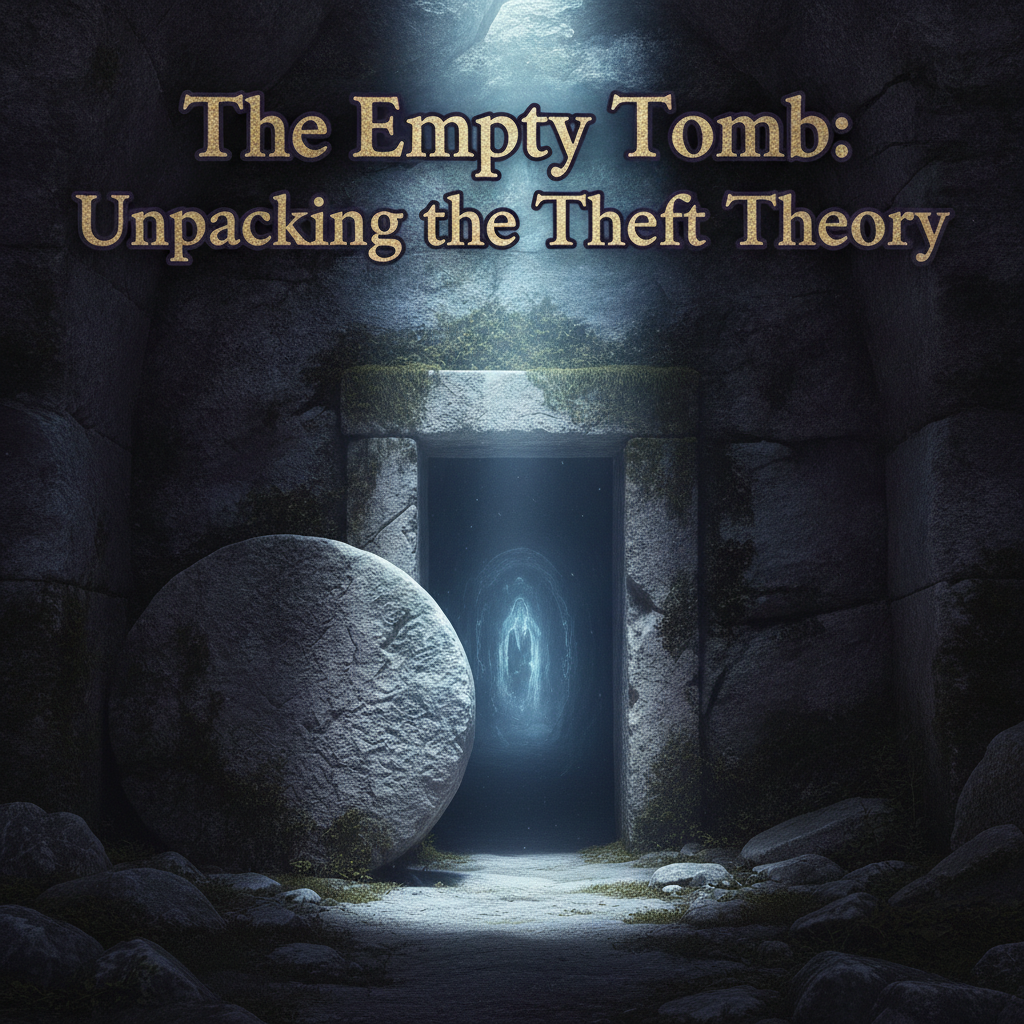
Something shifts in the dark outside Jerusalem in the early hours after the crucifixion, and the explanations that followed never really settled down. The air around an empty tomb carries a certain weight. It’s a neat story on the surface. It keeps the supernatural at bay. One of the oldest suggestions still whispers that the disciples took the body themselves. As the scene is illuminated by ancient stone and trembling witnesses, that explanation gets less and less plausible.
The setting is amazing. There’s a tomb cut into rock, a stone rolled across the gate, and a guard detail to keep the place safe. Despite hearing rumors that the Teacher was going to rise, the authorities weren’t careless. The seal was official, and the watch was armed and accountable. It’s hard for a small group of grieving men to overpower trained soldiers, move a stone that a strong back would have trouble moving, and then carry away a body. Guards reported something else afterward, and the official story was more damage control than calm investigation.
There were also the disciples themselves. Those weren’t bold operators. After the arrest, they scattered. Peter denied even knowing him. The others hid behind locked doors. The idea that this same group, still reeling from public execution and personal failure, suddenly organized a precise nighttime theft under the nose of armed watchers suggests a transformation that theft theory itself can’t give. In a single night, people don’t usually go from abject terror to disciplined crime, especially when the prize is a corpse.
In the aftermath of the empty tomb discovery, it’s hard to square with a simple cover-up. The same men who had hidden began talking openly about what they’d seen and heard. Instead of retreating to safer districts, they stayed in the city where authorities could get hold of them. They announced a risen Lord right where the body was. Every public claim became exposed if they had stolen the body.
A single confession under pressure, a single slip, would have collapsed the whole story. Yet the message spread, and the messengers endured hardship, exile, and death rather than recant. Liars don’t usually choose to go to the cross or the sword. Their lives after that morning indicate conviction, not calculation.
Another thing to consider is the burial cloths. In the accounts, they’re left in place, the head covering separate. A hurried theft would probably take the body as it is, wrapped and ready. Leaving them arranged as if the body had simply passed through suggests something other than frantic removal. The detail’s small, but it seems odd in a story about theft. It makes more sense if they left the wrappings undisturbed while the One they had held was gone.
A quiet difficulty is the women who came first to the tomb. In that culture, their testimony carried less formal weight. If the story was supposed to be credible, stronger witnesses would have been better. It’s more likely that the earliest reports come from mourners who found the stone moved, the body missing, and a message they couldn’t believe. The awkwardness of the detail proves it wasn’t carefully crafted. Rather than being polished, it has the texture of something remembered.
Different explanations have been offered over the years for the theft. Sometimes the disciples are portrayed as clever conspirators. Sometimes they’re portrayed as innocent. In neither version are the empty, guarded tomb, transformed cowards who become public witnesses, and a message that doesn’t die. There’s a mystery behind the alternative, that the body wasn’t stolen because the Lord’s risen. But it doesn’t require us to believe that frightened men suddenly became master thieves, or that a conspiracy of silence held under pressure of persecution.
This is the perfect place for Christian Gothic sensibility. The stone, the dark, the watchers, the sudden absence, the light that doesn’t come from any ordinary lamp. It’s not about denying shadows here. It’s about recognizing that the darkest night outside the city walls wasn’t the end. It wasn’t necessary for the disciples to steal what death no longer possessed. An empty tomb is both a mystery and evidence, a place where ordinary explanations end and something stronger takes over.
Our official story of theft didn’t match the facts on the ground that night. We don’t know everything about that night. There’s the guard, the seal, the disciples’ fear, their courage later, the arranged cloths, the unlikely first witnesses, all of these things argue against the simple claim that a friend took the body. In the quiet that follows every attempt to explain away the emptiness, that claim still sounds: He couldn’t be kept in the grave.
Christian life doesn’t float above darkness. It walks through it knowing that the tomb was opened from the inside. The same Lord who left the stone rolled away still meets people in their sealed places. The evidence against the theft theory isn’t just historical argument. The One who stepped out of the grave still calls the fearful into courage because death doesn’t have the last word.
So the question returns, not as a puzzle but as living pressure. If the disciples didn’t steal the body, something else happened. The early witnesses staked their lives on it. All of these changes, their refusal to abandon the message, their willingness to suffer rather than revise the story, are hard to ignore. It asks us, at the end, whether we’ll keep inventing human explanations that get thinner with every detail, or whether we’ll stand before the open stone and reckon with the possibility that the Lord is risen.
This reckoning isn’t tidy. It doesn’t remove all shadows. It does, however, put them in a bigger frame. In Gothic Christianity, light is most visible when it breaks through darkness. The garden tomb is one of the places where that breaking is remembered. The disciples didn’t need to carry the body away. The body was already gone, and the world has never been the same since.