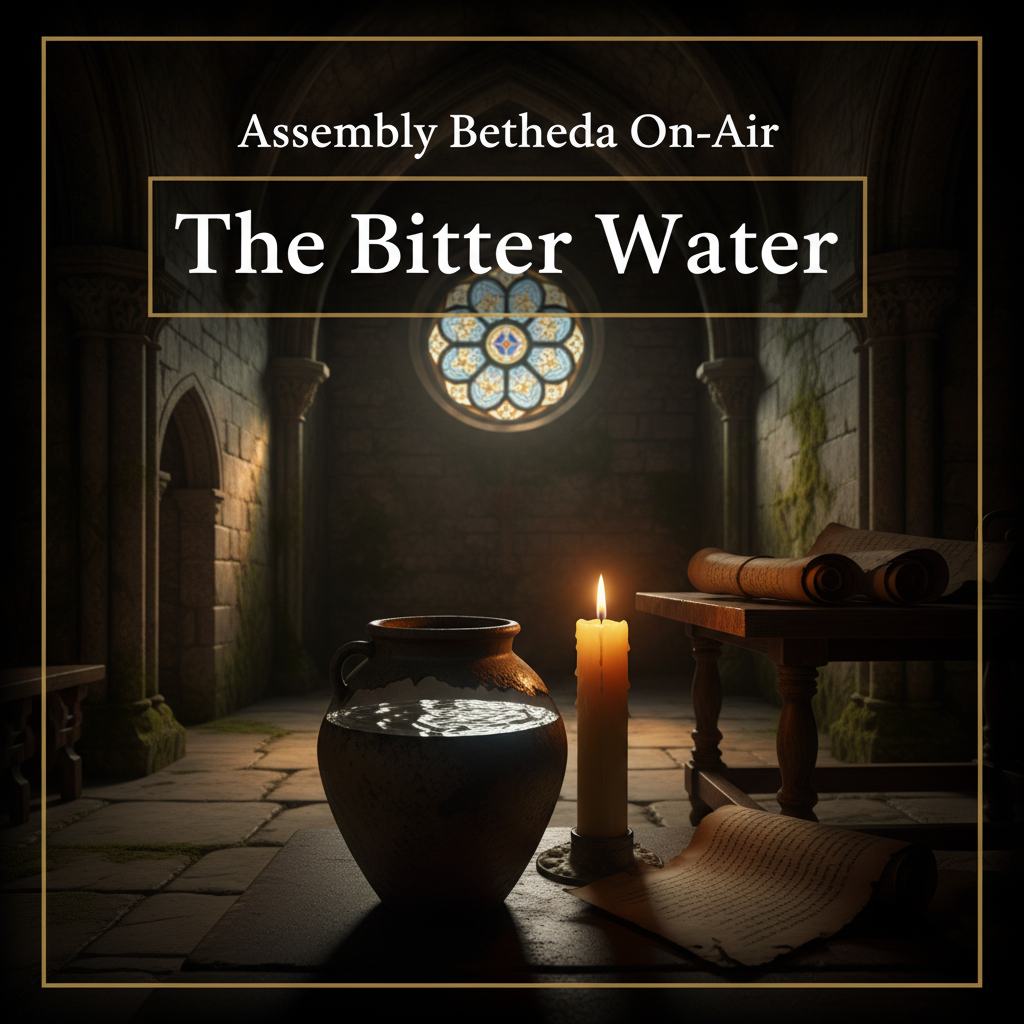
Hello friends, welcome back to this velvet-shadowed corner where faith meets ancient mystery. In this passage, we step into the flickering torchlight of Numbers 5, 11, 31, a passage that feels like something out of a Gothic novel but is still rooted in God’s Word. This is not a dry rulebook chapter. Here’s a tabernacle with heavy curtains, dust drifting like forgotten secrets, and holy water turning bitter.
It is a raw , dramatic ritual that uncovers jealousy , faithfulness , and the kind of justice that rolls in like storm clouds over dark hills. We keep it real and casual here , just a heartfelt dive into hw this text shows God as the ultimate revealer of truth amid hidden pain and suspicion.
The Lord tells Moses what to do when a man’s wife goes astray and is unfaithful , but it stays hidden with no witness and she has not been caught. If feelings of jealousy rise in her husband and he suspects her , whether she is impure or not , he must take her to the priest along with a tenth of an ephah of barley flour as an offering. No olive oil or incense is added , for this is a grain offering for jealousy , a plain reminder to draw attention to possible wrongdoing.
You can already feel the tension building , like the first low notes of a dark hymn echoing through an empty stone hall. Suspicion creeps in like fog across a moor , and God steps forward with a solemn ritual to cut through the haze.
The priest brings the woman and has her stand before the Lord. He takes holy water in a clay jar , adds dust from the tabernacle floor , then loosens her hair and places the grain offering in her hands while he holds the bitter water that brings a curse. He puts her under oath and says , If no other man has been with you and you have not gone astray while married , may this bitter water not harm you.
But if you have made yourself impure by being unfaithful , may the Lord cause you to become a curse among your people when He makes your womb miscarry and your abdomen swell. May this water enter your body so that your abdomen swells or your womb miscarries. Then the woman answers , Amen. So be it.
That single Amen lands heavy , like a great door closing in a haunted corridor. She surrenders completely to God’s test. The priest writes the curses on a scroll , washes them into the water , and makes her drink it. He waves the grain offering before the Lord , burns a handful on the altar as a memorial , and then has her drink the bitter water. If she is guilty , the water will cause bitter suffering , her abdomen will swell , her womb will miscarry , and she will become a curse.
If she is innocent and clean , she will be cleared of guilt and able to have children. This is the law of jealousy , covering both real unfaithfulness and a husband’s unfounded suspicions. The husband remains innocent of any wrongdoing , but the woman bears the consequences of her sin.
This ritual carries a rich Gothic atmosphere. The clay jar , simple and earthy , holds water that can bless or curse. Dust from the sacred floor mixes in, reminding us we stand on holy ground even in moments of judgment. The loosened hair speaks of vulnerability and exposure. The plain barley offering, waved and burned , sends smoke curling upward like prayers entangled with justice. Drinking bitter water reveals what’s inside you.
A living scene painted with crimson and black, candle flames casting long shadows on stone walls. Christian Gothic thrives in this blend of the sacred and the severe, where beauty meets terror.
God doesn’t leave a husband trapped in endless doubt because jealousy can eat away at the soul like ivy chokes an old stone. He provides a clear path to truth. The offering is plain because this is serious business, not celebration. Priests act as mediators, speaking the oath and administering the test. The woman’s Amen shows her trust in the Lord, and if she’s innocent, the water won’t hurt her and she’ll be able to bear kids. In the event she breaks the covenant, her body serves as a visible warning among the people. It shows how seriously God takes marriage, a union meant to be a reflection of His own faithfulness.
It’s beautiful how the holy water becomes bitter from dust and curses. There’s no human courtroom or crowd, just the silence of the tabernacle, where heaven touches earth. In Gothic light we love, it reminds us that faith isn’t always soft and gentle. It protects the marriage from lingering shadows and the community from chaotic accusations. It offers resolution instead of endless suspicion. It sometimes comes with storm clouds and thunder, but when hearts are clean, it always leads to restoration.
This passage points forward in haunting ways to the New Testament. The bitter cup reminds me of the cup Jesus drank for our sins. We let our hearts wander and we were unfaithful to Him so we wouldn’t be destroyed by the curse. In contrast to this ritual, which brought suffering to guilty sinners, Christ took the full weight of judgment, so that sinners could be cleared by grace. A woman left free and fruitful, symbolizing the life restored by Jesus. Grace whispers through the shadows even now, a foretaste of the living water that truly cleanses.
The law still speaks in our world of broken promises and hidden hurts. God sees everything, and He wants our covenants to be honest. The ritual calls us to come to the light of suspicion and hidden things. When we say Amen, so be it, we believe God’s justice is perfect, whether it clears us or reveals what we need to change. Darkness gives way to divine clarity, and shadows only make the light shine brighter.
A Gothic masterpiece in scripture, Numbers 5 , 11 , 31 is full of drama, symbolism, and unwavering truth. It invites us to embrace the mystery of God’s ways , to trust His justice when our eyes fail , and to stand in awe of a Lord whose heart is revealed by holy water mixed with tabernacle dust. Whatever the water brings, He is still sovereign. The covenant is sacred, and faithfulness leads to life. The light of Christ still shines through even the bitterest waters, turning every test into a testimony of grace as you linger in the shadows a bit.