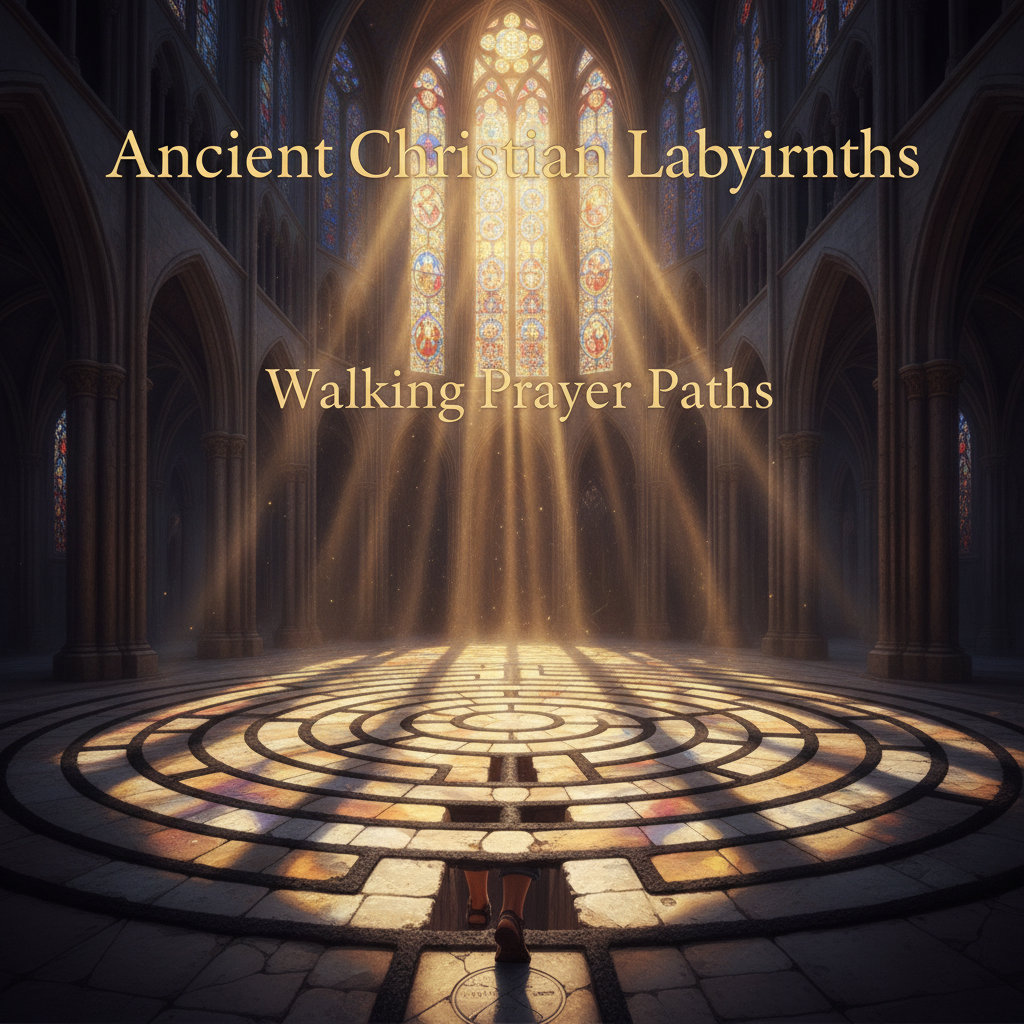
Here’s something cool from Christian history, those ancient labyrinths people used to walk to pray. There’s more to these patterns on the ground than old designs. These are special paths that help people connect with God in a quiet, moving way. Just imagine stepping onto a simple winding path and praying while your mind calms down. That’s what it’s all about.
A labyrinth is one of the most common things in old churches and holy spots in Europe. It dates back hundreds or even centuries. Instead of mazes that have dead ends, labyrinths have a clear path in and a clear path out. Following the turns feels like you’re on a journey to the center, where you’ll find peace or maybe a moment with God. The early Christians saw these as tools for prayer, not games. While they walked, they thought about Bible stories or whispered to God.
Chartres Cathedral in France has one famous circular pattern on its floor. It’s been around for a while, but still draws people. People sometimes walk it barefoot, feeling the stones under their feet as they reflect. The design has eleven circles and a beautiful rose center. There’s no rush, just trust step by step.
When people wanted deeper ways to pray, these labyrinths came up. Monasteries and cathedrals used them so everyday people could get a mini pilgrimage without traveling far. Walking the path was like following Jesus through all the tough stuff. Sunlight cast shadows through windows, turning the floor into a living picture of light and dark, hope and struggle.
Basically, it’s just praying with your whole body. No fancy words or long sermons. Just move, breathe, and listen. Modern churches are bringing back this practice because it feels fresh and grounding. The way out feels lighter, like God walked with you all the way. You enter the labyrinth with worries, but by the middle you feel lighter.
The patterns often use simple geometry, circles and turns that mirror the seasons or the soul journey. They were linked to stories like the Israelites wandering or Jesus in the desert by early Christians. A single path shows that God has a path for everyone, even when it curves unexpectedly. You can’t get lost here, just find yourself.
Labyrinths can be outdoors in gardens or grass, or indoors with tiles or paint. They can be small finger ones on tables or big ones you can really walk around. The key is slow movement + prayer = closeness to God.
Walking these ancient designs helps calm the busy mind. In our noisy world, this feels like a gift. You focus on each step and let your prayers flow naturally. Some say the turns represent letting go of control. Others feel the center as a place to receive peace. Whatever you do, prayer moves.
The steady path gave comfort when life felt chaotic, and Christians used labyrinths through the ages. We can borrow that wisdom today. Find a labyrinth near you or draw one on paper and trace it with your finger. The goal is to walk intentionally toward God.
The shadow patterns also play a big role. As the sun moves, light and dark dance across the design, reminding us that faith brings both joy and hardship.
So next time you feel scattered, try a labyrinth walk. Keep it simple. Breathe in peace, breathe out stress. Let the ancient pattern guide you. It is not about rules or perfection. It is about showing up and letting God meet you on the path.