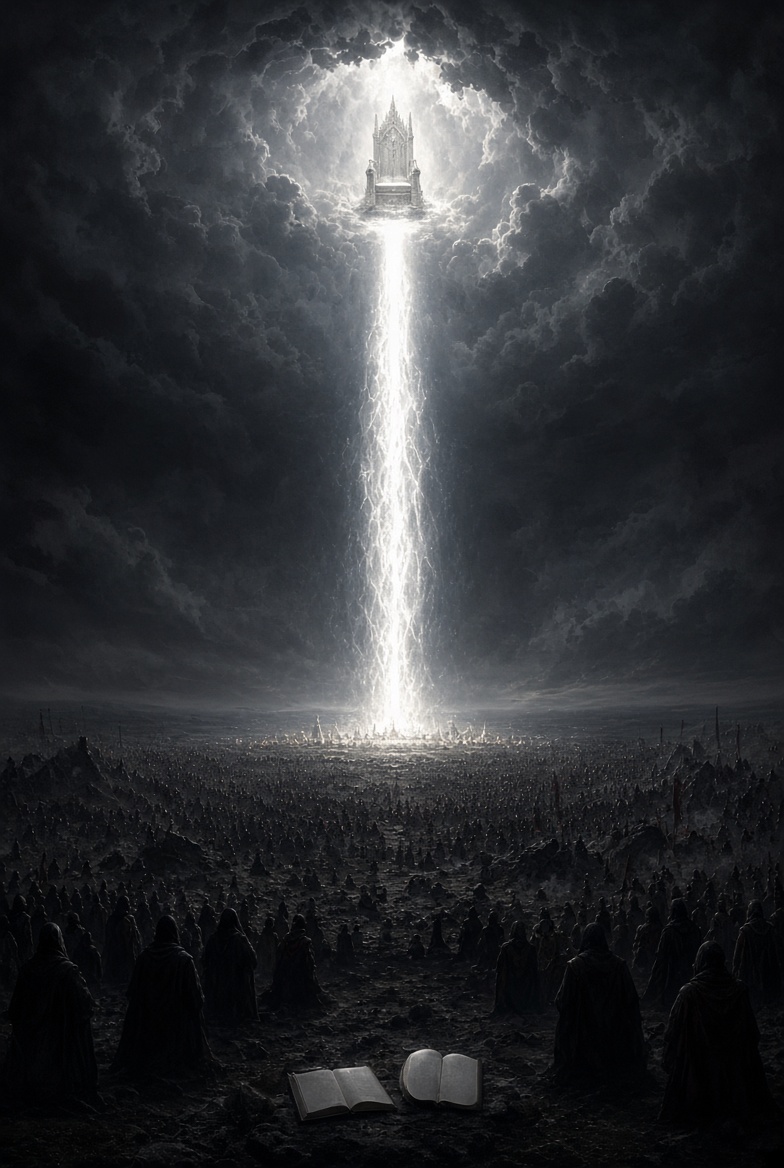
There’s something deeper waiting in quiet places where emptiness seems to reign, where stone walls crumble and winds howl through abandoned rooms. The presence of God doesn’t just visit desolate places. It remakes them. The barren ground that once held only dust becomes fertile ground. That silence that felt final becomes a pause before a holy song. It’s not a distant hope. The Almighty steps into ruin and speaks order, beauty, and belonging.
Desolation is more than empty space. It’s the feeling of loss, the fading of warmth, the feeling that something once lived is gone. The natural world is full of ruined abbeys, forests stripped of leaf and song, and cities whose streets echo with forgotten footsteps. It appears as spiritual dryness, unanswered questions, and a heavy feeling that God has grown distant in the human heart. There’s a consistent pattern in Scripture. The God who made the earth from nothing doesn’t abandon it. He enters it.
Isaiah talked about the wilderness turning into a spring. He described the desert blooming with Lebanon’s glory, Carmel’s splendor, and Sharon’s majesty. It’s not just poetic decoration. It’s a statement of divine intention. Where human strength ends, divine presence begins to work quietly. It’s rarely sudden in the sense of spectacle. Most often, it’s a steady light that first outlines the edges of the darkness, then fills the center, then spills outward until it’s gone.
It is the full weight of God’s character that makes His presence so powerful. He is holy, so nothing unclean can remain unchallenged in His presence. He is merciful, so the broken don’t get crushed anymore, but gathered. He is sovereign, so the powers that once claimed the desolate place must give way. When the Lord draws near, the atmosphere changes before the scenery does. Fear loosens its grip. Hopelessness thins out. There’s a quiet expectation that takes hold. Inner shifts are the first signs that the outer landscape is changing.
In the Gospels we see Jesus move through places marked by desolation of many kinds. He enters tombs and calls life back into them. He walks into homes where sickness is a permanent guest and sends it away. With a glance, a word, or a shared meal, he restores dignity to those whose lives seem wasted. In every encounter, God doesn’t need perfect conditions. He creates them. The desolate place doesn’t stop His work. His glory shines brightest on this stage.
In the Church’s life, this pattern continues. Communities have recovered from persecutions, neglects, and cultural collapses throughout history. Cathedrals have been built over earlier ruins. Monasteries have cultivated gardens in dirt that was once deemed useless. Prayer has grown up from prisons, hospitals, and lonely rooms until those spaces themselves became centers of light. Faith begins with accepting desolation as temporary. As the stones that once testified to abandonment are rearranged into altars, the silence that once accused is now filled with worship.
It’s never just external transformation. The true wastelands are always inside. The heart that’s grown cold, the mind stuffed with doubts, the spirit that’s forgotten how to hope, these are the true wastelands. The presence of God meets them with the same authority He shows toward physical wreckage. He doesn’t scold it. He fills it up. The Holy Spirit moves through the corridors of the soul, opening windows long boarded shut, sweeping out dust of old disappointments, and lighting lamps that had gone dark. It’s not instant perfection, it’s progressive renewal. Old patterns lose their power. New desires come on. Love and trust become more powerful.
In the process, we’re called to participate. God isn’t just doing work in desolate places passively. It’s simple and hard at the same time. We have to acknowledge the barrenness instead of denying it. Even when it feels like it’s the furthest away from Him, we need to turn toward Him with the quiet disciplines of Scripture, prayer, and fellowship. Such faithfulness makes room for God’s presence.
People who’ve faced desolation and then seen it reversed have a special beauty. There’s a greater joy in knowing the contrast. It’s a richer gratitude because you’ve tasted the alternative. It carries weight because it’s been forged in the dark. Those who’ve passed through spiritual winters and emerged into spring have an authority that you can’t fake. The scent of the wilderness they left behind and the fragrance of the garden they entered is in their words.
What was once a desolate place becomes a testimony because God’s presence is there. The ruined walls become evidence of former strength that God is now restoring in greater measure. In the economy of divine redemption, nothing is wasted. The empty rooms become spaces ready for new occupants. Silence becomes the canvas for new songs. Every barren patch of ground is potential soil for a harvest that will amaze those who once doubted it would ever come.
There is power in this truth in times of desolation in the wider culture. Churches shouldn’t retreat into nostalgia for better days when institutions fail, moral clarity dims, hearts turn cold. When communities of faith become outposts of transformation, homes become sanctuaries, and ordinary conversations become occasions of quiet miracle, she’s called to embody the presence of God in the most vulnerable places. God’s glory is poised to break forth with unexpected force in the desolate places of a generation.
It’s open to all souls that’re lost in a wasteland. Come as you are. Bring the dust, the silence, the unanswered questions. The Lord, who specializes in new beginnings, doesn’t need polished offerings. He gets honest hearts and starts working. With time, the landscape changes. Springs appear, paths emerge, strength returns. It used to feel like the end, but now it feels like the beginning of a great story.
In the end, the transformation of desolate places isn’t primarily about improved circumstances. It’s about God. When He is there, it’s hard for the definition of desolation to hold true. Emptiness can’t be left empty when He’s with you. When the Source of all life has taken up residence, barrenness can’t stay barren. Darkness can’t remain dark. This is the unchanging promise. It’s a daily reality for everyone who turns and welcomes Him.
Let the winds blow if they must. Let the stones of former structures lie scattered for a season. The Architect of all things already designed the restoration plans. His presence is the guarantee. His faithfulness is the foundation. It’s His love that turns wasteland into a garden, silence into music, ruin into a home. Desolate places on earth and in hearts don’t go unnoticed. They’re waiting for the King who will make everything better.