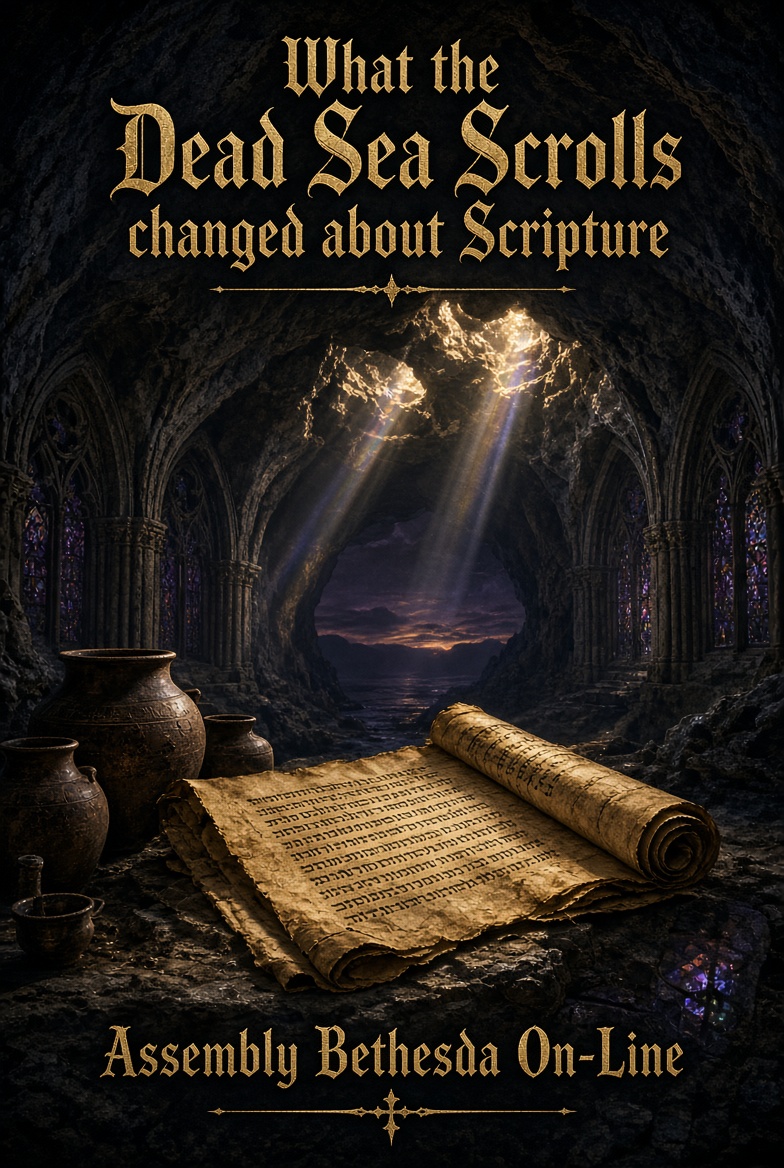
Something waited for centuries in ancient desert caves. The Dead Sea Scrolls didn’t come out with fanfare or sudden revelation. They just came out, dusty and fragile, and changed how we thought about Scripture. Not by rewriting the text we already loved, but by letting us hear the old voices that once surrounded it.
Imagine the scene. A young Bedouin shepherd tosses a stone into a cave near Qumran in 1947, and pottery shatters. Inside the jars are leather and papyrus scrolls that have been in darkness since Jesus’ time. These texts date around the third century BC to the first century AD. They contain portions of nearly every book of the Hebrew Bible, plus community rules, hymns, and commentaries. It was the first time we had hands-on access to manuscripts older than any we’d seen before.
Before the Scrolls, the oldest complete Hebrew Bible we possessed was the Leningrad Codex from around AD 1008. That’s a thousand year gap between the original writings and the copies we used. Scholars wondered how much the text might have drifted. Qumran’s Isaiah scroll, for instance, matches the Masoretic Text we use today with remarkable precision. Whole chapters match almost word for word. In cases where differences appear, they’re usually small – a spelling variation, a word order change, or an occasional alternate reading that doesn’t change the core meaning.
That faithfulness matters. It tells us that the words that shaped the faith of Israel, the words Jesus read and quoted, reached us mostly intact. God kept a record of His words from prophets and poets. Gothic caves become cathedrals of preservation, dark chambers filled with light that doesn’t fade.
They gave us a glimpse into the Jewish landscape between the Testaments, full of hope, debate, and longing. The Qumran community, probably Essenes or close relatives, lived with intense devotion to purity, Scripture study, and a belief in divine intervention. They mention two spirits in every person, light and darkness. They talk about the coming Teacher of Righteousness and the final struggle between the light and dark. It reminds us that the soil into which the gospel was planted was already stirred by Messianic hope and apocalyptic urgency.
Take a look at how the Scrolls treat the Psalms. Some contain new psalms that aren’t in our standard collection, others reorganize the familiar ones in a different way. Yet the heart of praise never changes. The same God is exalted, the same cries for mercy rise, the same confidence in His steadfast love. We enjoy the variety because it shows the community valued the Psalter as living worship, not a museum piece. We can pray them knowing that earlier generations did the same.
Commentaries called pesharim interpret prophetic books as being directly relevant to the community’s time. They saw their suffering and hopes reflected in the ancient books. This method of reading Scripture as present and powerful appears again in the New Testament. When Jesus or Paul draw meaning for their hearers, they stand in a river we can recognize from the Scrolls. Scripture wasn’t supposed to stay in the past. Through the centuries, it speaks, challenges, comforts, and calls.
There are some differences between the Scrolls and later texts. There are some passages in Jeremiah and Samuel that are longer or shorter. Sometimes the Scrolls align closer with the Septuagint than with traditional Hebrew. These variations teach humility. It took a lot of effort, patience, and sometimes mistakes to copy this portrait. But overall, it’s still remarkably steady. There are no essential doctrines that hang by a textual thread that the Scrolls pull, because the central claims of faith stand firm.
Christian Gothic imagines the Scrolls as relics of a shadowed age that hold dust, time, and the silence of caves once echoed with prayer and reed pens scratching in their hearts. Faith has always been close to mystery. The same God who hid these texts for nearly two thousand years also preserved the living Word in the hearts of His people. The caves didn’t create new Scripture. Our understanding of the world that received them was enriched by them.
Today’s church can find quiet courage in the Scrolls. In an age when ancient texts are often questioned, these fragile documents stand as witnesses. They say the story of God’s people didn’t get invented late or altered beyond recognition. When He declared the Scripture fulfilled in their hearing, He spoke from a text that had endured for generations. The words he opened in the synagogue at Nazareth were basically the same words that had been copied and cherished for generations.
The Scrolls also invite us to read with wider eyes. They show that Second Temple Judaism wasn’t a single, rigid system. Multiple voices interpreted the Law and the Prophets. Some emphasized strict separation, while others looked for a coming anointed one who would restore justice. The One who fulfilled every promise walked into that diverse landscape. By understanding the diversity, we’re able to appreciate Christ without diminishing the faith of those who waited.
Those Scrolls are so beautiful. Leather, ink, stitching, and careful line ruling. These were objects of devotion. Scribes worked under lamps and moonlight, preserving words they thought came from the Holy One. Their labor feels gothic in the best sense, solemn, dedicated, almost monastic. We need to treat our Bibles like treasures that survived dark times, not disposable printouts.
The same Spirit who inspired the original writers also guided the long chain of transmission as we hold modern translations influenced by the Scrolls. The same Spirit still opens up the text to us. There was nothing changed by the Dead Sea Scrolls, just our confidence in it. They made the ancient voice sound a lot clearer, older, and more trustworthy than we ever knew.
There is still silence in the caves near the Dead Sea. The jars are empty now, the scrolls carefully stored and studied. But the light they released continues to fall across the pages we read. Scripture stands because God never abandoned it to the dust. Qumran’s shadows make it more visible.