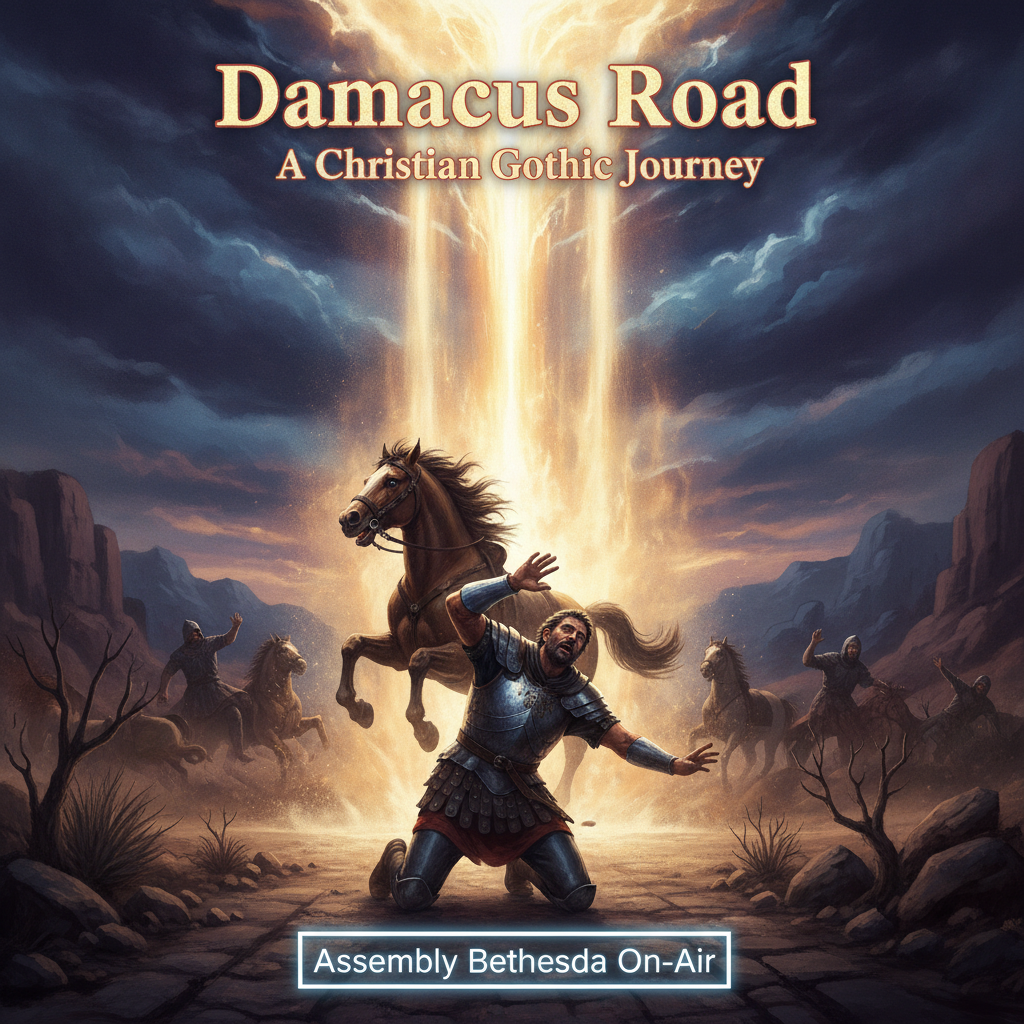
When a man believes he is doing God’s work while crushing the people of God, there’s a kind of darkness that feels heavier than night. That’s Saul of Tarsus. He didn’t see himself as a villain. He saw himself as a guardian of the pure faith, a man whose zeal burned so hot it left scorched earth behind him. With letters in his hand, authority in his lips, he rode toward Damascus with a quiet confidence that was instilled in him.
Under a clear sky, the road stretched out. Dust rose from the hooves of the animals. The sun hung high, ordinary and bright, as it always did for men who thought the day belonged to them. Then it was light. Not sunlight. Not torchlight. A shining light that ripped through the ordinary and dropped Saul to the ground like the earth himself decided he wouldn’t stand up anymore. The light was pure, relentless, and personal. It didn’t ask permission. It just showed up.
In the midst of all the brilliance, a voice cut through. “Saul, Saul, why are you persecuting Me?” The question was simple, but the implication wasn’t. The voice claimed ownership of the people he’d been hunting. Every arrest, every threat, every stone thrown in the name of purity had landed on Someone more powerful. When the foundations of a man’s life crumbled, Saul asked the only question he could think of. “Who am I?” The answer came without hesitation. “I’m Jesus, the one you’re persecuting.”
A hunter realized he had been hunting the wrong prey at that moment. It was not just the light that blinded Saul’s eyes; it burned through the certainty that had driven him. The One he thought was dead troublemaker stood up, speaking with authority no earthly court could match. All of the things he had built his identity on, careful study, fierce loyalty, righteous anger, stood exposed as incomplete. Even though he was zealous for God, he missed the God who walked among men and now called to him.
Saul’s traveling companions heard the sound but couldn’t see anyone. When he rose, the world had gone dark. The light that revealed truth had taken ordinary sight. The men stood in confusion while the revelation pressed on him. He had to be led by the hand into the city he once planned to conquer with warrants and threats. For three days, he sat without food or water, the silence of blindness giving space for the voice to keep speaking in the quiet places of his mind.
Meanwhile, the Lord was already moving on the other side of the city. The quiet disciple Ananias received a vision that tested everything he thought. Go to Judas’ house on Straight Street. Lay hands on the man who’s breathing threats against the church. As any reasonable person would, Ananias protested. Despite the stories of Saul’s cruelty, the instruction remained. “Go. This man is God’s chosen instrument.”
The words Ananias spoke were gentle and direct as he walked through the door, found Saul still waiting in darkness. “Brother Saul, the Lord Jesus who appeared to you on the road has sent me to help you regain your sight and be filled with the Holy Spirit.” Hands touched the man who had bound those hands before. It was like scales falling from Saul’s eyes. Sight returned. Baptism followed. Food came. Strength returned to a body that had been emptied to make room for the spirit.
He didn’t change gradually the way we sometimes like. The man who once hunted the followers of the Way now proclaimed Jesus is God. It was the same synagogues where he had been expected to bring prisoners that now heard him declare the very Name he had tried to silence. Confusion spread among those who knew his former reputation. Astonishment mixed with suspicion. Yet Saul kept talking. Suddenly, the gospel that had stopped him on the road moved through him with the same intensity he once reserved for persecution.
There’s something Gothic in this story because of the collision of light and darkness, the sudden intrusion of the divine into a life which thought it already served the divine. It’s not a gentle path to Damascus. It’s where the old self gets struck down so the new one can rise. Blindness becomes the doorway to true seeing. A hunter is chased by mercy that won’t let him continue in error. Scales fall both literally and metaphorically. Christ’s face can now be clearly seen because everything that covered the eyes of the heart has been removed.
He never forgot the violence of the light or the tenderness of the voice in his later letters. He understood that transformation wasn’t self-improvement, but death and resurrection happening in the same soul. He spoke of being crucified with Christ, of dying for the new man to live. When we least expect Him and when we need Him, the One who once measured righteousness by the law meets us with righteousness as a gift.
Throughout the Christian Gothic atmosphere, you’ll find beauty in the darkness because light chooses to enter it, mercy in the judgment because the Judge is the Savior, and hope in the fall because falling is the beginning of rising. When Saul of Tarsus walked into Damascus, he knew what his mission was, but when he walked out, he felt claimed by a bigger mission than he could have imagined. Jesus stops us when our zeal overrides our understanding of grace, when our certainty overrides our love.
There is more to the story than sight. It continues when a heart that was once closed is opened by the same light. It continues whenever the hunter discovers that Truth has been hunting him all along. The road to Damascus is still open. The light still falls. The voice still speaks. Even if you don’t answer the question, “Who are You, Lord?” that started with a man lying on his face in the dust, the transformation still hits you.