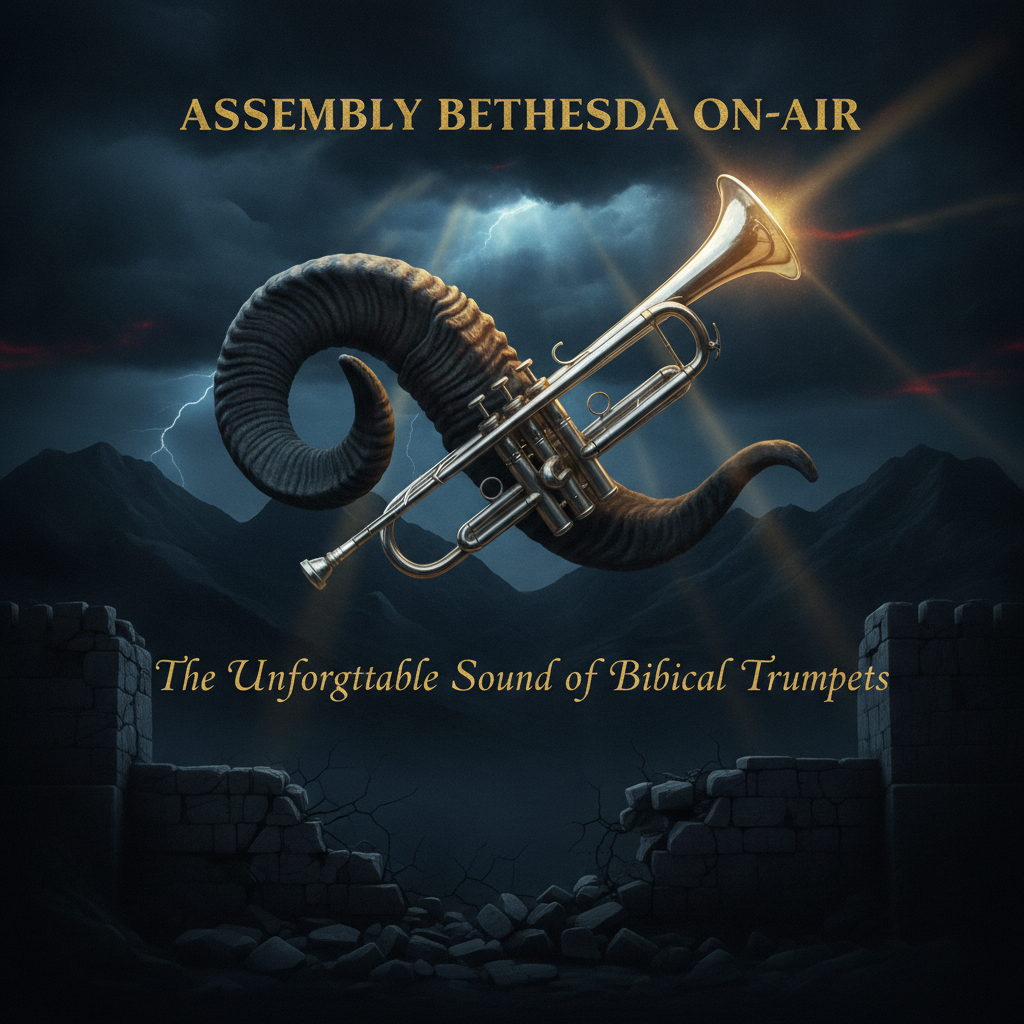
Somewhere in the quiet corners of Scripture, there is a sound that still hangs in the air long after the last note has faded. It is not the polished music of modern worship, nor the distant choir of angels we sometimes imagine. It is the raw, cracked call of a trumpet, often a ram’s horn, sometimes silver, always urgent. These instruments appear again and again across the pages, yet their deeper meaning has grown soft with time, like an inscription worn smooth by centuries of weather.
In the biblical world, a trumpet was never just noise. It was a summons that cut through ordinary life and demanded attention. When the people of Israel stood at the foot of Sinai, the sound of the trumpet grew louder and louder until the mountain itself trembled. That blast was not entertainment. It was the voice of the Holy One announcing presence. The people covered their faces. The ground shook. Something ancient and terrible and beautiful had drawn near.
Later, the same instrument would mark the fall of walls. At Jericho the priests walked in silence for days, then on the seventh day they raised the trumpets and the people shouted. Stone that had stood for generations collapsed. The sound itself became an agent of judgment and of promise. What human hands could not tear down, the call of God brought low.
There are silver trumpets as well, crafted for the priests, used to gather the camp, to signal movement, to mark the beginning of festivals. Two of them were enough to assemble the whole congregation. One alone called the leaders. The difference in tone carried meaning. A short blast meant one thing. A long, sustained note meant another. The people learned to listen carefully, because the trumpet spoke a language of obedience.
In the hands of the watchmen, the trumpet became a warning. When danger approached the city, the man on the wall lifted the horn and sounded the alarm. Those who heard it had a choice. They could ignore the call and remain in their houses, or they could rise and prepare. The prophet Ezekiel was told that if the watchman failed to sound the trumpet, the blood of the people would be on his hands. The instrument carried moral weight. Silence could be a form of betrayal.
Then there are the seven trumpets of Revelation, each one opening a deeper layer of the world’s ending and remaking. The first brings hail and fire. The second turns the sea to blood. The third poisons the waters. The fourth darkens the sky. The fifth releases torment. The sixth gathers armies. The seventh announces the kingdom of the world becoming the kingdom of the Lord. These are not gentle notes. They are the sound of history being torn open so that something new can be born.
Yet even in judgment there is mercy. The trumpet that announces wrath also announces the gathering of the elect. Jesus spoke of the great trumpet that would send angels to collect the faithful from the four winds. Paul wrote of the last trumpet, the moment when the dead in Christ would rise and the living would be changed. The same instrument that toppled walls and darkened skies also calls the scattered home.
What has been forgotten is how personal this sound remains. The trumpet does not only speak to nations or to cosmic ages. It speaks to the individual heart that has grown dull. There are days when the soul sits behind its own walls, content with quiet routines and soft distractions. Then something breaks through, a sudden awareness of God’s nearness, a sharp conviction, an unexpected summons to leave the familiar and step into the unknown. That interior blast is the same voice that once shook Sinai.
In gothic light the image becomes clearer. Picture an ancient stone chapel at dusk, the stained glass nearly black, a single candle trembling. Somewhere outside the walls a horn sounds, low and long, the note bending as it travels through cold air. The sound enters the building the way wind enters a ruin, finding every crack. It does not ask permission. It simply arrives and rearranges the silence. That is the nature of the biblical trumpet. It is never polite. It is always true.
The forgotten symbolism lies in the relationship between the sound and the listener. The trumpet does not change. The human ear does. Sometimes we hear only noise. Sometimes we hear command. Sometimes, if the heart is soft enough, we hear invitation. The same blast that toppled Jericho can also call a wandering soul back to the camp. The same silver trumpet that gathered Israel for war can gather the lonely for worship.
There is a kind of beauty in this severity. The gothic imagination understands that holiness is not always gentle. It can be dark and vast and edged with shadow. The trumpet belongs to that realm. It is the voice of a God who refuses to leave the world undisturbed. He will not let the walls stand forever. He will not let the watchmen sleep through the night. He will not let the dead remain silent when the final note is played.
So the next time the text mentions a trumpet, linger there. Do not rush past the sound. Let it echo in the quiet of your own reading. Ask what walls still need to fall, what gatherings still need to happen, what warnings still need to be heeded. The instrument is old, but the call is not finished. Somewhere beyond the page the same note is still traveling through the dark, looking for ears that are ready to hear.