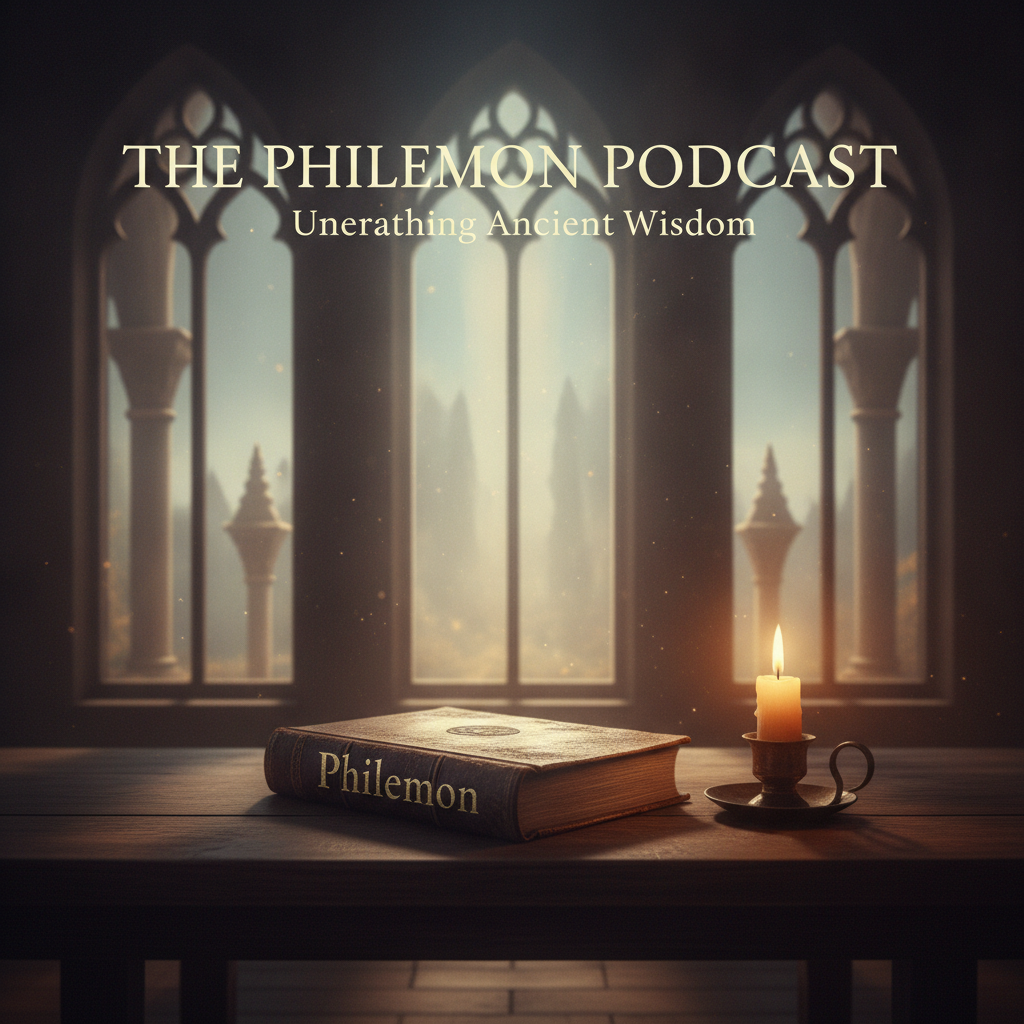
I feel like I’m walking into an old stone church at dusk when I read Paul’s letter to Philemon. There’s a certain weight in the air. The light is low. It feels like footsteps once carried heavy news. Paul wrote the letter from chains, but it breathes freedom. Onesimus had run. Philemon had been wronged. But somewhere between those two men stands the cross, quiet and unyielding, asking them both to do the harder thing.
It’s not soft forgiveness in this letter. It’s not the shrug that pretends nothing happened. It’s the deliberate choice to look at the wound and still open the door. Paul doesn’t demand. He appeals. Philemon becomes Philemon’s partner, and then Onesimus joins that circle of belonging. The runaway slave becomes his beloved brother, and the master invites him to see him that way. Candlelight against stone, grace pressing into places that once held bitterness, it’s gothic in the best sense.
We live in a time that loves the language of justice and rarely lingers on the cost of mercy. Philemon refuses to let us stay comfortable. Even though the letter is short, only 25 verses, it holds an entire theology of restored relationships. Paul could have ordered Philemon to get Onesimus. He had the authority. But instead he chooses to love instead of command. That’s dying by choice. That’s the gothic heart of the gospel, the beauty that grows only when something’s broken and then fixed by a stronger hand.
Imagine the scene. Philemon opens the letter at his house church in Colossae. There’s a quiet breeze and flickering oil lamps in the room. He reads the familiar greeting, then the careful words about Onesimus. He plays with it gently, saying the one who used to be useless has become useful both to him and to Philemon. Paul doesn’t deny the wrong; he just invites Philemon to see the man differently because he’s already been claimed by Christ. Forgiveness here isn’t forgetting. Under the light of the cross, it’s remembering rightly.
Here’s where the Gothic vibe comes in. Forgiveness always happens under a bigger picture than the offense. Every reconciliation is accompanied by a cross. It’s the wood against the sky, where justice meets mercy and neither is diminished. Paul is asking Philemon to live out the same meeting when he asks him to receive Onesimus as he would receive Paul himself. The old order of debt and ownership dies when we treat the former slaves like equals. You have to bury something to make room for something new.
Every time we’re told to forgive, we feel the tension. It’s real hurt. It’s a sense of injustice. The letter to Philemon doesn’t scold us for feeling it. The cross is placed between us and the one who wounded us, and the question is whether we’ll walk the same road Paul did, the road that refuses to use power when love is still able to speak. There’s a quiet courage in that refusal. It’s like the courage of a Gothic saint who keeps the candle burning even during the darkest hours.
There’s nothing Paul can’t pay Onesimus. Charge it to my account, he says. The whole gospel is in a single sentence. Christ has already charged all debts to His account. His books are balanced in blood. When we forgive, we’re just agreeing with what’s already done. It’s not about inventing mercy. It’s about receiving mercy and then extending the same hand it first extended to us.
The letter ends with a gentle confidence. Paul expects to be released and to visit. He asks for a guest room to be made. Even in chains, he plans for fellowship. Forgiveness isn’t the end. It’s the beginning of a new chapter written in the same house, under the same roof, around the same table. Gothic here is the long corridor that used to lead to separation now leading to a lighted room and open door.
We need this letter in our own shadowy days. We need to know that the gospel doesn’t leave us alone with our pain. It places us in a family that is bigger than our pain. Philemon’s loss doesn’t define Onesimus anymore. It’s the one who calls them brothers that defines them. That’s the quiet fire at the center of the letter. It burns without consuming. It illuminates the dark corners without erasing the truth. It won’t let the darkness win.
There’s something tender and severe about forgiveness in Philemon. It’s tender because it treats both the wronged and the wrongdoer equally. It’s severe because it won’t allow either of them to stay in the old story. The old story has to die. The new story is written in grace, sealed with blood. It’s best to read it slowly, by candlelight if necessary, until it sinks past our defenses and settles into our heart.
There’s no rush in this letter. Paul takes his time. He greets, he thanks, he prays, he appeals. The pace is part of the lesson. The gothic sensibility understands that forgiveness isn’t a single dramatic moment, but a long obedience, a daily decision to keep the door open, even when the memory still hurts. Beauty often comes after a long wait, light is most precious when it has traveled through darkness, and reconciliation is most lasting when it costs something.
We sit with Philemon. We let the letter speak quietly into our own unfinished stories. We notice how Paul never once names the sin in graphic detail, but never pretends it didn’t happen. It’s the gothic virtue at the heart of Christian forgiveness, that trust that the same Lord who transformed Onesimus can transform the relationship itself. He simply puts everything under Christ. Stepping into the shadowed room with faith that the One who lights every candle is already there is faith.
We’ll read the letter in one sitting, but it’s deep enough to keep coming back to. It’s the same invitation every time we open it. Accept the brother, charge the debt to another. Prepare the guest room. It’s okay to live like you’ve been forgiven so much, and don’t have a final claim on other people’s debts. Even in the dim light of an ordinary day, that invitation stands true. It’s still possible to hear Paul’s careful words echoing in our own hearts. You can still open the door. You can still share the light.
In Philemon, there is a Christian gothic heart that isn’t about ruins, but about redemption. Not just love of darkness for its own sake, but love of darkness with a light you can’t put out. Forgiveness is that light. In the quiet space between these pages, we’re invited to practice this redemption, one careful, expensive, candlelit choice at a time. Forgiveness does not erase the past. It redeems it.