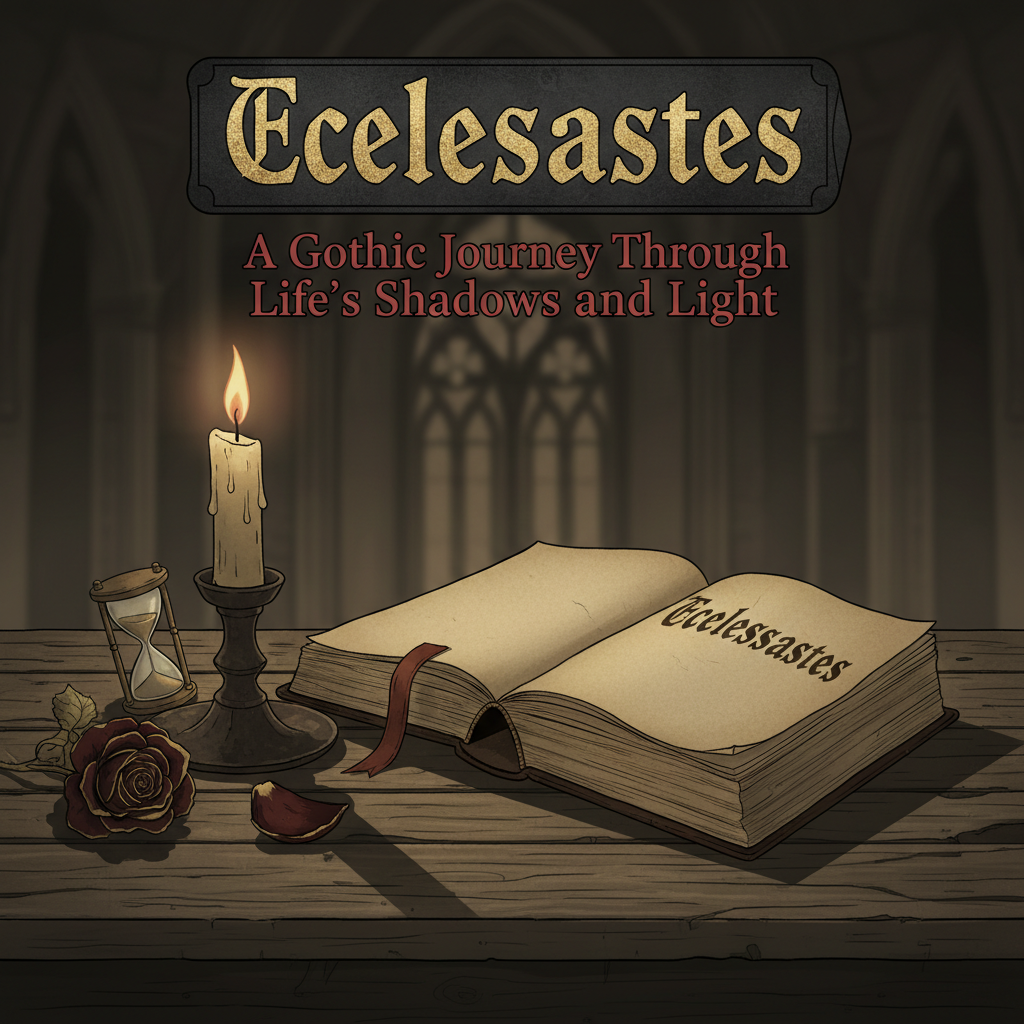
Ecclesiastes hits hard in the dim corners of our world, where candlelight flickers against old stone walls and the wind whispers through cracked stained glass. Vanity of vanities, says the Preacher. All of life is vanity, says the Preacher. Life seems meaningless, full of toil, injustice, and death. It’s a heavy truth, a fog over a forgotten graveyard. The Christian Gothic view doesn’t let us run from the darkness, though.
We walk through it, holding on to the cross that shines even when the sun doesn’t. It’s like you wake up, chase a task that never seems to end, deal with unfairness everywhere, and know you’ll die one day. The Preacher lays it out plain in Ecclesiastes. Everything he tried turned to vapor, like chasing the wind on a stormy night. Under the sun, nothing lasts.
There’s injustice, the rich hoard, the poor suffer, and death levels everyone. This book feels bleak, Gothic in its honest gloom, like wandering through an abandoned cathedral, where echoes of prayers echo, but answers don’t seem to be coming. Even though it sounds casual, it’s not just a dry lecture. It’s a raw cry from someone who has gone through it. It’s a night of labor that wears you out.
It’s funny how you build something beautiful and someone tears it down or takes credit for it. It’s like love and hate mix in the same heart. Laughter fades into sorrow. Under the sun, cycles repeat, seasons come and go, but nothing changes the emptiness. There’s a time for everything, birth and death, planting and uprooting, weeping and laughing, but it’s all pointless at the end. However, here is where the Christian light shines through the Gothic shadows.
Throughout Ecclesiastes, the Preacher says, “Remember your Creator from your youth.” That’s the key. Life under the sun is meaningless without God. The labor becomes worship when we see everything through Christ’s eyes. Even when it hurts, our labor becomes worship. Injustice reminds us that perfect justice awaits us in eternity. Death isn’t the end, but the door to the One who conquered it. Picture an old Gothic church at midnight.
The moonlight streams through rose windows, coloring the dusty pews. Faith stands firm through centuries of storms, just like faith stands firm when life seems meaningless. There is hope beyond the sun because Jesus entered a broken world full of toil and death. He knows how heavy it is. On the cross, He took the ultimate injustice for us.
Everyday struggles, the endless grind, the unfairness we see in the news or on the streets echo Ecclesiastes. But believers carry a secret. Our emptiness drives us to God’s fullness. Instead of despair, we love others, serve quietly, and pray in the shadows for His presence. Gothic faith embraces mystery, the unknown, the dark valleys because we know the Shepherd is with us. The Preacher tried it all. King, garden, singer, treasure, nothing satisfied.
In an autumn gale, leaves swirl around a lonely tombstone, making us laugh and cry. But turning to God changes the view. Fear God and keep His commandments is all man’s duty. Simple, direct, eternal. Despite lights blazing and distractions everywhere, ancient words still resonate today. Social media highlights the good times while hiding the bad ones. Success stories fade fast.
People die. Things break up. Bodies go bad. Death comes unexpectedly. Vanity of vanities. Gothic souls love beauty in decay, hope in ruin. Christianity does not deny the darkness. It redeems it. The empty tomb proves vanity doesn’t win. Christ rose, bringing meaning to the meaningless. Our work stores treasure in heaven. Injustice will be made right. Death becomes gain for those in Him.
If life gets tough, read Ecclesiastes, and let its honest gloom point you upward. Light a candle, pray in the shadows, trust the God who holds every season. What the Preacher says isn’t the end. It’s an invitation to find what lasts.