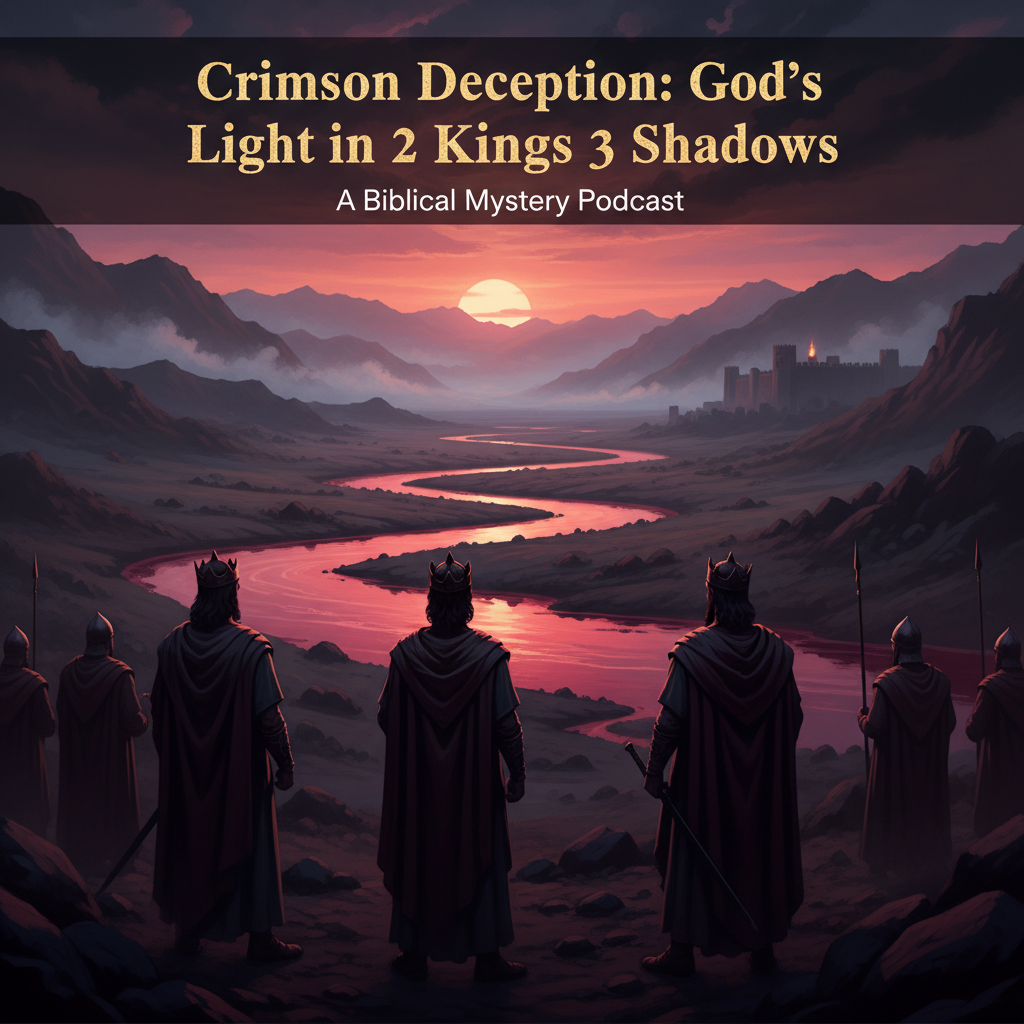
Let’s imagine a dry desert valley under the harsh sun with three kings and their armies marching together for a battle. There’s no water anywhere, just dust and desperation, and then God comes through and does a miracle that seems more like a nightmare at first. You might expect a clean heroic tale, but this is the story from 2 Kings 3, a chapter packed with shadows, blood, and some of the most unsettling twists in the Bible. It feels more gothic, filled with mystery, human frailty, and the kind of divine intervention that makes you wonder how light can break through.
The trouble starts when Moab rebels. After King Ahab dies, Mesha decides he’s tired of paying tribute to Israel, so he stops sending those lambs and rams. Jehoram isn’t about to let that slide. Jehoram gathers his troops and calls the king of Judah , Jehoshaphat , to join him. Jehoshaphat agrees and they even bring in the king of Edom for good measure.
Thrallies, one big alliance, heading out of Edom on a long roundabout route. The army and their animals are parched seven days later. No springs, no rain, nothing but sand and thirst. The king of Israel panics and says it looks like the Lord has already handed them over to Moab. But Jehoshaphat asks if there’s a prophet nearby who can ask the Lord about them.
Suddenly, Elisha shows up. The servant points out the guy who used to serve Elijah. Elisha doesn’t want to help Jehoram, but he respects Jehoshaphat enough to call for a musician. With the music playing, Elisha gets this wild prophecy from the Lord. He tells them to dig ditches all over the valley. There’s no wind, no rain, and yet the valley will fill up with water so everyone will be able to drink. And that’s not the case. God’s gonna give them Moab back. It sounds simple, but to these kings in that bone dry wasteland it must have seemed impossible. They’ll wreck every fortified city , cut down the good trees , stop up the springs, and ruin the land with stones.
As soon as the meat offering starts, water flows from Edom and fills the valley. The Moabites watch from their side and see the sun hitting the water and it looks red like blood. Perfect, they think, time to rush in and get the spoil, because the three kings turn on each other and slaughter each other during the night. But it’s a trap. The Israelites attack, and they drive the Moabites away. Just like the prophecy said, they push into Moabite territory, destroy cities, throw stones on fields, block springs, chop trees. Moabite king Mesha sees the battle turn against him. Seven hundred swordsmen try to break through to the king of Edom, but they don’t.
Then comes the heaviest part, the one that still makes me chill. Mesha offers his son, the one who would become king after him, as a burnt sacrifice right there on the wall in front of everyone. After that, the Bible says there was great wrath against Israel. The armies pulled back and went home. Not a full conquest, no celebration. Just a sudden jolt of indignation that sends them running. The ending is strange, unsettling, the kind that leaves the story hanging in shadows rather than tidy victory lights.
I love how this chapter layers darkness with divine purpose. The water that saves the Israelites looks like blood to their enemies, turning a miracle into something that lures the Moabites to their demise. As though the valley itself were a canvas of crimson deception, it was both beautiful and terrifying. The sacrifice on the wall , that desperate act of a father offering his own child , echoes through the ages as a dark mirror to the ultimate sacrifice in Christ. One brings wrath and withdrawal , the other brings grace and openness to God. There are these contrasts in Gothic Christian thought, the black lace veil of mystery over the cross, the beauty that blooms from decay, and the hope that refuses to give up.
There’s no dramatic storm or thunder, just quiet water rising at dawn. That’s the Gothic heart of the story. God doesn’t need wind or rain to prove himself. The light of morning reveals it in such a way that confuses the enemy that it fills the valley anyway.
This reminds me that when we’re going through dark days, when everything looks hopeless, God can send provision that looks ordinary at first but carries the weight of resurrection. It’s also a reminder of the blood that beats death itself, the blood that beats death itself. John 1 says that the light shines in the darkness, and the darkness can’t overcome it. This battle shows that truth in action, with the red waters not swallowing the faithful, but exposing the enemy’s miscalculation.
It’s one of those biblical mysteries we don’t know how to solve, but it fits perfectly with Gothic. Even in desperation, human sacrifice stands in stark opposition to God’s heart. Despite the cost of sin and the brokenness of a world where kings resort to such extremes, God doesn’t let it determine the outcome forever. Even though the Israelites withdraw, faith doesn’t die. It lingers as a warning and an invitation to trust that God’s ways always lead toward redemption.
This chapter fits right in with the Gothic Christian love for stories that embrace the macabre and find Christ there as a result. With blood red water, a sacrifice on a wall, and retreating armies, all of it portrays a raw and real spiritual battle. There’s nothing polished about it. It’s not safe. This is the kind of tale that belongs in the shadowy corners where melancholic hearts feel comfortable. There’s the cross in the distance, the one true sacrifice that turns wrath away forever.
The story invites us to linger in the tension. When battles rage, when outcomes look uncertain, and when miracles come wrapped in imagery that could mean the difference between life and death, we remember the God who fills valleys without fanfare. It’s got a gothic beauty to it, the way darkness sets the stage for light, the way blood and sacrifice point to the greatest victory in history.
2 Kings 3 gives us courage to face our own strange battles, knowing the same God who turned water into blood is the one who turns mourning into dancing and gives beauty to ashes.