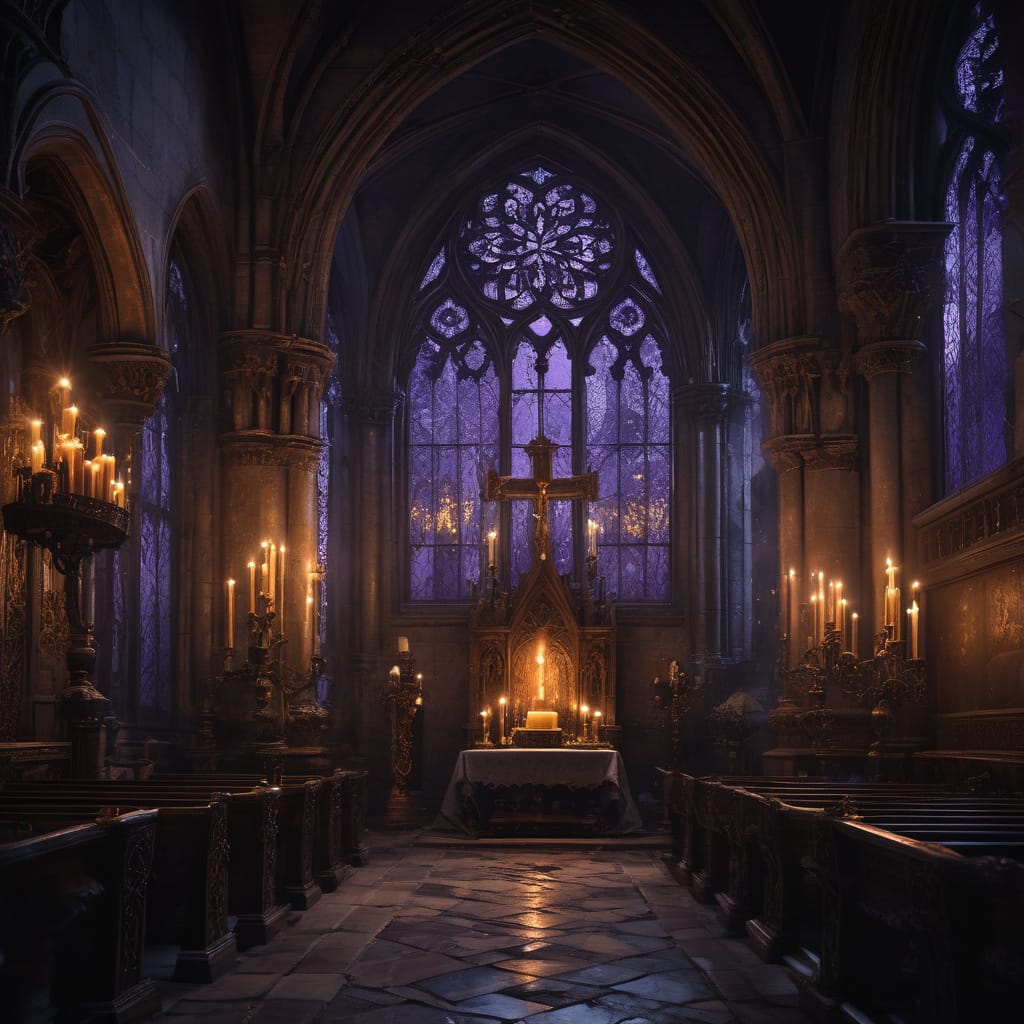
Let’s come together tonight when the clock strikes twelve and the world gets quiet enough for heaven to lean in close. It’s not the kind of faith you find on Sunday mornings. It’s all about candle flickering in a darkened room, whispered words only the stars can hear, and deep communion when the rest of the city is sleeping. In Christian Gothic spaces, we’ve always treasured these moments, because the darkness strips away distractions and bares the soul before God.
These late night encounters are woven into the Bible. While the crowds slept, Jesus slipped away to pray, finding lonely hills or olive groves under the moonlight. When sleep wouldn’t come, David poured out his heart in bed. In a prison cell at midnight, Paul and Silas sang hymns, and the walls trembled with divine response. These are the stories that shape our gothic prayer life, showing that the night’s not empty but full of possibilities.
There are a few faithful left in the pews after the tourists leave. Candles cast long shadows across the stone floors, black veils and hoods drawn low. The stained glass turns deep indigo and the silence feels thick enough to touch. That’s when prayer changes. It’s less about lists and more about being with the One who never sleeps.
Church history is full of the same kind of stories. Monks kept vigil in the early hours, chanting psalms while the rest of the world dreamed. Medieval believers lit tapers in side chapels and cried when no one else was around. We do midnight prayer meetings in converted warehouses and candle-lit living rooms in our modern goth Christian circles. It’s like a living icon, dark and reverent and strangely intimate.
It’s because it mirrors the Gothic love of mystery that makes nocturnal prayer so powerful. After midnight, everything slows down. Distractions fade, phone screens go dark, and we can get back to the old rhythms of confession and adoration. God answers your prayers in the language of shadows. No bright lights or loud music, just a steady flame and an open heart.
These stories have a recurring theme of honest wrestling under the moon. Jacob at the ford wrestled with the angel until dawn. The night was the arena where blessings were won. Or the garden where Jesus sweated blood while his friends slept. Gothic faith leans into those moments rather than rush toward sunrise. The darkness holds the full weight of what’s coming yet also holds the surrender that saved us all.
After midnight, the communion of saints is really strong. When the veil between heaven and earth feels thinner, the great cloud of witnesses seems closer. Prayers you offer in quiet rooms join the eternal chorus. At our gatherings, we pass a candle around, and each person whispers a plea until it’s gone through everyone’s hands. It feels ancient and new at the same time.
As the clock keeps ticking and answers don’t arrive on time, faith learns to wait in the dark. That wait is not passive. Black lace and soft guitar chords play minor keys in the background, and it’s active trust dressed up in black lace. The music in Christian Goth prayer often matches the hour, low atmospheric sounds that don’t overpower the words.
The early church records believers praying all night before big decisions or during persecution. The darkness became a secret meeting place where the Spirit moved freely. The midnight hour remains a sanctuary carved out of time when daylight brings its noise and demands.
You notice how the body itself participates in these prayers. Knees on cold floors, hands raised in dim light, breath visible in the chill of an unheated chapel. Gothic aesthetics embrace that slight edge of discomfort because it mirrors the narrow path we walk. It’s not about comfort, it’s about communion.
It’s often like a quiet miracle to come out of night to first light. We don’t force the dawn. We just stay faithful until it comes on its own. Many nocturnal prayer stories end with a sudden sense of peace just before dawn, as if the long vigil had gotten us ready for whatever the new day holds.
We build altars for these hours in our subculture. We put a black cloth on a table, a crucifix, a candle, maybe a Gothic cross necklace on a Bible. It’s simple yet sacred, inviting anyone who can’t sleep to come and linger. New people join the watch and leave changed, and the stories multiply.
There’s no show at faith after midnight. Everyone isn’t watching for show. The prayers are raw, the tears are real, the silence is holy. That rawness is why goth hearts love it so much. We already dress for the night. Beauty is often found in the dark and the quiet.
While some sleep, others stand guard. The body of Christ keeps breathing through the hours because a few are awake and praying. That shared vigil creates a stronger bond than daylight fellowship alone.
Those nights give you a quieter confidence. The same God that met seekers in ancient gardens and prison cells still meets us when it’s 3 in the morning. The stories continue in every candlelit room and every whispered name. Faith becomes not an enemy of the night, but a trusted companion.
We end the vigil with a simple blessing, voices low and joined. The candle is snuffed, but the flame of prayer keeps burning until the next midnight call. That’s the beauty of faith after midnight. It doesn’t really end. It just waits for the next dark hour to start over.