Today we are going to unpack one of the most raw cries in the Bible. A verse like Psalm 88 isn’t something you hang on a sunny coffee mug. We think it’s our home, the howl that echoes from the bottom of a pit at midnight. Immediately upon opening the book, you can hear the writer screaming to God for salvation. No sunshine breaks through, no quick rescue arrives, and yet the prayer keeps going. This psalm is pure goth gold wrapped in faith because of its stubborn persistence in total darkness.
The psalm starts with a desperate address, calling out to the Lord who saves, and then pours out the pain. He feels like he’s already dead, forgotten, cut off from God. His friends have stepped back, his eyes are dim from sorrow, and the waves of trouble crash over him like cold sea water. As you read it, you can hear the organ swell in a dim cathedral, black lace curtains swaying as rain taps on the stained glass.
Goth culture is all about that aesthetic, the beauty that lingers right beside ruin, and here it’s straight from the Bible. The silence lingers, the questions hang heavy in the air. Why did you reject me? Why is your anger pouring out like a flood? These lines don’t sound like polished sermons. They sound like lyrics from a band playing in a foggy basement club at two o’clock in the morning.
There’s something so powerful about this theology of abandonment for us because it doesn’t fake hope. There’s always been an honest ache in Christian Goth spaces because we know real faith isn’t always up and down. Sometimes the mountain is a grave, and you’re still breathing in it. There’s no neat resolution to the psalm. Even though the writer ends it in the same darkness it started with, he still calls God “my salvation.” That tiny thread of address is so important. Even when every feeling screams God is gone, the soul can still reach out. That reach is the gothic cross around our necks, heavy, ornate, and unashamed of its shadows.
This fits in with the wider story of scripture. When he hung on the cross, Jesus quoted a line from that hour. My God, my God, why have you abandoned me? The theology here isn’t about God ignoring us forever. He stepped into the very abandonment the psalm describes so that we wouldn’t feel so alone. It’s about God allowing us to feel absent so that our trust grows deeper. We learn to light black candles during those seasons and keep whispering the old words. The decay of hope turns into the soil where resurrection roots start to grow.
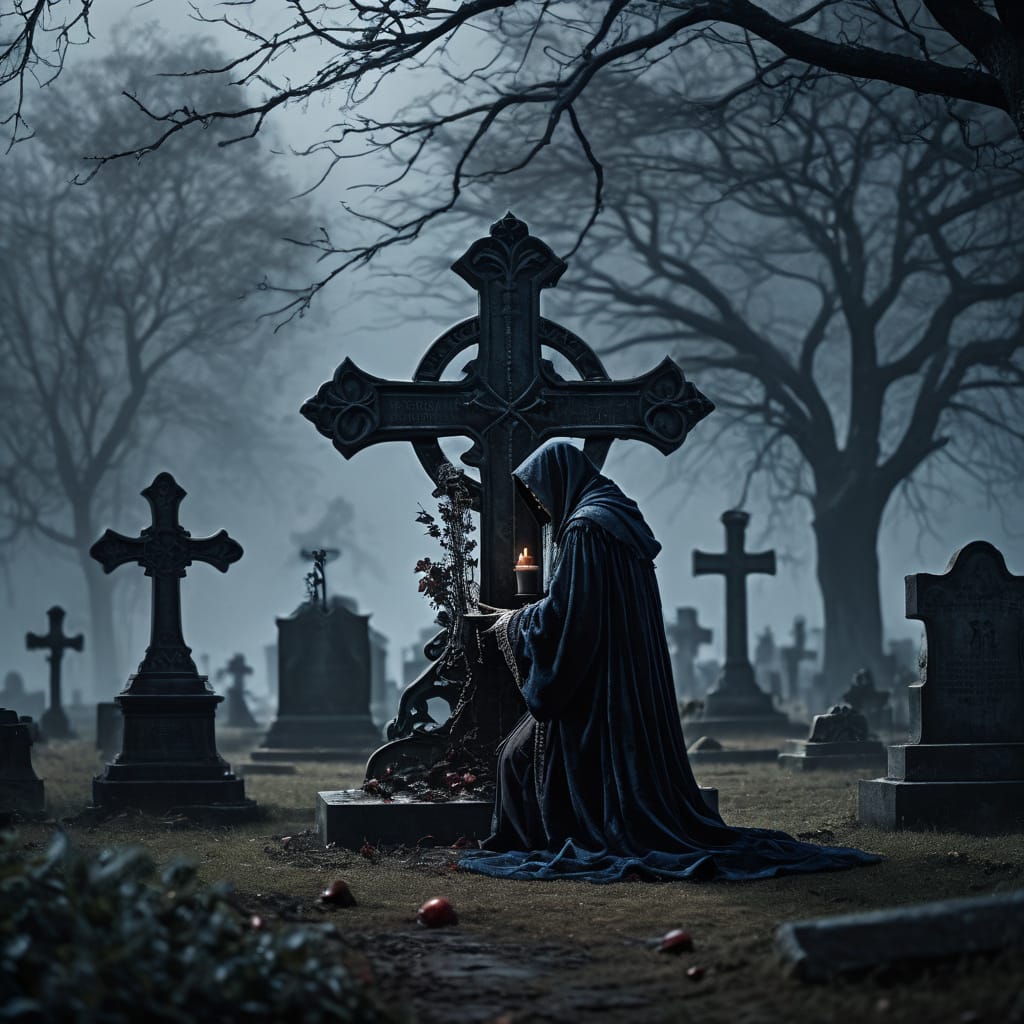
Almost like a Victorian graveyard at twilight with ivy climbing over tilted stones, a lone figure kneeling with the Bible open. That image isn’t just romantic. In fact, the Psalm teaches us that lament is worship too. It doesn’t matter if you put on a smile or pretend the darkness isn’t thick, you can still call the Lord yours if you bring the full weight of it to the altar. We wear that truth like mourning jewelry, turning sorrow into something hauntingly beautiful instead of something to hide.
Let’s linger on the imagery a little longer because goth hearts love it. The psalm talks about pits, darkness, depths. Those are not abstract ideas. They feel like the fog rolling through an abandoned chapel or the way moonlight barely touches a marble statue of an angel with broken wings. They’re my favorite. In Christian Gothic art, broken angels remind us that even angels can suffer and still point upwards. If we’re broken, we can still declare that God hears, even if it feels like he’s late. Psalm 88 gives us permission to wear our brokenness openly.
A second layer is the way the psalm wrestles with God’s love and wrath. The writer asks if God’s wonders can be known in the dark, if his righteousness can be declared in the land of forgetfulness. Those questions cut deep because they come from someone who has not given up believing in the wonders. That tension is the heartbeat of gothic faith. We wear black not because we love death, but because we know death has been swallowed up. In Psalm 88, we pause at the tomb as long as we need, lit by the faint glow of a cross-shaped candle.
It gets quiet in a goth Bible study when you mention this psalm. People nod because they’ve felt that same isolation during midnight services or walking empty city streets after the clubs close. It shows God is big enough to hold our accusation, our doubts, our exhaustion, because the theology of abandonment strips away the fake cheer and leaves raw honesty. He doesn’t strike the psalmist down for his bold questions. For every generation of night owls to find their voice in, he lets the words stand in scripture forever.
The psalm builds community in the shadows. When one person reads it aloud and others whisper the responses, something sacred happens. The darkness feels less lonely since it’s shared. It’s why Christian Goth gatherings always end with candle passes and silent prayer. Even when everything else has gone quiet, we remind each other that the final verse still mentions God as savior.
Psalm 88 isn’t the end of the story, but it’s a crucial chapter. In the same way our goth playlists move from heavy minor chords to unexpected lifts of hope, it prepares the heart for the brighter psalms that follow in the book. God is working in the silence, according to abandonment theology, shaping people to love him for who he is in the void, not for the blessings.
We close the Bible, but we don’t close the conversation. Psalm 88 stays open on the nightstand like a black ribbon bookmark, ready for the next time the waves crash. It reminds us that Christian faith isn’t fragile. It’s able to survive the darkest night and still wake up singing, even if it’s a whisper at first. In our modern goth hearts, this ancient text holds such power. It gives us words to describe the unexplainable ache and then hands us back to the God who listens anyway.
It’s really a theology of stubborn love. You feel abandoned, but you keep praying. You wear the darkness like a cloak, but you light the candle. You read the words that never promise an easy dawn, but still you believe dawn will come because the same God who allowed the night also rose from one. That’s Christian Goth, friends. We don’t run from the pit. We decorate it with crosses and keep vigil until it gets lighter.