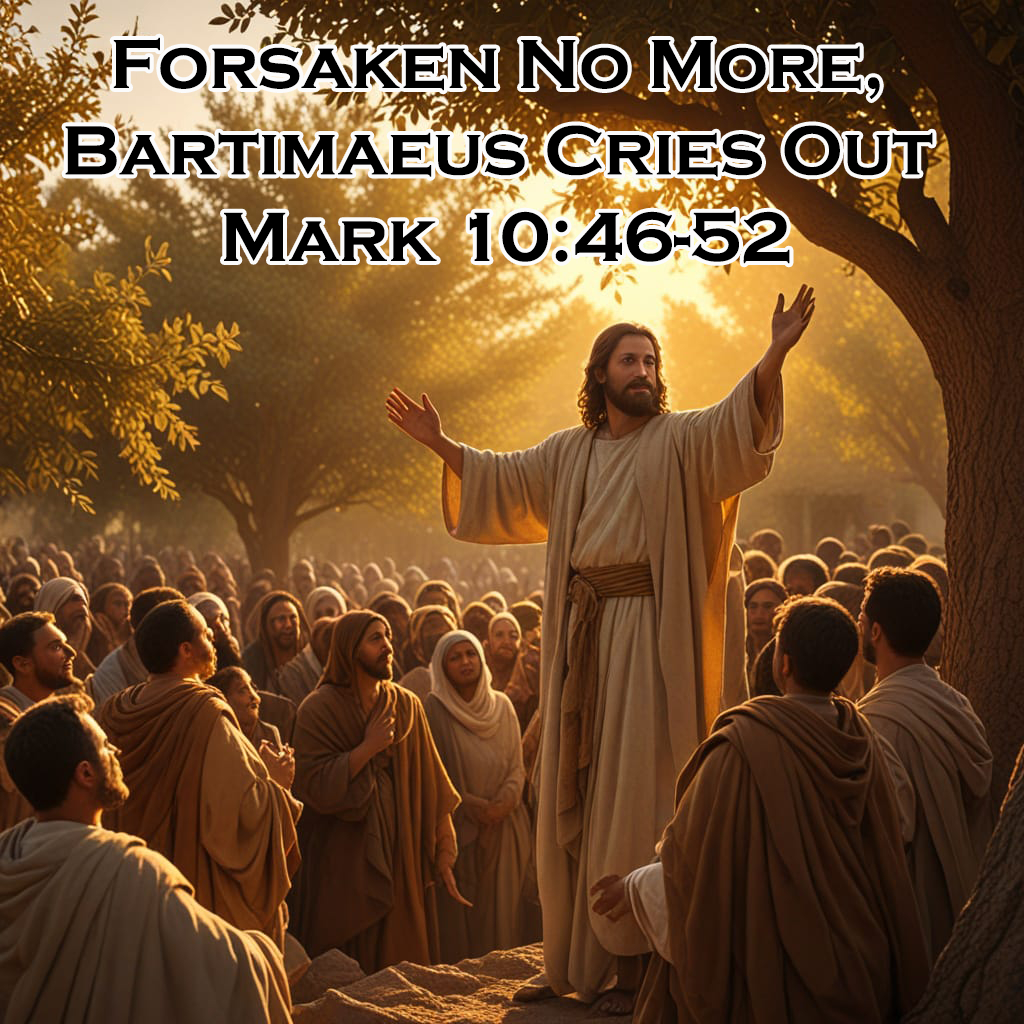
Forsaken No More, Bartimaeus Cries Out in Darkness, Mark 10:46-52
When the sun bleeds out across the sky like a cathedral window at twilight, the road outside Jericho is deep purples and bruised reds. Hundreds of people are chasing after this guy named Jesus, who is turning heads and flipping tables on the religious scene, and there’s dust hanging thick in the air. On the edge of it all sits Bartimaeus, blind, broke, and basically invisible.
He’s the classic fringe dweller, the guy society shoved aside because his eyes didn’t work and that made him “unclean” or cursed in their book. There’s no fancy seat in the synagogue, no job, just a ragged cloak and a cup for scraps while people pretend he doesn’t exist.
It’s then that Jesus and his crew roll through, and Bartimaeus doesn’t wait for an invitation. He starts yelling, raw and loud, “Jesus, Son of David, have mercy on me!” The crowd tries to shut him down fast, like “keep it quiet, you’re embarrassing us.” This is typical, isn’t it? Outcasts are always told to quiet down. But Bartimaeus? He just keeps screaming, because silence doesn’t work when there’s nothing left. The cry cuts through the chaos like a raven’s call.
A forgotten beggar on the road catches Jesus’ attention, and the whole parade halts. He tells the crowd to bring him over, and suddenly those same people who were shushing him are helping him up. It’s probably that threadbare cloak that’s kept Bartimaeus warm through too many cold nights that he throws off his cloak, and he stumbles forward into the unknown. There’s no judgment, no lecture, just Jesus looking at him and asking: “What do you want me to do for you?””
“Rabbi, I wanna see,” Bartimaeus says. No fancy prayer, no long explanation, just an honest need from the heart of someone who’s lived in darkness forever. Then Jesus says, “Go. Your faith has healed you.” And then there’s light. Colors pop up where there was only black. Faces, the road, the sky, everything comes alive. But here’s the gothic twist that hits you: Bartimaeus doesn’t just grab his sight and bounce. Following Jesus down the road, he steps into the light as another disciple.
This whole encounter is pure apologetics wrapped in midnight velvet. Jesus doesn’t ignore the fringes, he walks straight into them. One blind beggar is met where he is, dust and all, by the Messiah in a world that pushes the broken, the poor, the different to the edges and pretends they don’t matter. In other words, the faith isn’t a polished club for the perfect people; it’s for the ones society labels hopeless, for the ones who are shunned.
Bartimaeus calling him “Son of David” is big, too, because that’s straight-up messianic talk. He’s saying Jesus is the promised king who’s supposed to bring light to the blind and freedom to the captives, and the guy proves it.
That’s crazy. The religious leaders are walking around acting like they’ve got it all figured out, but Jesus picks the guy they’d never invite to dinner. The crowd wants spectacle and status, but Jesus gives mercy to the voice they’d tried to silence. That’s the defense of the gospel right there: real power looks like stopping for the outcast. It shows Jesus isn’t distant or harsh; he’s the kind of savior who hears desperate cries in the dark and turns them into dawn. Faith? Bartimaeus believed enough to yell when everyone said stop, enough to throw away his only security blanket when Jesus called. Trust flips the switch from darkness to light.
You can almost feel the atmosphere shift when you read it, like the shadows pulling back in a haunted chapel when someone lights the candles. I’m walking down the road to Jericho, and it’s like shedding chains you’ve worn your whole life, the cloak hitting the dirt. Healing isn’t like some sterile miracle, it’s messy and human, dust on bare feet, voice cracking from screaming, then sudden colors like stained glass catching moonlight rush in.
It’s the heart of the story that makes Christianity so compelling: Jesus meets Bartimaeus right where he is, no prerequisites, no “clean up first.” Christianity claims God loves the world, especially the forgotten ones, and Bartimaeus is living proof.
I remember all those fringe folks Jesus chased after, the lepers, the tax collectors, the women pushed to the edge. Same vibe here too. Instead of waiting for them to get to the center, he pulls them in from the outside. It’s hard to argue against a kind of love that changes a beggar into a follower when he bends down in the dirt and asks, “What do you need?”. Bartimaeus teaches us that a kingdom isn’t about climbing a spiritual ladder; it’s about a savior who bends down in the dirt and asks, “What do you need?”.
A guy yelling at the roadside while life passes by is how ordinary the moment seems at first. But that yell becomes a turning point, a moment when eternal light crashes into personal darkness. It’s apologetics you can feel in your bones. Jesus shows he’s real by caring for those no one else would. The crowd wanted to keep moving, but Jesus said, “nah, this one matters.” That’s when Bartimaeus stepped out of the shadows.
It’s like the story whispers that the same voice that stopped for a blind beggar still listens if you’re staring at Jericho road and feeling shoved to the side. The gospel isn’t tidy or exclusive; it’s raw, atmospheric, and built for the fringes. He still calls the shunned by name, still trades darkness for sight, still invites outcasts to walk with him. After crying out, Bartimaeus got met right there. He walked away and saw the world in a whole new way. It’s the kind of redemption that makes the shadows look beautiful.