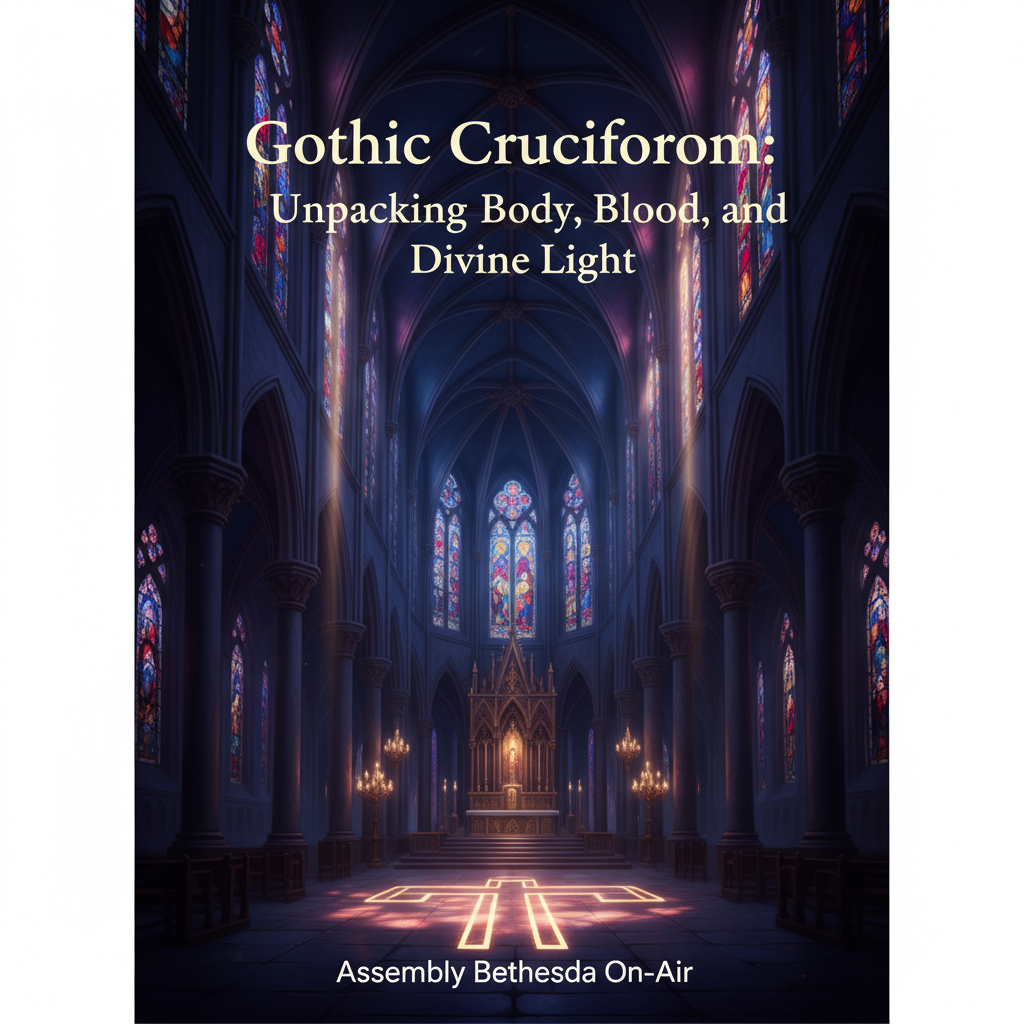
From above, Gothic churches look like crosses, called cruciform. This isn’t just some random design choice. The whole building becomes a symbol of his body stretched out on the cross, a deep visual reminder of Christ’s sacrifice. The long central part, the nave, represents Jesus’ body and legs, while the shorter arms, the transepts, represent his outstretched arms. A nod to resurrection and light breaking through, the altar area at the east end points toward his head.
Darkness plays a big part in these massive stone cathedrals. Gothic style is all about contrast, heavy stone pierced by huge stained-glass windows that flood the interior with color. The thick walls and high vaults create deep shadows, which is intentional. The interplay between light and dark represents the mystery of the cross, where suffering and divinity meet. It’s not just a shape, it’s a place where human pain, blood shed in agony, meets divine presence.
It’s like a giant crucifix. Catholics believe Christ is truly present in the consecrated bread and wine, body, blood, soul, and divinity. The cruciform church echoes this.
The darkness of the nave, often dimly lit except for candlelight or those jewel-like windows, evokes the tomb, the shadow of death, when the light of the world was extinguished on Good Friday. Light pours through those dark places, symbolizing how divinity offers redemption.
The body aspect is straightforward. The church plan mimics Christ’s physical form on the cross, reminding worshippers that God took on real flesh, real suffering. The blood tie-in occurs through the sacrifice, the outpouring that saves humanity. Soul is the spiritual reality that goes beyond the physical, the animating force that makes the Eucharist so much more than just symbols.
It’s the divine light that Gothic builders chased with their flying buttresses and ribbed vaults, lifting the eye toward heaven even as it grounds itself in earth.
Those pointed arches, soaring spires, and intricate tracery push toward the sky, defying gravity like something out of a fairytale. Gothic architecture came about during the Middle Ages when people wanted spaces that felt alive with the divine. But the cruciform plan keeps it tethered to the cross. It’s not abstract theology, it’s embodied. You walk the nave like Christ’s path to the altar, walking through shadows and into light.
You feel awed and intimate in those vast interiors, with echoes and cool air. The cross shape invites you to see yourself in it, your own body and soul caught up in the mystery. The blood of the crucifixion flows into the sacraments, nurturing the soul. Divinity isn’t distant, it’s right there in the tabernacle, veiled yet present.
Even today, stepping into a Gothic cathedral feels like entering a living symbol, where architecture, liturgy, and belief come together. A cruciform isn’t just decoration; it’s a confession in stone, glass, and shadow, proclaiming that at the darkest hour in history, body and blood were sacrificed, soul was shed, and divinity triumphed.