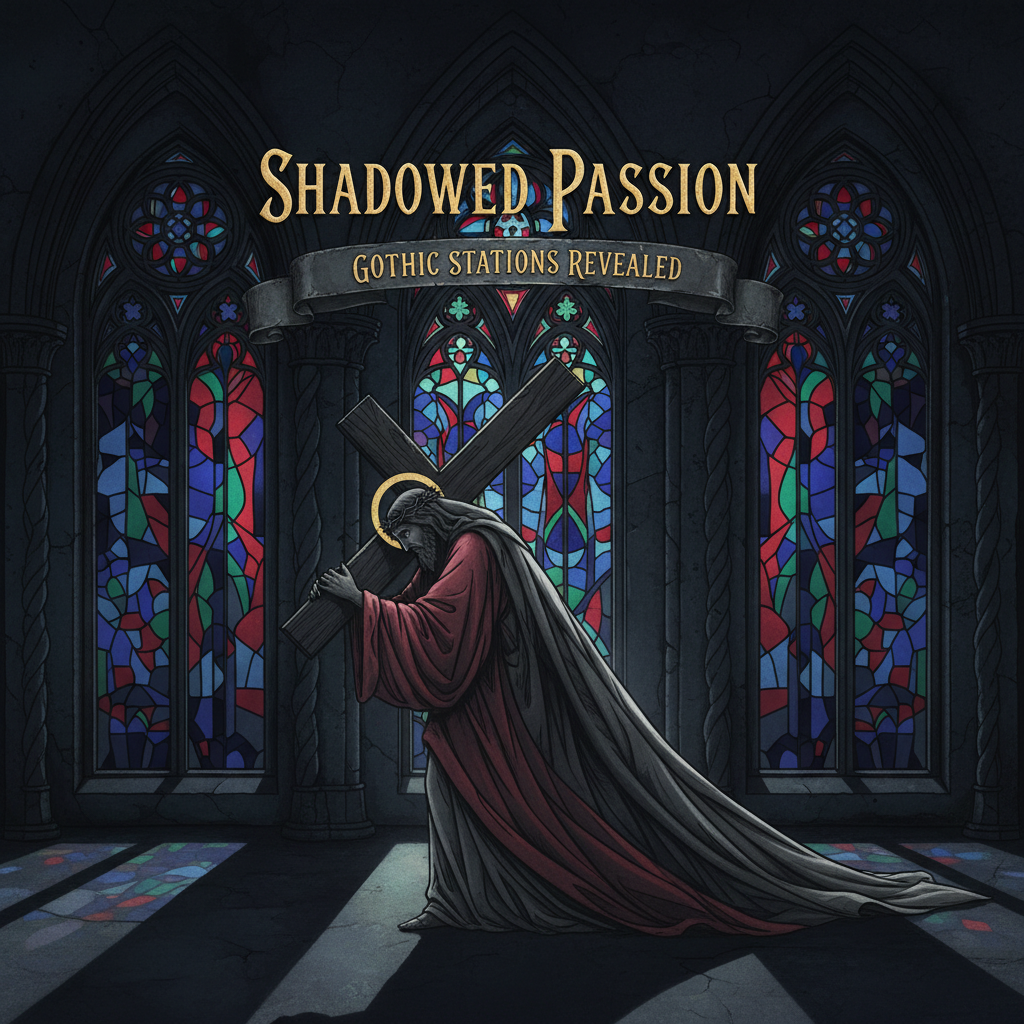
When you step into a cathedral with dim lighting, shadows line the stone floors, and the air feels like it’s been infused with quiet prayer for centuries. In the Gothic Stations of the Cross, you’ll find that kind of space, a version of the traditional devotion surrounded by dark arches, pointed spires, and a haunting atmosphere. You don’t find Jesus’ passion in a sunny chapel. It’s a shadowy path, one that leans into the mystery, the weight, and the stark drama of crucifixion.
From Jesus’ condemnation to his burial, the Stations of the Cross follow fourteen moments, with some traditions adding one more for the resurrection. Gothic takes frame those scenes with intricate carvings and pointed arches that echo medieval cathedrals. It’s got tall, slender pillars reaching toward vaulted ceilings, ribbed like skeletal hands, and stained glass that filters light into deep reds, purples, and blacks. As for the art, it’s mostly carved wood or plaster, with figures carved with sorrow or resolve that look elongated and intense. Antique Belgian and French pieces from the 1800s, for example, show hand-painted scenes in gothic frames, where suffering feels almost theatrical, pulling you right into the moment.
With the Gothic style, it feels darker. Jesus falls not just under the cross, but also under heavy shadows that seem to press down with him. Veronica’s veil stands out against black robes and looming architecture. In low light, the crucifixion scene stands out with pointed crosses and thorny crowns that look more menacing. It’s easy to linger, absorbing the visuals without rushing. A shadowed meditation is driven by that tension between despair and hope, between the pointed arches and the ground-level suffering.
The Gothic style suits themes of mortality, redemption, and the supernatural naturally. Gothic architecture was born in an era obsessed with how the divine came into our world, often through dramatic contrasts between light and dark. You’re not just reading prayers, you’re walking through a visual story where every shadow tells a part of the story. Taking that approach to the Stations turns it into something immersive, almost cinematic. You’ll notice how beauty can coexist with pain when you look at details like filigree on frames and vines around the cross.
Take your meditation to the first station: Jesus condemned. In a Gothic rendering, Pilate’s hall might rise with ribbed vaults and cold stone, and the crowd a mass of shadowed faces. Feel that injustice hit harder. Move to the second, where Jesus takes the cross. The wood looks rough against the gothic borders, and you can see the weight in his bent shoulders and strained muscles. As the fall (stations three, seven, nine) approaches, the ground seems uneven, shadows pool like ink around the fallen figure. Helpers like Simon and Veronica emerge from the gloom, their acts of kindness shining brighter.
The heart of it comes around station twelve, the crucifixion. Gothic versions often frame it with dramatic flair, with the cross elevated against a backdrop of pointed arches or dark skies. There’s plenty of brutality, nails, thorns, blood. But there’s also elegance, like the curve of limbs or fold of cloth. It reminds you that suffering isn’t meaningless, it’s part of something bigger. It gets softer in station thirteen, the deposition, as tender hands lower the body, shadows lengthening as evening falls. The burial in station fourteen seals it in quiet stone, a tomb that feels both final and hopeful.
It doesn’t take fancy art or a cathedral to meditate this way. Close your eyes and picture it, or find images online of gothic-style stations, olive wood carvings, or antique Belgian plaques. Let gothic imagery color each station’s prayer. Notice how the darkness makes light moments, like Veronica’s veil or Mary’s gaze, come to life. Don’t let the shadows scare you, they’re there to highlight. There are times in life when faith feels heavy, uncertain, shadowed by doubt or grief, but still points toward something bigger.
Lent is a perfect time for this approach, or any time you’d like a slower, more atmospheric take on passion. It takes away the familiar and lets it feel raw again. Gothic aesthetics, with their love of drama and the eternal, fit perfectly with the Stations. Every pointed arch lifts your eyes, and every shadow deepens your reflection, and it turns a simple devotion into a journey through darkness toward light.
Ultimately, Gothic Stations of the Cross aren’t just spooky for the sake of it. Walk it slowly, let the shadows speak, and you might find the resurrection just beyond the darkest arch. Take the full weight of the story, the sorrow along with the promise.