Let’s dig into something wild, the Bible isn’t just about moral lessons and happy stories. Ezekiel and Revelation are two books full of dark imagery that paints a picture of divine mystery, judgment, and chaos. It’s got creepy visions, monstrous creatures, and end-of-the-world vibes like a horror movie. Let’s keep it real and talk about how their wild symbols and intense scenes evoke an eerie, gothic atmosphere.
Start with Ezekiel, this prophet who’s having the trippiest dreams ever. In chapter 1, he describes four living creatures that are like nothing from our world, each with four faces, human, lion, ox, eagle, and they’re covered in eyes, yeah, eyes everywhere, staring out from their bodies and wings. They’re tied to these massive wheels within wheels, which glitter like chrysolite and move anywhere without turning.
Those weird, otherworldly machines scream cosmic horror, like the universe is alive and watching you. Imagine standing by a river in exile, feeling totally isolated, and then this vision hits you, full of fire, storm clouds, and a sapphire throne with a figure glowing like molten metal on it. Not just scary, it’s a gothic blend of awe and terror, where the divine feels dangerously close and completely unknowable.
Ezekiel 37 has the valley of dry bones, a vast field littered with skeletons, bleached and forgotten. In the blink of an eye, tendons and flesh start growing back on these bones, skin covers them, and breath starts coming in, turning them into a living army. A resurrection on steroids, but with a macabre twist, the rattling bones coming together, the eerie silence broken by life’s rush.
A gothic revival story that emphasizes decay, ruin, and the thin line between life and death, this isn’t your sunny Easter story. In Ezekiel’s prophecies, there’s hope and horror, like in chapter 9 where angels mark the faithful and executioners slaughter everyone else, blood flowing through the streets. It’s brutal, vivid, and reminds you of the dark edge of biblical judgment.
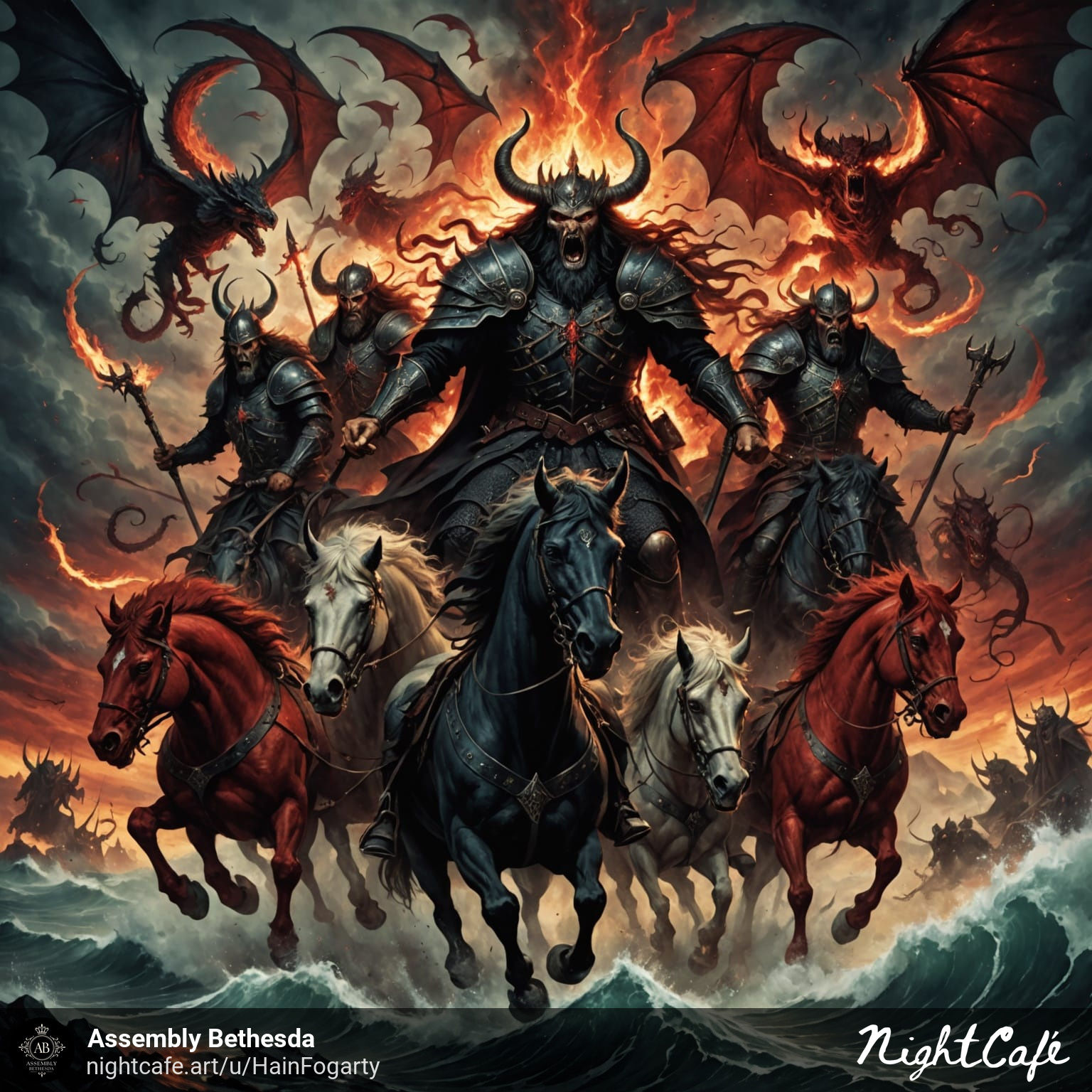
John’s Revelation is like a biblical goth grand finale. It’s full of symbols that could inspire a Tim Burton movie from the get-go. Chapter 6 unleashes the four horsemen, Conquest on a white horse, War on red, Famine on black, and Death on pale, followed by Hades. They’re not subtle, they’re harbingers of doom, trampling the earth with strife and starvation.
There’s that classic gothic motif of inevitable decay and human frailty against cosmic forces: horses thundering across a blood-soaked landscape, scales weighing out meager rations, swords slashing.
There’s the beast from the sea in chapter 13, with seven heads, ten horns, and blasphemous names scrawled on it, like a hydra crossed with a leopard, bear, and lion. Those who don’t obey are marked for death. Suddenly, the beast from the earth shows up, performing miracles that deceive people, forcing them to take the infamous mark of the beast.
Those two evoke tyrannical horror, where power corrupts everything, and society’s controlled by false idols. Chapter 16’s bowls of wrath turn the seas to blood, and darkness people gnaw their tongues in agony over amp up the Gothic with its plagues too. It’s relentless, building this sense of a world unravelling, sky rolling up like scrolls, stars falling like figs in a storm.
What’s cool is how both books use this dark imagery to convey bigger ideas, not just scare you, but make you think. The freaky visions in Ezekiel emphasize God’s sovereignty in the middle of chaos, like even in exile and destruction, God has a plan. As Babylon the great crumbles in flames while merchants weep in Revelation, the ultimate battle between good and evil is depicted, with Babylon the great as a fallen city of excess and sin. The gothic elements, ruins, monsters, and cosmic upheavals highlight the fragility of our world and the promise of renewal, but only after the storm.
Comparing the two, Ezekiel feels more personal, his visions feel like intimate encounters that leave him floored, literally, face down in awe. But Revelation is broader, a warning to churches of tribulations, with imagery that’s global and cataclysmic. Both draw from similar wells, wheels and thrones echo each other, beasts and creatures have that multifaceted weirdness. They’re like siblings in the Gothic family, one brooding in the Old Testament, the other exploding in the New Testament.
The apocalyptic dread from these pages influences everything from heavy metal album covers to dystopian novels in pop culture. Think “The Omen” or “Constantine”. They even capture that shadowy essence in art, like Blake’s illustration of Ezekiel’s wheels and Doré’s engraving of Revelation’s horrors.
As a recap, the Bible’s gothic side in Ezekiel and Revelation isn’t about cheap thrills, it’s about the divine intersecting with humanity, full of wonder and warning. Faith isn’t always light and easy, sometimes it’s cloaked in darkness to reveal deeper truths. So when you crack open the Bible, look for those eerie bits, they might just give you chills.