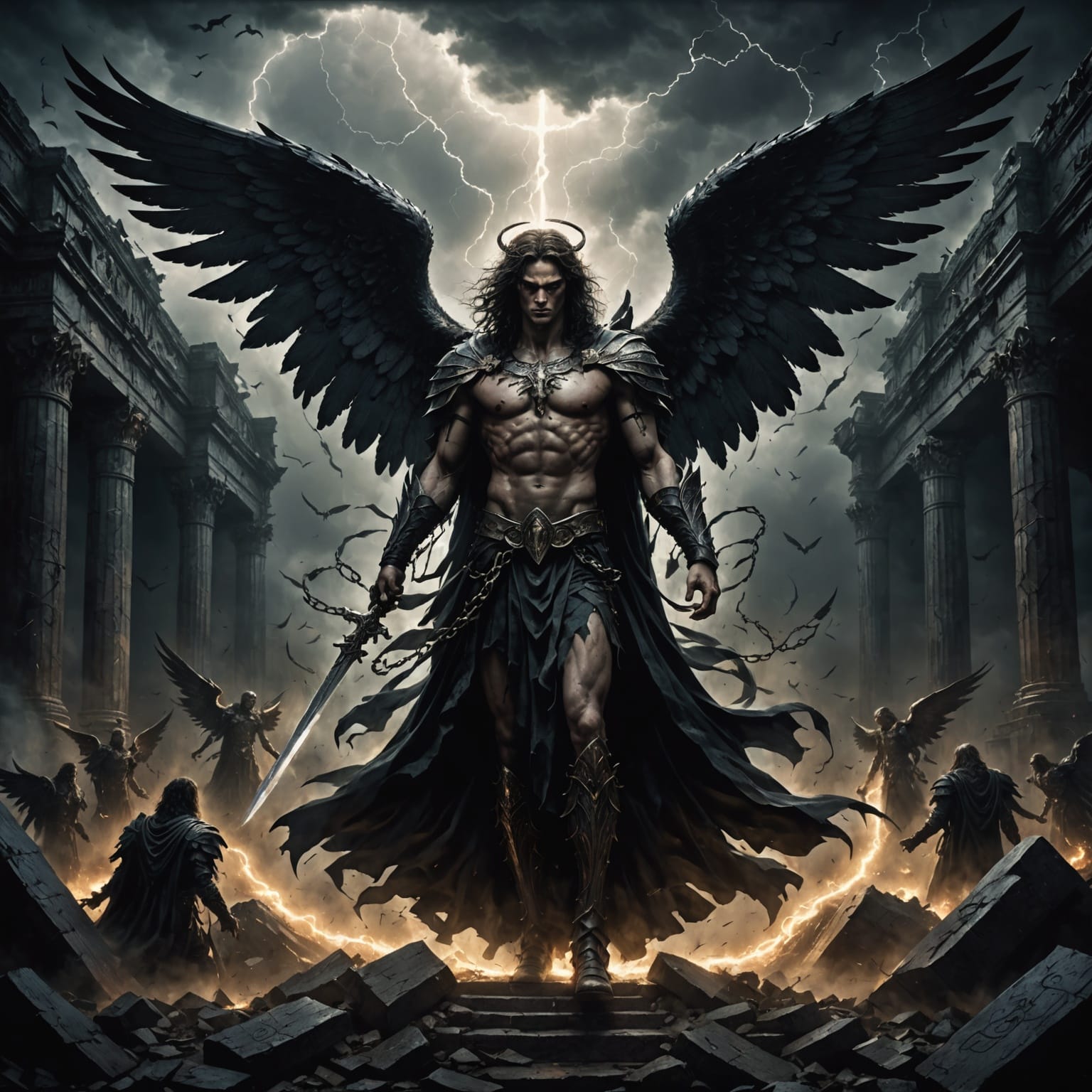
Did you ever wonder why someone like Satan rebelled against God when he was in heaven with God? It’s one of those big questions people get when they dive into the Bible’s take on angels, evil, and the spiritual world. Here’s what Scripture says and some common understandings.
First of all, it’s about pride. The Bible describes Samael “Lucifer”, who many see as Satan’s original name, as this beautiful, powerful angel, perhaps even the top one, like an anointed cherub. In Isaiah 14 and Ezekiel 28, he gets puffed up because he’s beautiful and wise.
He starts thinking, “I’ll ascend to heaven, I’ll raise my throne above the stars of God, I’ll make myself like the Most High.” All those “I will” statements show pure self-exaltation. It wasn’t the desire to serve God anymore, it was the desire to be God. Even though deep down he knew God’s power was unbeatable, pride blinded him. Pride can make smart people do foolish things, convincing themselves they can win.
Some people think he didn’t fully grasp the consequences, or maybe he just couldn’t stand the idea of anyone else being in charge, especially since God was giving humanity special attention. Whatever the case, it was an ego-driven decision that led about a third of angels to revolt.
That’s where Satan and those fallen angels are now. In the Bible, Satan’s not locked up in some fiery pit running hell like in the movies. He’s shown up before God, accusing people, and roaming the earth. Peter calls him a roaring lion looking for someone to devour. Ephesians calls him a prince of air, and Corinthians calls him a god of this world.
He’s influencing things here on earth, tempting, deceiving, and causing trouble, but always within God’s limits. There are some fallen angels bound in chains of darkness, waiting for final judgment, maybe those who went too far, like the ones tied to the Nephilim story. Then there are others out there working as demonic forces, fighting spiritual battles we read about in Ephesians. They’re not in the lake of fire yet, that’s coming later.
There’s another crazy thing about the Nephilim. Genesis 6 mentions these “sons of God” took human wives, resulting in the Nephilim, which are described as giants or mighty men. Nephilims are hybrids, part angel, part human. The bodies got wiped out in the flood, but what about their spirits? There’s a popular view, based on Bible texts and old texts like 1 Enoch (which Jude references), that these disembodied spirits became demons.
Because they weren’t fully human or fully angelic, their spirits didn’t wander around like human souls do. Instead, they wander the earth, looking for bodies to possess or influence, which is why demons crave embodiment in the New Testament. It’s why some link them to evil spirits that torment people. Some argue that the Nephilim were just powerful human warriors from mixed lines like Seth and Cain, without any special spirit fate. Yet the hybrid view explains why demons seem more desperate and earthbound than fallen angels.
This all points to big truths about free will, pride leading to downfall, and how evil works. His followers split between bound and active, and the Nephilim’s legacy might explain roaming spirits we call demons, who rebelled out of arrogance, got cast down, and still roam with influence. The spiritual battle is real, but God still has control.