
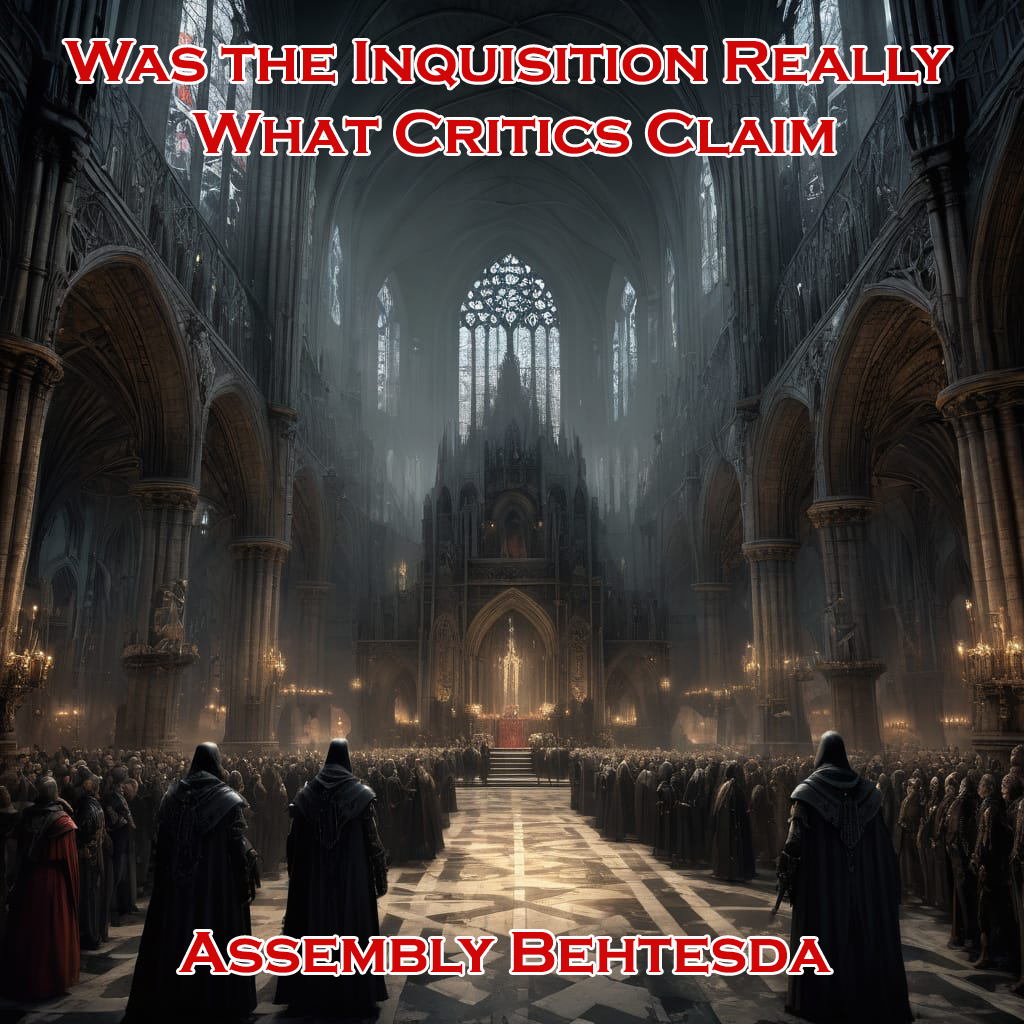
Greetings, fellow twilight dwellers, you who wear your crosses like elegant thorns and find beauty in ancient cathedrals lit up by candles. If you scroll through any online Christian debate, someone drops the Inquisition like it was a velvet curtain. Atheist critics love it because it’s this nonstop bloodbath, millions tortured and burned, the ultimate proof that the Church was just a monster in holy robes.
The club is their favorite. But let me tell you that the shadows have been stretched way too long, the story twisted by old grudges and propaganda thicker than fog over a graveyard. The historical record needs to be set straight here in this gothic corner of the internet. No fiery sermons, just straight talk from the crypt.
The critics usually lump everything together and make wild claims about fifty million dead, or at least tens of thousands roasted each year. Sounds scary, huh? Like the Church ran a medieval death factory. But here’s where the velvet glove comes off the iron fist.
The total executions during the Spanish Inquisition, the one everyone screams about most, are about three thousand to five thousand people over three hundred and fifty years, according to modern historians who dug through the original records, not just old anti-Catholic pamphlets. This is it. Not millions. Not even tens of thousands. We’re talking about fewer than fourteen people a year across the whole continent for all the Inquisitions combined.
When you compare that to secular courts at the time, which hanged thieves and cut off hands for way less, the Inquisition looks less like a horror show and more like a strict but strangely measured system.
What’s up with the gap between myth and truth? It’s the Black Legend, that juicy propaganda campaign devised by Protestant nations like England and the Netherlands to fight Catholic Spain back then. To make Spain look like the devil, they spread stories of torture chambers and rivers of blood. The Enlightenment writers picked it up and ran with it because it fit their vibe of ditching religion for reason.
Some old estimates threw around 32 thousand executions, but those were shaky sources that counted every rumor. You dig into the actual ledgers, the ones kept by the inquisitors themselves, and the numbers shrink dramatically. About 150k people got investigated over the centuries, yeah. Most got warned, did public penance, or wore a tunic for a while. Only a tiny fraction got burned, and even then, it was usually after multiple chances to repent.
In the gothic imagination, all chains and screams echoing off stone walls make for killer imagery. But torture was allowed starting in the mid-1300s, but it was super regulated. Critics love describing iron maidens and racks running 24 hours a day. A confession had to be repeated without pressure for it to count as valid, and it had to last only a short time. No blood was drawn in most cases.
Many times it wasn’t even used at all. The goal wasn’t to break bodies for sport. It was to save souls. The Inquisition existed because heresy was seen as a spiritual plague that could drag entire communities to hell. It made sense to people who really believed eternal damnation was on the line. It’s like an emergency spiritual health department, not a sadistic club.
The medieval Inquisition that started in the 12 hundreds against groups like the Cathars was even more focused on persuasion than punishment. And guess what, the Church often intervened to stop mob violence. Lynchings and riots against suspected heretics happened all the time. There were rules, evidence, and defense lawyers in the Inquisition, so it was actually a lot fairer than secular courts that just executed people on rumor.
It targeted converted Jews and Muslims who were secretly practicing their old faiths after the Reconquista and undermining the new Christian kingdom in Spain. Was it perfect? No. Power mixes with faith, and mistakes happen. Some abuses got through, some innocents suffered.
Painting the whole thing as the darkest chapter ignores how the Church built hospitals, universities, and preserved knowledge during the so-called dark ages.
Let’s talk context, because casual history lovers miss this part. Europe during those centuries wasn’t a peaceful garden. Plague, wars, political upheaval, real threats from invading faiths, secret societies pushing dangerous ideas that could tear society apart. Heresy wasn’t just disagreement on theology, it was often political rebellion or social upheaval. Inquisition handled it in order rather than letting kings and mobs run wild.
Yeah, Protestants had their own version of witch hunts and religious courts. It’s funny how the spotlight always swings to Rome. The Salem trials and the executions under Elizabeth the first weren’t a picnic either. But you don’t hear critics mention those with the same glee.
In our time as Christian goths, we love the dark side. We like the aesthetics, the mystery, the way faith can look like a beautiful tragedy at night. The Inquisition gets twisted into this symbol of everything wrong with organized religion, but flip the lens. It shows a Church that cared enough about truth to fight for it, even when the fight got messy. It preserved orthodoxy so that the gospel could reach us today.
A church without that backbone wouldn’t even exist, let alone maintain the faith we cling to in our black lace and silver crucifixes. Instead, the Church endured, reformed itself at Trent, and kept the flame going.
Today’s critics still wave the Inquisition flag because it’s easy, makes them feel superior without doing the work, and they ignore how scholars have debunked the numbers. They skip the fact that most people investigated were reconciled back into the faith, not destroyed. They forget that every human system has stains, religious or not.
The difference is that Christianity owns its past, learns from, and points to grace that covers even the darkest chapters. Next time someone online tries to sabotage your faith with Inquisition horror stories, smile in the shadows and give them the real record. It’s not millions of people. It’s not lust for torture. It’s a complex, human chapter in a story that always ends in resurrection.
While the Church wasn’t perfect, it wasn’t the cartoon villain either. Our Gothic hearts know beauty and brokenness go hand in hand. The Inquisition reminds us that mercy and truth were the goals, even in the darkest tribunals. The light wins, even when it looks like it’s flickering in the crypt. That’s worth defending. That’s worth wearing as a badge on our velvet sleeves. Faith survived the critics then. It will outlast them now. Keep your crosses high, night owls.