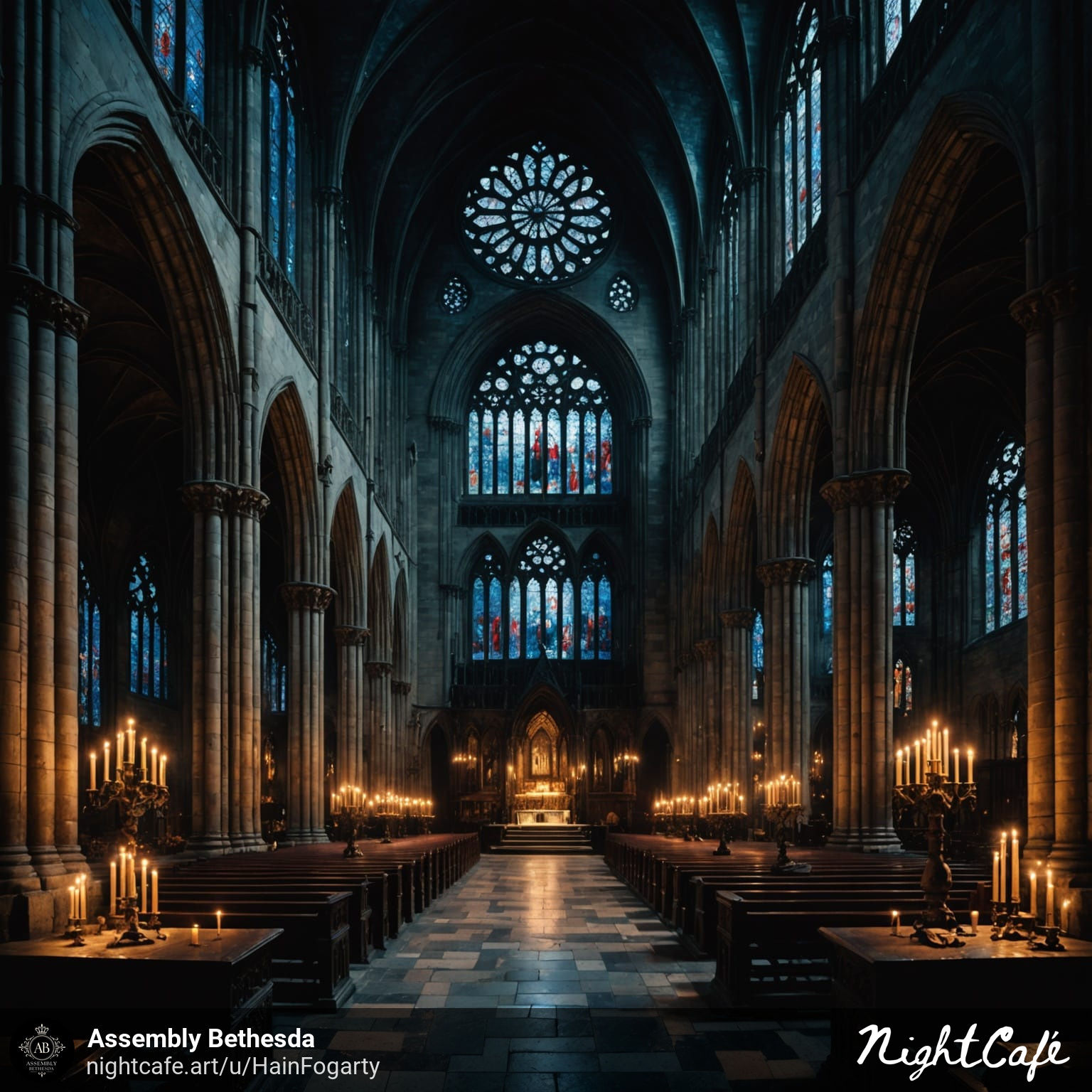
Daniel emerges as a haunting tapestry of mystery, terror, and divine revelation in the shadowed corridors of ancient scripture. It’s like crumbling ruins under a stormy sky, evoking dread and melancholy. Shadows fill the pages, monstrous empires rise and fall in grotesque splendor, and veiled prophecies whisper about cosmic upheaval, judgment, and ultimate redemption.
In Daniel’s obscure visions, earthly and eternal boundaries blur in eerie grandeur, inviting contemplation of human fragility against divine terror.
Apocalyptic depths are revealed in chapters 7-12, where empires become grotesque beasts and kingdoms are shattered by supernatural forces. In the New International Version, Daniel is divided into faithfulness narratives and visionary prophecies. ally, these elements echo decay, the macabre, and sublime terror.
In the vision, grotesque hybrid creatures represent tyrannical forces that devour and crush, while ancient thrones blaze in fiery judgment, evoking ruined abbeys engulfed in ethereal fire.
In chapter 2, Daniel describes Nebuchadnezzar’s dream about a colossal statue made out of glittering gold, shiny silver, burnished bronze, sturdy iron, and fragile clay feet. This eerie monument stands as a monument to human hubris, only to be obliterated by a stone “cut out, but not by human hands” (Daniel 2:34, NIV), which grows into a mountain filling the earth.
In terms, the statue embodies the sublime fragility of empires, majestic but doomed to crumble like forgotten tombs. The book is interpreted by Daniel as successive kingdoms, starting with Babylon, which is gold, then inferior realms, until God’s eternal kingdom lasts forever. There’s a haze surrounding the rock’s divine origin, hinting at a supernatural force that destroys mortal grandeur without effort.
A horror intensifies Daniel’s own vision in chapter 7. As the sea stirs by winds from heaven, four great beasts emerge. The first, a lion with eagle wings, stands like a human with its wings torn off. The second is a bear with ribs in its mouth. The third is a leopard with four wings and heads.
It’s terrifying to see the fourth, dreadful and powerful with iron teeth and ten horns, from which a little horn emerges and uproots others and shouts boastfully (Daniel 7:3-8, NIV). Monstrous hybrids represent empires that ravage the earth, combining animal ferocity with unnatural intelligence.
A throne room of sublime terror looms over the scene: the Ancient of Days, clothed in white, with wooly hair and flaming wheels presides over books. The boastful horn is silenced, the beast killed and burned. After that, “one like a son of man” approaches and gets everlasting dominion (Daniel 7:13-14, NIV).
This courtroom of judgment, amid rivers of fire and myriad attendants, mirrors cathedrals’ vaulted heights and infernal imagery, where divine justice looms over chaotic creation. According to Daniel 7:25, NIV, the beasts are kings, with the fourth kingdom divided, oppressed by a wicked ruler, until the saints take it over.
As a two-horned ram charges unconquered, a goat with a prominent horn swiftly attacks, shattering it and growing great. Chapter 8 deepens the veil of obscurity. A goat’s horn breaks, replaced by four, and a small horn extends from them, casting down stars and stopping sacrifices (Daniel 8:1-12, NIV). Even though it magnifies itself against Prince of Princes, it breaks without being touched by humans.
The voice asks, “How long?” and gets a cryptic reply: 2,300 evenings and mornings until the sanctuary is reopened. In Daniel 8:20-25, NIV, Gabriel interprets the ram as Media-Persia, the goat as Greece, and the horn as a fierce king who rises in the last days, and is destroyed not by human force. In this vision, a sealed future prophecy that evokes ruined sanctuaries desecrated by profane powers, its melancholy heightens melancholy.
In chapter 9, there are seventy ‘sevens’ that add temporal obscurity. Gabriel reveals in prayer for Jerusalem: “Seventy ‘seven’ are decreed to finish transgression, put an end to sin, atone for wickedness, bring in everlasting righteousness, seal up vision and prophecy, and anoint the Most Holy Place” (Daniel 9:24, NIV). Seven ‘sevens’ and sixty-two ‘sevens’ pass before an Anointed One comes, then dies.
This veiled timeline, blending atonement with abomination, casts a shadow of sacrificial doom and profane intrusion (Daniel 9:25-27, NIV).
There’s a lot going on between the kings of the North and South in chapter 11, but it escalates to a time of distress unmatched, when “multitudes who sleep in the dust of the earth will awaken, some to everlasting life, others to shame and everlasting contempt” (Daniel 12:2). Until the end, the wisdom shines like stars.
The resurrection amid anguish evokes themes of graves opening and eternal judgment, where hidden prophecies pierce the darkness.
In terms, Daniel’s obscure prophecies transcend historical kingdoms, becoming archetypes of sublime terror: grotesque beasts devouring in shadowy seas, blazing thrones judging in fiery courts, desecrated altars in crumbling empires, and veiled resurrections promising light. literature’s fascination with decay, the macabre, and the divine sublime mirrors the book’s apocalyptic style.
Human pride is shattered by unseen hands, and faithful saints endure persecution until divine intervention reveals everlasting dominion.
In this veiled cathedral of prophecy, dread and beauty intertwine. The terror of judgment amplifies the glory of redemption, and the obscurity of visions heightens the majesty of revelation. Daniel takes his readers into shadowed depths, where they face monsters and sealed mysteries, and they learn how to be humble before the Ancient of Days. The prophecies endure, even though obscure, as eternal witnesses to God’s sovereignty over chaotic history, a testament to hope out of horror.